Trademark Registration for Gas & LPG Trading in Vietnam
In the gas industry, where prestige and safety are paramount, a trademark is a vital tool for asserting brand identity and securing market share. However, many enterprises still overlook the importance of legal protection, facing risks of brand duplication, consumer confusion, or even losing the right to use their established brand names. In this article, Viet An Law provides a comprehensive guide on trademark registration for gas & LPG trading in Vietnam. We will break down the detailed process for gas-related products and services, helping enterprises proactively safeguard their brand assets and ensure full legal compliance.
Slogan (advertising slogan, e.g., “Safety every minute – Saving every hour”)
These elements can be registered individually or combined to form a composite trademark.
Product and service classification for industrial gas brand
According to the Nice Classification (Version 12-2024) used in Vietnam, when registering a trademark for the gas business, enterprises need to pay attention to the following categories of goods/services:
Class
Describe
Class 04
Fuels, gases, liquefied petroleum gas (LPG), lubricants, etc.
Class 06
Metal gas cylinder
Class 11
Gas stoves, gas burners, gas valves
Class 35
Gas distribution, wholesale and retail services, gas agency.
Class 39
Gas delivery service, gas cylinder delivery to your door.
Class 40
Gas refilling and liquefied petroleum gas (LPG) filling services.
Eligibility requirements for industrial gas brand and LPG trademark Vietnam
Case 1: Gas production and LPG filling enterprises
Enterprises that directly produce and fill LPG from factories or filling stations can register a gas trademark to be affixed to cylinders, transport vehicles, or commercial materials. Conditions include:
Having a license to produce/fill gas as stipulated in Decree 87/2018/ND-CP (as amended and supplemented);
Having technical equipment and safety systems that comply with national technical standards;
Having a unique brand or intending to develop a unique brand to differentiate it from other gas products on the market.
Case 2: Gas distribution and trading entities (non-manufacturers)
Enterprises importing and distributing gas from other suppliers still have the right to register a trademark for the gas products they market if:
Having a legal contract with the gas production/filling unit;
The production unit does not use that trademark and does not object to the registration;
Having a gas trading license and ensure the distribution conditions comply with the law;
Committing to being responsible for the quality and safety of the gas products bearing the registered trademark.
Case 3: Joint ownership of trademarks
Two or more enterprises operating in the same industry may jointly register a gas trademark (for example, a collaboration between three gas distributors to build a regional trademark such as “Song Hau Gas”). However, the following must be ensured:
All parties must participate in the production/business of the trademark gas;
The use of the trademark must not cause confusion regarding the origin of the gas for consumers.
Notes on the transfer of trademark registration rights
In the gas sector – which involves safety and fire prevention – the transfer of a trademark application is only legal if the transferee:
Has the appropriate operating license;
Ensures continued use of the trademark in accordance with regulations and without causing market confusion.
Dossiers for registration of a gas business trademark
Trademark registration application form (template provided)
Trademark sample (5 color copies)
List of goods/services to be protected (classified according to the Nice Classification)
Power of attorney (if submitted through a representative organization)
Documents proving priority rights (if any)
State fees
If the owner is an organization/enterprise: a copy of the enterprise registration certificate is required.
If the owner is an individual: a copy of the ID card/citizen identification card is required.
Procedures for trademark registration for Gas & LPG trading in Vietnam
Step 1: Receiving the application
Organizations and individuals submit one set of trademark registration dossiers to the National Office of Intellectual Property.
Step 2: Formality examination
The NOIP examines the validity of the application; the examination period is one month from the date of receipt.
If the application is valid: The Office issues an acceptance decision, clearly stating the applicant’s information, trademark, application number, filing date, priority date (if any), and sends it to the applicant.
If the application is invalid: The Office issues a notice of intended refusal, stating the reasons and setting a deadline of two months for the applicant to amend, supplement, or respond.
The examination period may be extended by 10 days if the applicant requests amendments, supplements, or a response to the notice.
Step 3: Publication of the application
After the application is deemed valid, the Office will publish it in the Industrial Property Gazette. This publication aims to ensure transparency and allow third parties to raise objections (if any).
Step 4: Substantive examination
The NOIP examines the protectability of a trademark according to the conditions stipulated in the Law on Intellectual Property. This stage aims to determine the scope and conditions for legal protection of the trademark.
If the trademark does not meet the protection requirements or is incomplete, the Office will issue a notice of the results of the substantive examination, stating the reasons and giving the applicant a period of 3 months to respond.
If there is no response, an unsatisfactory response, or failure to correct the deficiencies, the Office will issue a decision to refuse the application within 15 days from the end of the aforementioned period.
In case of intended issuance:
If the trademark meets the protection requirements, the Office issues a notice of intent to grant and sets a deadline of 3 months for the applicant to submit the application:
Fees for issuing the Certificate
Fee for publishing the decision to issue the certificate
Fee for registering the certificate
If the applicant fails to pay the fees on time, the Office will issue a refusal decision within 15 days of the above deadline.
If the applicant pays all fees in full and on time, the Office will issue a decision to grant the Trademark Registration Certificate within 15 days.
In cases where a part of the trademark does not meet the conditions for protection:
The Office will issue a notice stating its intention to grant the certificate only for the portion that meets the requirements, specifying the reasons for rejecting the remaining portion and requiring payment of the fee for the protected portion.
If there is no response, disagreement, or failure to pay the fee on time, the Office will refuse to grant the certificate in whole or in part, depending on the case.
If the applicant responds or provides a reasonable explanation, the Office will continue processing and may grant the certificate for the appropriate portion.
Step 6: Publication and registration of certificate
After issuing the Trademark Registration Certificate, the NOIP will:
Published in the Industrial Property Gazette within 60 days from the date of the decision.
Recorded in the National Register of Industrial Property, officially completing the trademark protection procedure.
Important notes when registering an LPG trademark Vietnam
Avoid using descriptive, common words like “Gas”, “LPG”, “Safe”, or “Economical” as the main part of the trademark.
Avoid duplication or similarity to well-known trademarks in the same field (e.g., Petrolimex Gas, Saigon Petro…).
Design a unique logo; do not copy images from the internet or national symbols (national flag, national emblem…). File applications early, following the principle of “first come, first served”.
Consider registering the trade name and trademark simultaneously if you plan to expand your distribution chain or build a dealer network.
Trademark registration consulting services for the gas business
Consulting on the protectability of gas trademarks
Pre-feasibility study (preliminary and in-depth search)
Preparing application documents and representing clients in filing applications at the NOIP
Monitoring the processing progress and handling objections if any
Receiving and delivering the Trademark Registration Certificate
If you have any questions or require specific advice regarding trademark registration for gas & LPG trading in Vietnam, please contact Viet An Law for prompt answers and support.
Fast & Reliable Legal Assistance
Fill out the form below and get connected with a lawyer quickly.
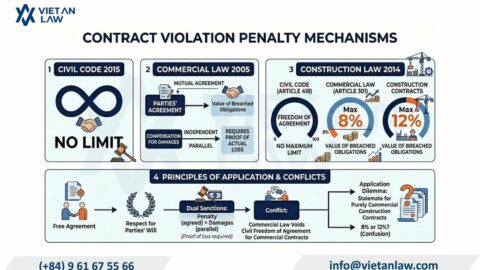
Vietnam's draft Commercial Law 2026 removes the 8% contract penalty cap, allowing unlimited breach penalties. Learn how this affects your contracts, liquidated damages clauses, and dispute strategy.
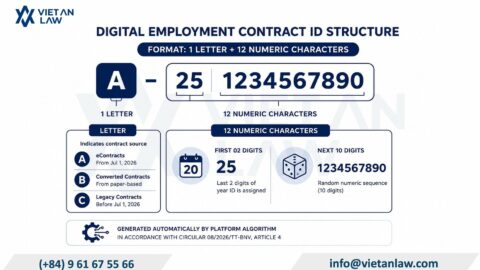
Electronic employment contract Vietnam: Complete guide to Circular 08/2026/TT-BNV key updates on ID codes, eContract platform access, and digital labor contract requirements effective July 2026.
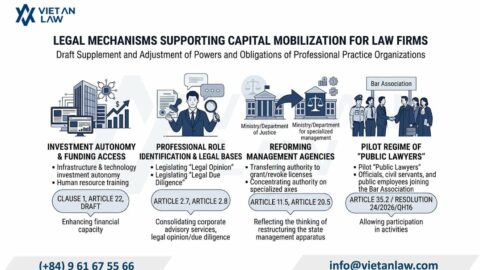
Capital contributing members in law firms Vietnam: Draft Law on Lawyers 2026 allows non-lawyer investors in limited liability law firms for the first time. Effective March 2027.
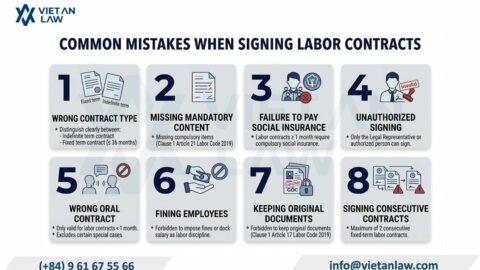
Avoid costly employment contract mistakes in 2026. Expert guide covers Labor Code 2019 compliance, contract types, social insurance, and common violations. Professional labor law consultancy from Viet An Law.