


According to Official Letter 2169/TPHCM-QLDN3 (March 2026) issued by the Ho Chi Minh City Tax Department, the regulations on tax incentives under Resolution 198/2025/QH15 and Decree 20/2026/ND-CP have been clarified: Foreign-invested enterprises (FDI), even if they meet the criteria for small and medium-sized enterprises (SMEs), do not fall within the scope of Corporate Income Tax (CIT) incentives specifically reserved for private economic sector development.
Download full Official Letter here:

As Vietnam continues to implement specific mechanisms to stimulate economic growth, distinguishing between economic sectors has become vital for tax compliance. Viet An Law provides this critical update regarding FDI SMEs Ineligible for CIT Incentives under Resolution 198 on Private Sector Development, ensuring that foreign investors accurately determine their eligibility under the latest regulations from the National Assembly and the Government.
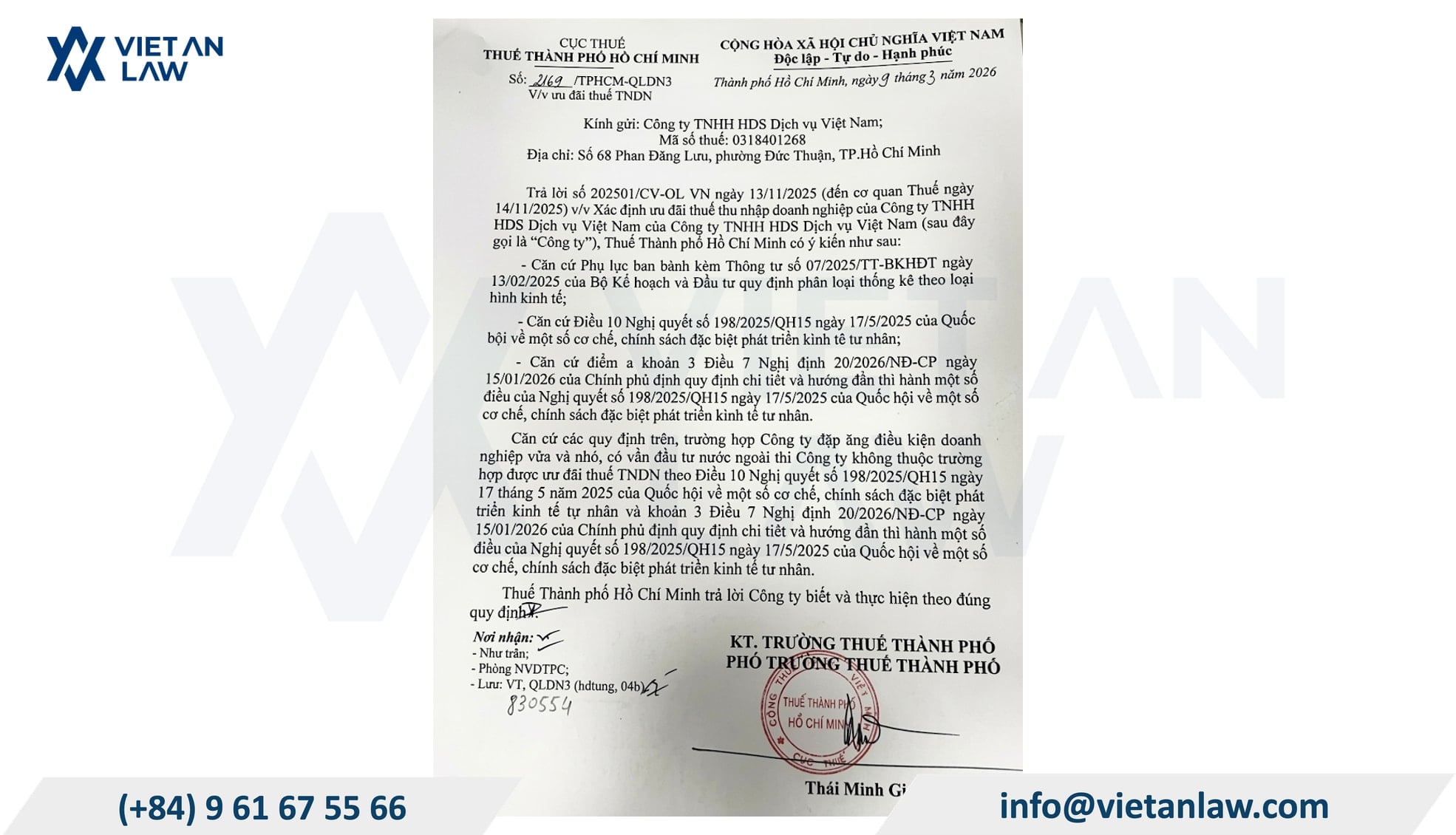
Official Letter 2169: Tax Authority’s Position on CIT Incentives for FDI Enterprises
In practice, the Ho Chi Minh City Tax Department provided a specific response in Official Letter No. 2169/TPHCM-QLDN3 dated March 9, 2026, explicitly affirming this position. Accordingly, the tax authority determined:
“…in cases where a Company meets the conditions of a small and medium-sized enterprise but has foreign investment capital, the Company does not fall under the cases entitled to CIT incentives according to Article 10 of Resolution 198/2025/QH15….”
Current Statistical Classification Standards by Economic Sector
Under the provisions of Circular No. 07/2025/TT-BKHĐT dated February 13, 2025, issued by the Ministry of Planning and Investment, the system for classifying economic types has been detailed to serve management and policy application. A notable point in the appendix issued with this Circular is the complete separation between the private economic group and the foreign-invested economic group (FDI):
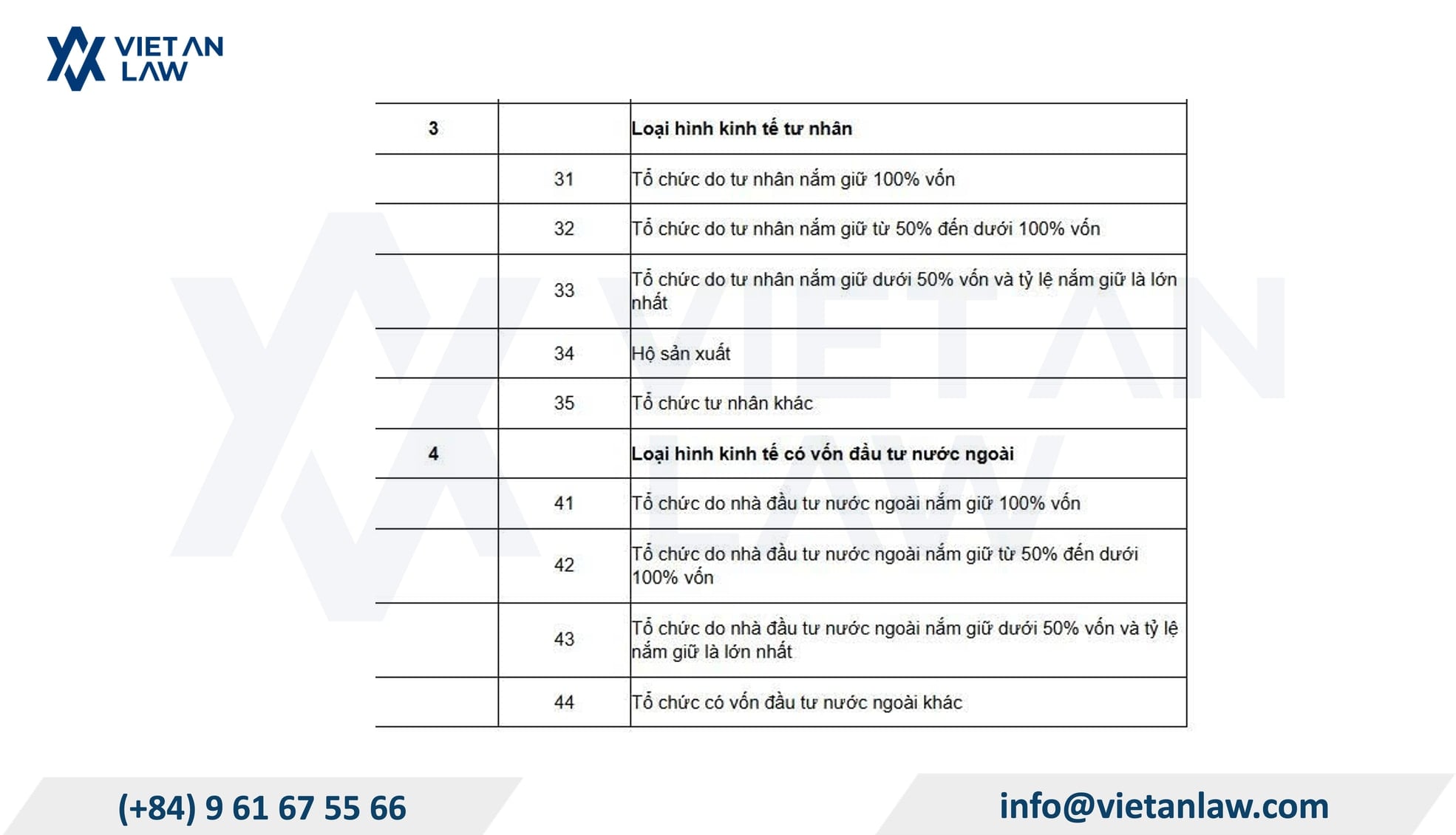
- Private economic sector (Code 3): Includes organizations where domestic individuals or private entities hold capital at various levels, or production households and other private organizations.
- Organizations 100% owned by private individuals (Code 31)
- Organizations where private individuals hold from 50% to under 100% of capital (Code 32)
- Organizations where private individuals hold less than 50% of capital but maintain the largest holding ratio (Code 33)
- Production households (Code 34)
- Other private organizations (Code 35)
- Foreign-invested economic sector (Code 4): Includes organizations where foreign investors hold from under 50% up to 100% of capital, or forms involving foreign capital contribution.
- Organizations 100% owned by foreign investors (Code 41)
- Organizations where foreign investors hold from 50% to under 100% of capital (Code 42)
- Organizations where foreign investors hold less than 50% of capital but maintain the largest holding ratio (Code 43)
- Other organizations with foreign investment capital (Code 44)
This classification is based on the origin of capital ownership, creating a clear legal boundary for the application of the State’s specific support regulations for each distinct economic component.
Conditions for Eligibility for CIT Incentives under Resolution 198/2025/QH15
Resolution No. 198/2025/QH15 of the National Assembly on several special mechanisms and policies for private sector development has set out breakthrough incentive orientations. However, based on Article 10 of this Resolution and detailed instructions in point a, Clause 3, Article 7 of Decree 20/2026/ND-CP, the direct beneficiaries of the policy are entities belonging to the “private economic sector.”
Determining whether an enterprise is eligible for incentives depends not only on scale (such as being a small or medium-sized enterprise) but must also consider the nature of the economic sector. Therefore, foreign-invested enterprises, even if they meet the revenue or labor standards of an SME, are still not classified into the “Private Economic Sector” group according to the classification table attched with Circular 07/2025/TT-BKHDT.
Viet An Law recommends that FDI enterprises exercise caution when approaching incentive policies intended for the private sector to avoid unnecessary legal confusion, as well as the risk of tax arrears and administrative penalties resulting from a misunderstanding of the applicable subjects for FDI SMEs Ineligible for CIT Incentives under Resolution 198 on Private Sector Development.
With extensive experience in tax and investment consultancy, Viet An Law is always ready to accompany your enterprise in reviewing eligibility conditions and performing legal procedures in compliance with current regulations.