Inactive Company in Vietnam: Should you suspend or dissolve?
Many business owners today hold a subjective mindset, assuming that once commercial operations cease, they no longer need to worry about legal formalities. However, leaving a legal entity “frozen” without reporting to State authorities can lead to severe administrative penalties and directly impact the legal representative. In the following article, Viet An Law will comprehensively analyze the legal consequences and guide you through the most optimal solutions for an inactive company in Vietnam: Should you suspend or dissolve?
Inactive company in Vietnam: Should you suspend or dissolve?
Inactive company in Vietnam: Should you suspend or dissolve?
Detailed answer: Must an inactive company undergo company dissolution?
According to Article 207 of the Law on Enterprises 2020, a company that is not operating is not required to be dissolved immediately. Therefore, if the owner still wishes to retain the legal entity to seek investment opportunities or restart the project in the future, it is not mandatory to carry out the company dissolution procedure. Specifically, according to Article 206 of the Law on Enterprises 2020 and the guidance in Article 60 of Decree 168/2025/ND-CP, to legalize the inactive business, enterprises need to note:
A written notification must be given to the Business Registration Authority at least 3 working days before the date of temporarily suspend operations or before resuming business before the scheduled date.
Each notification allows the business to temporarily suspend operations for a period not exceeding 12 months.
If an enterprise fails to execute business suspension procedures, is immediate company dissolution required?
As analyzed, a company that is not conducting business is not required to dissolve immediately, as long as the business has followed the proper procedures for notifying the temporary business suspension.
However, the line between “legitimate suspension: and “violation of the law” is very thin. According to point c, clause 1, Article 212 of the Law on Enterprises 2020:
“”If enterprises inactive businessfor one year without notifying the Business Registration Authority and the tax authorities, its Enterprise Registration Certificate will be revoked.”
Once the ERC is revoked, according to Article 207 of this Law, the enterprise will be forced to undergo dissolution procedures. Therefore, to minimize risks, if it is determined that it cannot continue to operate, the enterprise should proactively carry out the dissolution procedures definitively or apply for temporary suspension of business in accordance with the law.
What are the consequences of abandoning an inactive company?
The risks when a company ceases operations
In reality, many business owners are reluctant to go through administrative procedures, so they choose to abandon their enterprises, failing to file tax returns, pay fees, and cut off contact with authorities. Leaving a company inactive without going through the procedures for temporary suspension or dissolution will lead to extremely serious legal consequences:
Revocation of ERC and closure of tax identification number
As analyzed above, if a company is inactive for one year without notification, the competent state authority will issue a decision to revoke its business registration certificate.
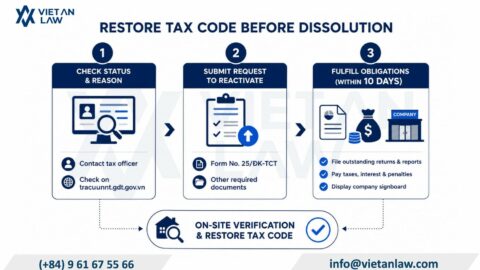
Consequently, based on Article 39 of the Law on Tax Administration 2019, the tax authority will close the company’s tax code (lock the tax code), and place it on the list of inactive businesses at its registered address. This status completely paralyzes the company’s legal status.
Administrative fines
Enterprises that cease operations will continuously accumulate administrative penalties, including:
In the field of business registration, for example, penalties for ceasing operations without notifying as required by Article 63 of Decree 122/2021/ND-CP.
In the field of tax and accounting management: Even without generating revenue, the company must still submit tax declarations (business license, VAT, corporate income tax, etc.). Failure to submit tax declarations on time will result in severe penalties according to Article 13 of Decree 125/2020/ND-CP or other related violations, depending on the actual situation of the business.
Legal disadvantages for the company’s legal representative
Not only are enterprises penalized, but the legal representative (Director/General Director) is also held liable. Specifically:
Prohibited/Temporarily suspended from leaving the country: According to Article 36 of the Law on Exit and Entry of Vietnamese Citizens, the legal representative of a company may be temporarily suspended from leaving the country if the business is being enforced against by an administrative penalty decision or has not fulfilled its tax obligations.
Potential difficulties in establishing a new company: The director of a company whose license has been revoked and whose tax code has been closed may face difficulties in establishing a new legal entity in the future.
The optimal choice: Should an inactive company undergo company dissolution or opt for business suspension?
Maintaining an inefficient enterprise can become a significant financial and legal burden. Faced with this situation, the question that most business owners struggle with is: Does an enterprise that ceases operations have to be dissolved, or should it only be temporarily suspended?
To determine the most suitable solution, please consider the following factors:
Plan to close a company in Vietnam
Company dissolution is a legal procedure aimed at completely terminating the existence of a business in the market, which means removing the business name from the national database and closing its tax identification number.
Advantages
Complete termination of legal and tax obligations: Upon completion of the dissolution process, the business no longer incurs any taxes, maintenance fees, or periodic reporting obligations (such as tax reports, financial statements).
Freedom of mind and resources: Business owners and shareholders are completely freed from the burden of managing a financially distressed entity, allowing them to focus their capital and time on more promising new projects.
Disadvantages
Complex and lengthy procedures: The company dissolution process requires many strict steps, especially the finalization of tax obligations (tax settlement, closing the tax code) with the tax authorities. This process can take several months if the documents need to be amended or supplemented multiple times.
Strict conditions: Shut down enterprise only can implement when it ensures that all debts (taxes, debts to partners) and other financial obligations, especially salaries and social insurance for employees, have been fully paid.
Complete loss of brand: The company name, tax code, and brand you have worked hard to build will be completely erased.
Cases where dissolution should be considered:
Enterprises experiencing prolonged losses, depleted working capital, and completely incapable of recovery.
Initial business objectives have been achieved or are no longer aligned with market trends.
Deep internal conflicts arise among shareholders/investors, making it impossible to agree on a course of action and unwilling to continue cooperating.
Plan to temporarily suspend operations
Advantages
Quick and simple procedures: The application for temporary business suspension is very simple, requiring only a notification to the Business Registration Office at least 3 working days before the planned suspension date.
Retention of legal entity and brand: The enterprise remains in the legal system. The tax code, company name, and subsidiary licenses (if valid) are retained, awaiting the opportunity to return to the market.
Cost savings: During the suspension period, the business does not incur operating expenses such as labor costs, rent, etc.
Flexibility to return to the market: The business can announce its resumption of operations at any time before the deadline if new business opportunities are found, and the restoration procedure is also very quick.
Disadvantages
Still liable for old debts: Temporary suspension does not mean evading obligations. The business must still pay previously incurred debts to partners, banks, and employees (unless otherwise agreed).
Does not completely resolve the issue: If the situation does not improve after the temporary suspension period, the business will ultimately still face the problem of dissolution.
Time limit: Each notification period is limited to a maximum of one year, requiring the business to monitor and renew it if it does not want to resume operations, avoiding legal risks.
Cases where this option should be considered:
The enterprise faces temporary financial difficulties due to macroeconomic fluctuations (such as pandemics or supply chain disruptions) but expects the market to recover within the next 1–2 years.
The management board requires a recess to restructure the organization, seek new funding sources, or pivot their business strategy.
The enterprise encounters accounting book complications and cannot immediately finalize tax closing procedures for dissolution; therefore, transitioning into an inactive business status is recommended to halt the accrual of new taxes and fees while resolving internal records.
The choice between company dissolution and business suspension depends entirely on the financial situation and future orientation of the business owner. Should you require legal consultation, please contact Viet An Law for timely assistance.
Fast & Reliable Legal Assistance
Fill out the form below and get connected with a lawyer quickly.
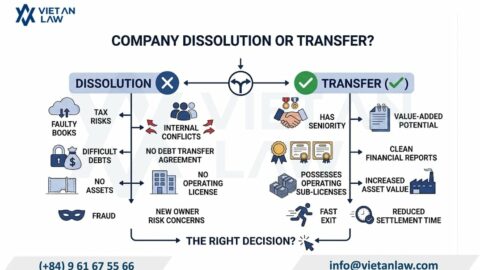
Company dissolution vs transfer in Vietnam: Compare costs, tax obligations, and legal risks. Expert analysis to help you choose the optimal exit strategy for your business.
Discover the 6 employment contracts exempt from social insurance Vietnam under the 2024 Social Insurance Law. Learn legal exemptions, compliance risks, and cost optimization strategies for businesses.
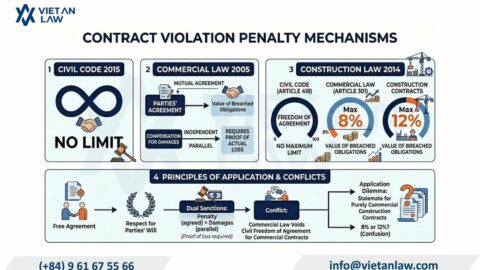
Vietnam's draft Commercial Law 2026 removes the 8% contract penalty cap, allowing unlimited breach penalties. Learn how this affects your contracts, liquidated damages clauses, and dispute strategy.
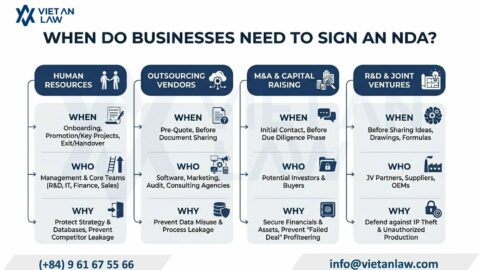
Complete guide to drafting a Non-Disclosure Agreement (NDA) in Vietnam 2026. Learn essential clauses, common mistakes, legal requirements & professional NDA drafting services for businesses.
Can you dissolve a company with a locked tax code in Vietnam? No—but dissolution is possible after restoring tax compliance. Learn the legal requirements, costs, timeline, and step-by-step procedures to…