


In the current technological era, cashless payments are growing strongly in Vietnam. The use of credit cards and e-wallets has become popular, making it easy for people to shop, spend, transfer, and receive money. However, from January 5, 2026, according to Circular 45/2025/TT-NHNN, card users will not be allowed to use credit cards to transfer money (credit) to e-wallets. This regulation officially separates the “credit/spending” function of credit cards and the “real account/wallet” function of e-wallets. This is a step to ensure transparency and safety for the payment system. This article by Viet An Law will help clients update on Credit Card to E-Wallet in Vietnam: Why Transfers are Restricted from 2026.
Overview of Credit Card to E-Wallet in Vietnam
According to the provisions of Clause 3, Article 3 of Circular No. 18/2024/TT-NHNN, amended and supplemented in Circular 45/2025/TT-NHNN, a credit card is a card that allows the cardholder to make card transactions within the credit limit granted according to the agreement with the card issuer.
Functions of credit cards

Credit cards are designed to serve the needs of spending now and paying later, not to deposit money or use as a direct payment account. The superior features bring many benefits to users, specifically as follows:
- Pay for goods and services directly or online: Users can swipe or tap their credit card on the POS machine to pay at stores, restaurants, supermarkets, and hotels. In addition, users can also use credit cards to shop online, pay electricity and water bills, service fees, top up phones, etc.
- Installment purchases: Installment payments via credit card are also a popular form today; users can divide large expenses into many payment periods.
- Cash withdrawal: Cardholders can withdraw cash from their cards at ATMs as agreed with the card issuer. Cash withdrawals are usually an add-on feature, and users may be charged a fee as per the regulations.
- Use for international transactions: Cardholders can use international credit cards to pay when traveling, shopping abroad, or on international e-commerce sites.
Credit card limit
Regarding the limit, according to Circular 45/2025/TT-NHNN, the total limit for cash withdrawals from credit cards (if there is a withdrawal function) is limited. For example, according to the revised content, the maximum cash withdrawal from a credit card is 100 million VND per month.
Credit cards support users to spend flexibly, even before having enough cash, making it convenient for shopping, services, deposits, and quick payments. However, because the credit mechanism does not spend available money, its use requires careful management to avoid debt on debt, high interest rates, and spending beyond the ability to pay.
New regulations of Credit Card to E-Wallet in Vietnam
On November 19, 2025, the State Bank of Vietnam issued Circular 45/2025/TT-NHNN, amending and supplementing a number of articles of Circular 18/2024/TT-NHNN regulating bank card activities. The Circular takes effect from January 5, 2026.
Among the amended contents, there is a very important part related to the scope of credit card use. Specifically, in Article 8 of Circular 45/2025/TT-NHNN, amending Clause 2 of Article 16 of Circular 18/2024/TT-NHNN, the following provisions on card use have been added:
“Credit cards are used to pay for legal goods and services; withdraw cash according to the agreement between the cardholder and the card issuing organization (TCHPT); credit cards will not be used to transfer money (or credit) to payment accounts, debit cards, prepaid cards, or e-wallets.”
Accordingly, from January 5, 2026, using credit cards to transfer money to e-wallets or payment accounts is a prohibited act.
With this regulation, from January 5, 2026, the legal scope of credit cards is narrowed. Credit cards are only used to pay for goods/services or withdraw cash (if agreed), but not to transfer/credit to other wallets or accounts.
Credit Card to E-Wallet in Vietnam: Why Transfers are Restricted from 2026?
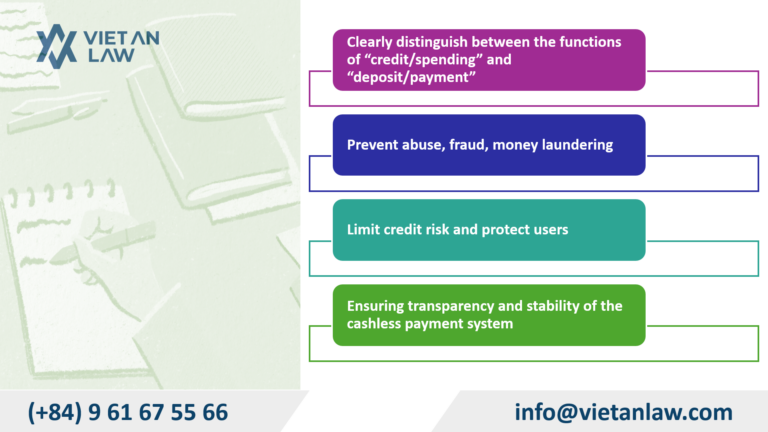
The regulation prohibiting the transfer of money from credit cards to e-wallets has a clear purpose: to protect the payment system, ensure transparency, limit risks, and encourage the proper use of the card’s functions. Specifically:
• Clearly distinguish between the functions of “credit/spending” and “deposit/payment”
Credit cards are designed to spend now and pay later. Meanwhile, e-wallets/payment accounts/debit cards/prepaid cards are identified as tools to store real money, used as payment accounts or “wallets”. Transferring money from a credit card to a wallet, i.e., turning the credit card into a channel to deposit/hold/circulate money, will change the real function of the credit card. Not allowing it helps to make a clearer distinction: credit cards are for spending/credit, and wallets/accounts are for storing/paying real money.
• Prevent abuse, fraud, and money laundering
When it is possible to transfer money from a credit card to an e-wallet/payment account, users (and bad organizations) can take advantage of this to “launder money”, conceal the origin of money, transfer/circulate amounts that will be very difficult to control cash flow. Furthermore, Circular 45/2025/TT-NHNN was issued based on the Law on Anti-Money Laundering and regulations on non-cash payments. This prohibition supports financial supervision and control, anti-fraud, and ensures system transparency.
• Limit credit risk and protect users
If users can easily “load” money from a credit card into their wallet and spend it as if it were a real asset, it is easy to use credit as ready money. This can easily lead to overpayment, interest, and bad debt. The ban helps users understand that credit cards have limits and are obligated to repay, not a source of “free” money. This helps protect users, avoid credit abuse, and maintain clear personal financial responsibilities.
• Ensure transparency and stability of the cashless payment system
In the context of the rapid development of electronic payments, e-wallets, and payment accounts, if there is no clear boundary between credit and deposits, the system will easily become chaotic. Cash flow is difficult to control, transaction monitoring is difficult, and systemic risks can easily arise. Not allowing money transfers from credit cards to wallets helps maintain the principle of separate credit and deposits/accounts, creating a more transparent and safer payment environment for all parties involved, from users, banks, intermediaries, to management agencies.
Above is advice on Credit Card to E-Wallet in Vietnam: Why Transfers are Restricted from 2026. If you have any questions or need advice on this issue, please contact Viet An Law for the best advice and support!