


In the field of law, particularly intellectual property rights, assumptions regarding related rights are an important concept, frequently mentioned in the process of resolving disputes and protecting the legitimate interests of the parties involved. So, what exactly are assumptions regarding related rights, and why do they play an essential role in ensuring fairness and transparency in the legal system? This article by Viet An Law Firm will help you better assumptions regarding related rights in Vietnam, while also providing an insightful perspective on how it is applied in practical legal contexts.
What Are Assumptions Regarding Related Rights?
Assumptions regarding related rights are a legal principle in the field of intellectual property, whereby an individual or organization is presumed to be the owner of related rights (such as performers’ rights, phonogram producers’ rights, or broadcasting organizations’ rights), unless evidence proves otherwise.
This principle aims to reduce the burden of proving ownership, facilitate the protection of the legitimate interests of the parties involved, and ensure transparency and efficiency in the enforcement of intellectual property laws.
Example: A phonogram producer is presumed to be the owner of related rights for a recording, unless there is evidence showing that the ownership belongs to another party.
However, the presumption of related rights also has certain exceptions as follows:
- Ideas or methods are not protected by related rights, as only specific forms of expression are considered.
- Use of works for public interest.
- When the protection period under the law has expired, related rights are no longer recognized.
- In cases where related rights are not registered with the competent authority, they may still be presumed under legal provisions. However, failure to register may lead to risks in disputes, as the owner must prove their rights.
- Certain legal provisions may limit related rights to ensure the fair interests of society: broadcasting signals for emergency purposes, use in national events.
Cases of Applying the Presumption of Related Rights
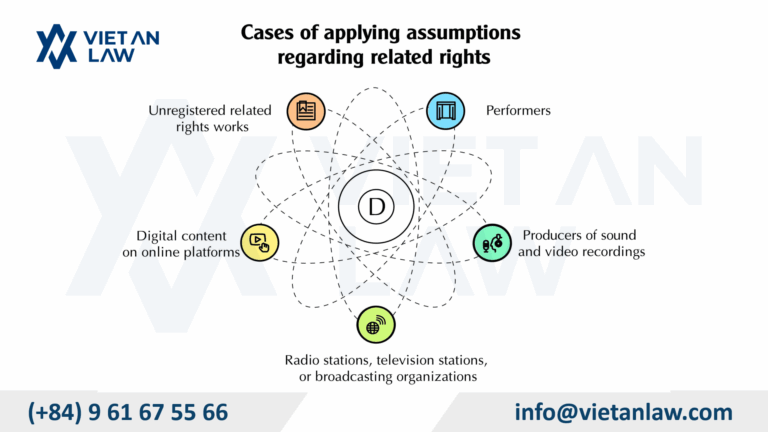
- Performers (singers, actors, musicians, etc.) are presumed to be the owners of related rights in their performances, including moral rights and economic rights.
- Producers of sound or audiovisual recordings: The producer (company or individual investing in the recording or filming) is presumed to be the owner of economic rights in the recordings or recordings they create.
- Radio stations, television stations, or broadcasting organizations are presumed to be the owners of related rights in the content they broadcast, including satellite signals carrying encrypted programs.
- Digital content on online platforms: In some cases, creators or uploaders of digital content on online platforms are presumed to be the owners of related rights in that content, unless there is evidence showing that the rights belong to another party (e.g., a rights transfer contract).
- Works not registered for related rights: If related rights have not been officially registered, the legal presumption still applies to recognize the creator of the work, producer, or broadcasting organization as the owner of related rights, unless there is a dispute or other evidence.
Content of the Presumption of Related Rights under the New Intellectual Property Law
According to Articles 29, 30, and 31 of the 2005 Intellectual Property Law (amended and supplemented in 2022):
Objects of Related Rights
Performers: Related rights protect the interests of individuals participating in artistic performances, including actors, musicians, and dancers.
Producers of sound and audiovisual recordings: Organizations or individuals producing sound or audiovisual recordings are also protected.
Broadcasting organizations: Radio and television stations have related rights over the programs they broadcast.
Performer’s Rights
Moral Rights
Name Attribution: Performers have the right to have their name indicated when performing or when their sound or audiovisual recordings are released.
Protection of Image: They have the right to protect the integrity of their performance image, preventing modifications or edits that may harm their honor and reputation.
Economic Rights
Exercise or Authorization: Performers have the exclusive right to perform or authorize organizations or individuals to carry out acts such as reproducing or distributing sound and audiovisual recordings.
Broadcasting and Communication: They have the right to broadcast and communicate the performance to the public through various means.
Duration of Protection
Related rights arise from the moment the performance or sound/audiovisual recording is carried out and have a specific term of protection, usually 50 years from the year following the performance.
Limitations of Rights
The law also stipulates certain limitations on the exercise of intellectual property rights to ensure a balance between the interests of rights holders and the public interest.
These provisions aim to protect the legitimate interests of individuals and organizations involved in the creation and dissemination of artistic works in society.
Consulting and protection services for related rights at Viet An Law
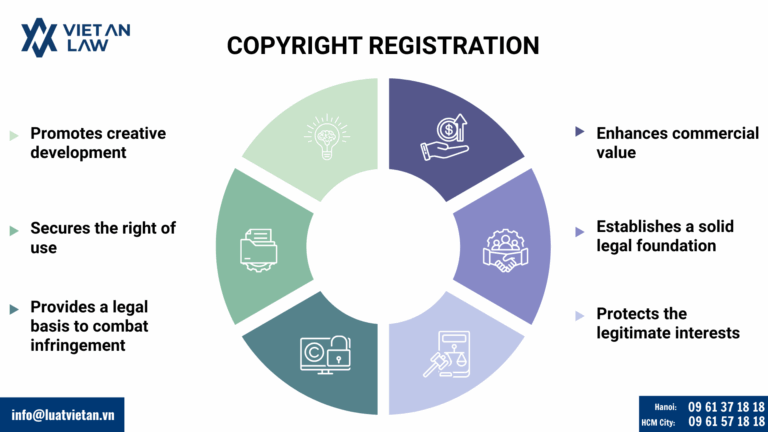
- Consulting on related rights: Guiding clients on moral and economic rights related to performance, production, and broadcasting activities.
- Explaining legal benefits: Detailing the rights that performers, sound and video producers, or broadcasting organizations are entitled to under the Intellectual Property Law.
- Advising on exemptions and limitations: Guiding cases where works can be used without infringing related rights (e.g., for public interest or educational purposes).
- Preparing registration documents for related rights: Assisting in drafting and collecting documents proving ownership, such as performance contracts, sound/video production contracts, or broadcasting licenses.
- Submitting applications to competent authorities: Submitting related rights registration applications on behalf of clients to the Copyright Office or relevant agencies.
- Issuing related rights certificates: Receiving the certificates and delivering them to clients.
- Advising on exploitation of related rights: Guiding licensing of sound recordings, videos, or broadcast programs.
- Handling related rights infringements: Representing clients in cases of unauthorized use of sound recordings, videos, or broadcasts.
- Mediation, negotiation, litigation: Participating in mediation, negotiation, or litigation regarding disputes over related rights.
Viet An Law Firm, on assumptions regarding related rights in Vietnam, not only focuses on assisting with rights registration but also provides comprehensive consulting and solutions to effectively protect and exploit related rights. Clients in need of consultation are welcome to contact us for timely support!