From March 1st, 2026, the Investment Law 2025 officially came into effect, along with Decree 103/2026/ND-CP (effective from April 3rd, 2026), creating a significant change in overseas investment procedures. A notable new point is that not all overseas investment projects require an Outbound Investment Registration Certificate. For small-scale projects, investors can apply for a simpler process, but must still fully comply with regulations on investment and foreign exchange management.
Regardless of the case, registering for foreign exchange transactions is still mandatory.
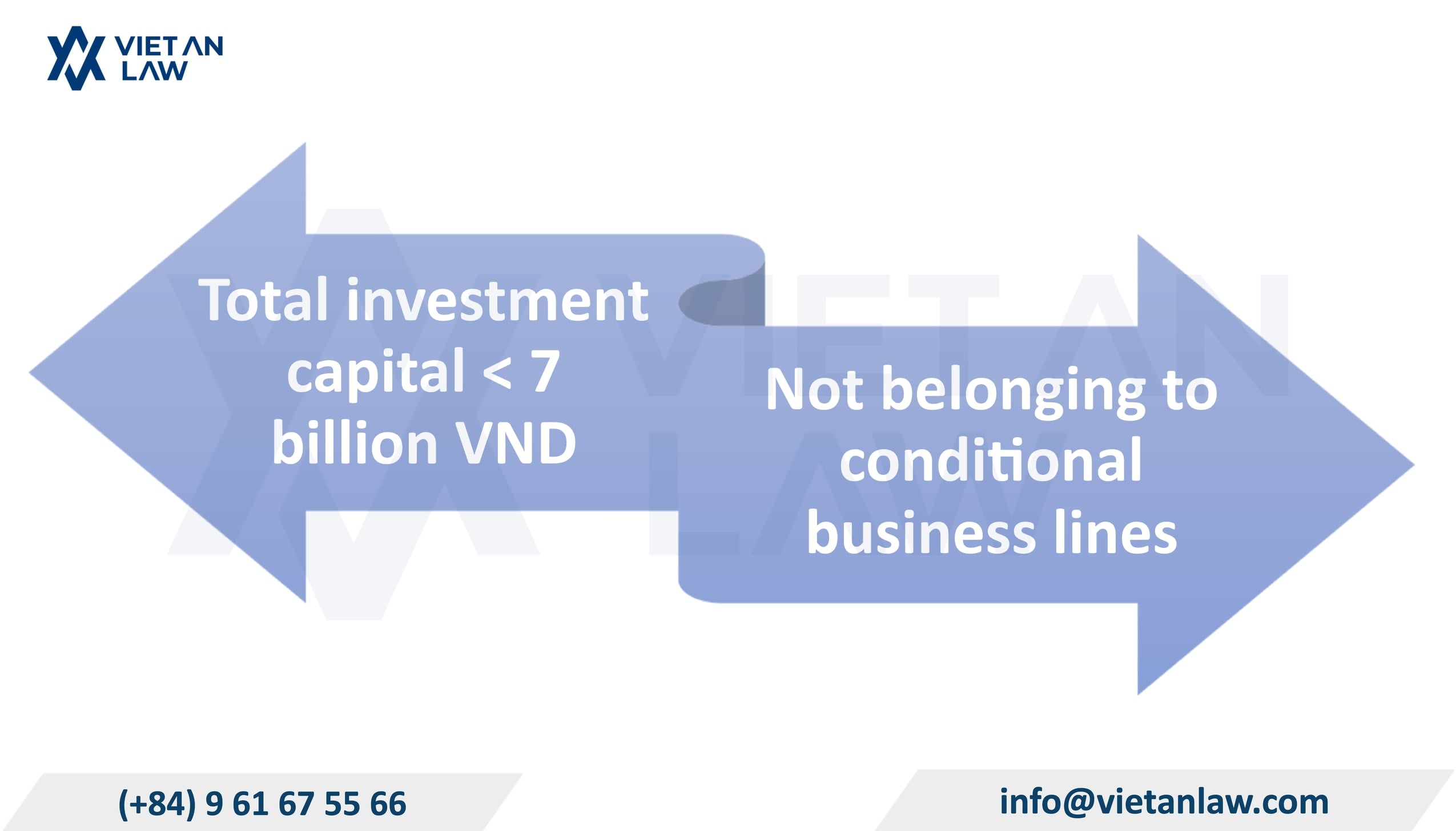
According to the new regulations under Decree 103/2026/ND-CP, investors are not required to apply for a Certificate if they simultaneously meet the following criteria:
This is a group of projects with simplified procedures, but not a complete exemption from legal obligations.
Important note for investors:
No Certificate required ≠ No procedures required. Accordingly, investors must still perform:
According to Decree 103/2026/ND-CP, if an investor invests abroad with a total capital of less than 7 billion VND and the project does not involve conditional business sectors such as banking, insurance, securities, press/radio/television, and real estate business, then they are not required to apply for an outbound Investment Registration Certificate.
However, this does not mean that the enterprise does not need to carry out any procedures; it simply means transitioning from the certificate application procedure to the investment project declaration and foreign exchange transaction registration
procedure.
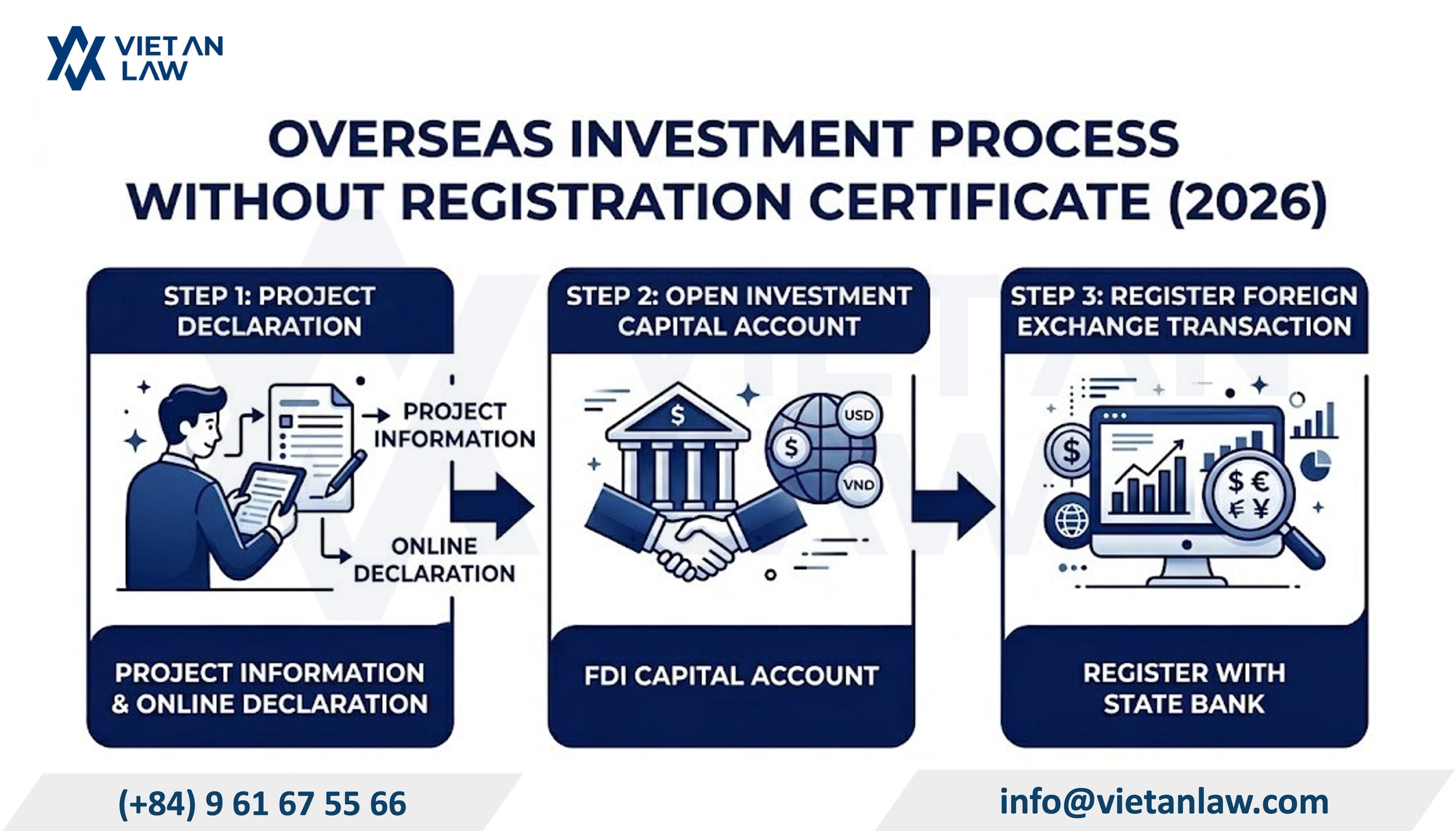
Submitted via the National Investment Information System
Results the investor receives:
Thực hiện tại ngân hàng có chức năng theo quy định. Đây là tài khoản bắt buộc để:
This must be done at a licensed bank. This account is mandatory for:
Mandatory regulations: Funds can only be transferred abroad under the following conditions:
Investors need to review the following:
In these cases, an outbound investment certificate is mandatory.
Even without a Certificate, investors must still:
The new regulations in 2026 simplify procedures for overseas investment, especially for small projects. However, strict adherence to the foreign exchange declaration and registration process remains crucial to ensuring the legality and safety of capital flows.
Comparison table of projects requiring vs exempt from Outbound Investment Registration Certificate in Vietnam
| Criteria | NOT requiring a Certificate | REQUIRING a Certificate |
| Legal basis | Decree 103/2026/NĐ-CP | Law on Investment 2025 + Decree 103 |
| Investment scale | Under 7 billion VND | From 7 billion VND and above |
| Business lines | Non-conditional business lines | Conditional business lines (Banking, Real Estate, Insurance, etc.) |
| Primary procedure | Declaration + Foreign exchange registration | Application for Outbound Investment Registration Certificate |
| Handling authority | Investment System + State Bank of Vietnam (SBV) | Ministry of Planning and Investment |
| Processing time | Fast (a few days to 1 week) | Longer (15–30 days or more) |
| Complexity level | Simple | More complex |
| Dossier requirements | Basic information declaration | Full and detailed legal dossiers |
| Investment remittance | After foreign exchange registration | After obtaining the Certificate + foreign exchange registration |
| Legal risk | Low if the process is followed correctly | High if dossiers are incomplete or procedures are incorrect |
No, unless it falls under a conditional business sector as stipulated by regulations.
Yes. Investors must still declare the project and register for foreign exchange transactions.
No. Foreign exchange transactions must be registered before transferring funds.
Information must be updated on the system within one month, and the legal conditions reviewed.
If you require detailed advice on:
Contact Viet An Law for comprehensive support – fast, legally compliant, and cost-effective: 09 61 37 18 18 (Hotline / Zalo / WhatsApp).