Step-by-Step Guide: How to Incorporate Your Own Company in Vietnam
Establishing a company is a complex legal act requiring strict compliance with current legal regulations. To realize your business intention and ensure legal operation, subjects need to carry out a series of administrative and professional procedures. This process ranges from identifying the type of enterprise, preparing legal dossiers, to business registration and post-establishment obligations. So, what do you need to do to start your own company? Viet An Law Firm will delve into the essential legal steps in this step-by-step guide: how to incorporate your own company.
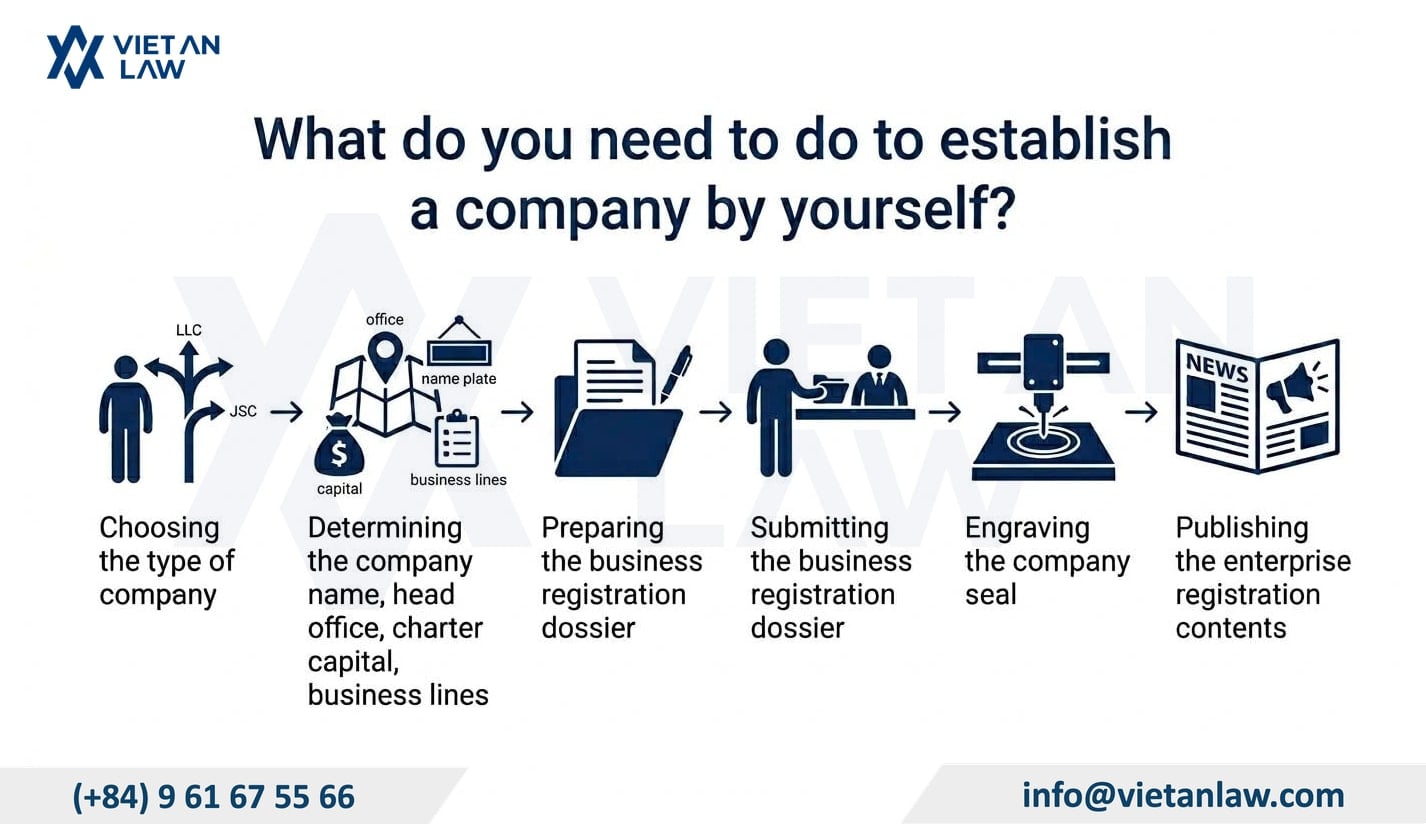
What do you need to do to establish a company by yourself?
Choosing the type of company
The current Law on Enterprise recognizes 05 types of enterprises, including:
Multiple-member LLC;
Single-member LLC;
Joint-stock company;
Partnership;
Private enterprise.
When needing to establish a company, individuals and organizations must first choose a suitable type of enterprise. To know which type of enterprise to choose, it is necessary to clearly understand the nature, characteristics, and conditions of each type of enterprise.
Determining the company name, head office, charter capital, business lines
Regarding the company name
According to Article 37 of the Law on Enterprise 2020 (amended and supplemented in 2025), when naming a company, organizations and individuals need to note the following:
The Vietnamese name consists of 02 elements: Type of enterprise and proper name;
The company name must not duplicate the name of another company;
Do not use the names of State agencies, socio-political organizations… to name the company;
Do not use words and symbols that violate historical traditions, culture, ethics, and fine customs..
Place of the company’s head office
Article 42 of the Law on Enterprise 2020 (amended and supplemented in 2025), the enterprise’s head office is located in the territory of Vietnam, determined by administrative boundaries.
Charter capital
If choosing the type of enterprise as a joint-stock company, partnership, or limited liability company, organizations and individuals must determine the charter capital.
If it is a joint-stock company: Charter capital is the total par value of shares sold or registered to be purchased when establishing the company.
If it is a partnership or limited liability company: It is the total value of assets contributed or committed to be contributed by the company’s members or owners when establishing the company.
Business lines
Enterprises are free to do business in lines that are not prohibited by law according to the list of business lines under Decision No. 36/2025/QD-TTg. This means that, when following the steps to start a business, organizations and individuals must exclude business lines that are not permitted by law.
In addition, it is necessary to pay attention to business lines restricted from investment and business and conditional business lines.
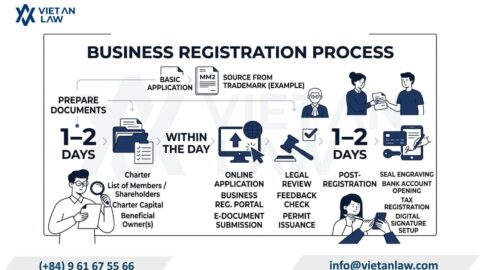
Preparing the business registration dossier
According to Articles 19, 20, 21, 22 of the Law on Enterprise 2020, depending on each type of enterprise, the business registration process and dossier will be different. Specifically as follows:
Dossier for private enterprise registration
Application for enterprise registration;
Copies of legal papers of the owner of the private enterprise.
Dossier for partnership registration
Application for enterprise registration
Company charter
List of members
Copies of legal papers of each member
Copy of the Investment Registration Certificate in case of a foreign investor.
Dossier for limited liability company registration
Application for enterprise registration.
Company charter.
List of members.
Copies of the following documents:
Legal papers of the individual in case the member is an individual, legal representative;
Legal papers of the organization in case the member is an organization and the document appointing the authorized representative; legal papers of the individual for the authorized representative of the member being an organization.
For members being foreign organizations, a copy of legalized legal papers is required;
Investment Registration Certificate for foreign investors.
Dossier for joint-stock company registration
Application for enterprise registration.
Company charter.
List of founding shareholders; list of shareholders being foreign investors.
Copies of the following documents:
Legal papers of the individual if the founding shareholder and the shareholder being a foreign investor are individuals, legal representative;
Legal papers of the organization if the shareholder is an organization and the document appointing the authorized representative; legal papers of the individual for the authorized representative of the founding shareholder and the shareholder being a foreign investor which is an organization.
For shareholders being foreign organizations, the copy of legal papers must be consular legalized;
Investment Registration Certificate for foreign investors.
Note: according to the provisions of Decree 168/2025/ND-CP, the enterprise only has to submit a copy of the individual’s legal papers in case of not declaring the identification code.
Submitting the business registration dossier
Place of submission
After completing the business registration process, organizations and individuals need to submit online dossiers to the Business Registration Office under the Department of Finance of the province where the company’s head office is located.
Form of submission
According to Clause 1, Article 26 of the Law on Enterprise 2020, organizations and individuals carrying out business registration procedures can submit through the National Business Registration Portal Https://dangkykinhdoanh.gov.vn
Engraving the company seal
After obtaining the Enterprise Registration Certificate, companies need to engrave a seal to use for transactions (or can use a digital signature to replace the seal).
According to Article 43 of the Law on Enterprise 2020, companies are allowed to freely decide the type, quantity, form, and content of the seal.
Note: Previously, the Law on Enterprise 2014 required companies to carry out procedures to publish the company’s seal sample on the National Business Registration Portal. However, the current Law on Enterprise 2020 has abolished this provision. Therefore, companies after establishment no longer have to carry out the procedure to publish the company seal sample. This is one of the important steps to start a business.
Publishing the enterprise registration contents
After completing the procedure to establish a company and being granted the Enterprise Registration Certificate, companies need to proceed to publish the enterprise registration contents according to Article 32 of the Law on Enterprise 2020. This is detailed further in our step-by-step guide: how to incorporate your own company.
Contents to be published including the Enterprise Registration Certificate and the following information:
Business lines;
List of founding shareholders; list of shareholders being foreign investors for joint-stock companies (if any).
Publication deadline: 30 days from the date of disclosure.
Notes when establishing an enterprise by yourself
Notes when establishing an enterprise by yourself
Choosing the wrong type of enterprise
Choosing the wrong type of enterprise (LLC, joint-stock, household business,…) leads to troubles regarding asset liability, tax obligations, and management structure.
For example: If you choose an individual household business, you will not be able to issue VAT invoices, have no legal status, and be liable with all personal assets.
Invalid company name
A company name that duplicates or causes confusion with another enterprise will be refused licensing.
Using prohibited words such as “national”, “republic”, “institute”, “bank” when not meeting the conditions.
Choosing the wrong business lines
Not registering the appropriate business lines will lead to not being granted an industry code, not being able to print invoices, and not being granted sub-licenses for conditional lines.
Some lines require a practicing certificate, legal capital, or special conditions.
Errors in post-establishment procedures
Failure to pay license tax, failure to open a bank account, or failure to register electronic invoices on time will be penalized.
Failure to submit tax returns because of inactivity. Tax returns must be submitted periodically according to the tax calculation period, whether the enterprise generates revenue or not.
The above is the advice of Viet An Law Firm on what to do to start your own company. We hope this step-by-step guide: how to incorporate your own company has been helpful. If there are any other obstacles related to enterprise establishment, please contact Viet An Law Firm for specific advice.
Fast & Reliable Legal Assistance
Fill out the form below and get connected with a lawyer quickly.
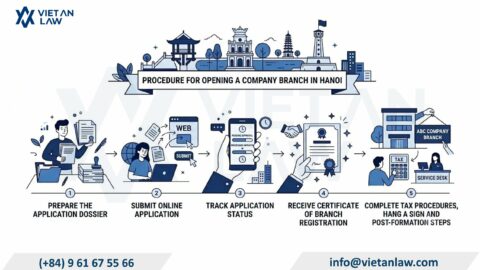
Complete guide to company branch registration in Hanoi 2026: requirements, procedures, costs, and address selection. Expert legal support for Vietnamese and foreign enterprises establishing branches in Vietnam.
Is the director's salary single-memeber LLC subject to PIT? Complete 2026 legal analysis on personal income tax, deductible expenses, and compliance rules for LLC directors in Vietnam.
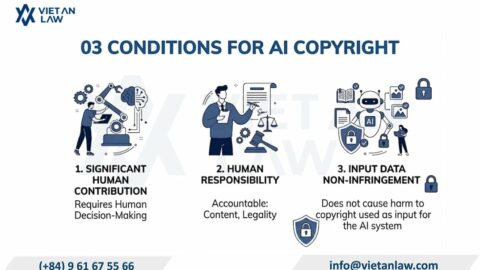
Decree 134/2026/ND-CP on AI copyright in Vietnam: New regulations for AI-generated works, ownership requirements, and data usage for training AI systems. Legal guide for compliance.
Company formation in Vietnam 2026 takes 3-5 days for domestic enterprises and 18-35 days for FDI companies. Complete guide to registration timelines and requirements.