


On January 8, 2026, the Ministry of Public Security issued Plan No. 12/KH-BCA regarding the inspection of compliance with legal regulations under its state management scope for enterprises and business households throughout 2026. Specifically, the Ministry will prioritize inspections of entities posing potential risks to security and social order. Understanding how to prepare for business inspections by the Ministry of Public Security in 2026 is crucial for maintaining legal compliance. In this article, Viet An Law provides the latest updates and essential notes regarding the 2026 inspections for enterprises and business households.
Legal basis for business and household inspections in 2026
The Ministry of Public Security’s 2026 plan for inspecting businesses and household businesses aims to implement the major policies and orientations of the Party and State, such as:
- Government Resolution No. 138/NQ-CP dated May 16, 2025, promulgating the Government’s action plan to implement Resolution No. 68-NQ/TW dated May 4, 2025, of the Politburo on the development of the private economy;
- Government Resolution No. 139/NQ-CP dated May 17, 2025, promulgating the Government’s plan to implement Resolution No. 198/2025/QH15 dated May 17, 2025, of the National Assembly on some special mechanisms and policies for the development of the private economy.
The purpose of the inspection is to enhance the effectiveness of state management in security and order, ensuring the implementation of the Party’s guidelines and policies and the State’s laws. Furthermore, it aims to support and resolve difficulties in production and business activities for enterprises, business households, and individual business owners, contributing to improving the investment environment.
Ministry of Public Security inspections focusing on sectors with high risks to security and social order in 2026
According to the plan, the subjects of inspection are enterprises, household businesses, and individual business owners that are required to be inspected according to legal regulations.
The police force will focus on areas, locations, and types of enterprises that pose potential risks to security and order. The checklist must be approved by the head of the police unit at the departmental level or the Director of the Provincial/City Police Department before implementation.
Currently, some types of businesses that pose potential security and public order risks may be subject to inspection in 2026, such as:
- Trading in fireworks;
- Trading in industries and professions using industrial explosives and explosive precursors;
- Pawnshop services;
- Security services;
- Electronic games with prizes for foreigners;
- Casino operations;
- Betting services;
- Cosmetic surgery services;
- Karaoke and nightclub services;
- Accommodation services;…
How to prepare for business inspections by the Ministry of Public Security in 2026
The inspection of enterprises and household businesses by the Ministry of Public Security, as per Plan No. 12/KH-BCA, will only be carried out in 2026.
Accordingly, quarterly, the Provincial and City Police Departments, based on their functions, duties, authority, requirements, actual situation, and guidance and directives from units under the Ministry of Public Security, will determine the content of inspections regarding compliance with legal regulations within the scope of state management of the Ministry of Public Security for enterprises, household businesses, and individual businesses operating in their localities.
Prioritizing online and remote inspections for enterprises and business households in 2026
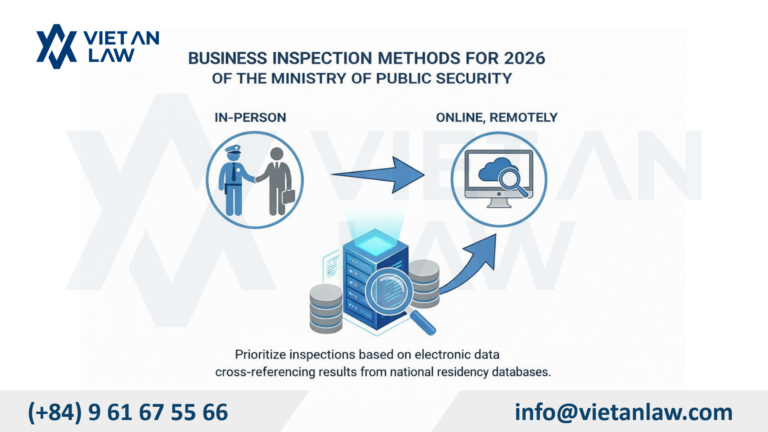
The inspection methods outlined in the Ministry of Public Security’s 2026 inspection plan for businesses and household businesses include:
- Direct inspection at the headquarters or business location;
- Online and remote inspection through electronic data systems.
While inspections previously involved direct visits to local areas by inspection teams, 2026 marks a significant shift towards digital transformation in inspection work. The Ministry of Public Security will enhance the use of data from the National Population Database and the electronic identification and authentication system to improve management efficiency and reduce unnecessary information requests.
Remote inspections via electronic data not only reduce the pressure of in-person inspections and save time for both authorities and enterprises, but also ensure absolute objectivity and transparency.
4 principles for business and household inspections by the Ministry of Public Security in 2026
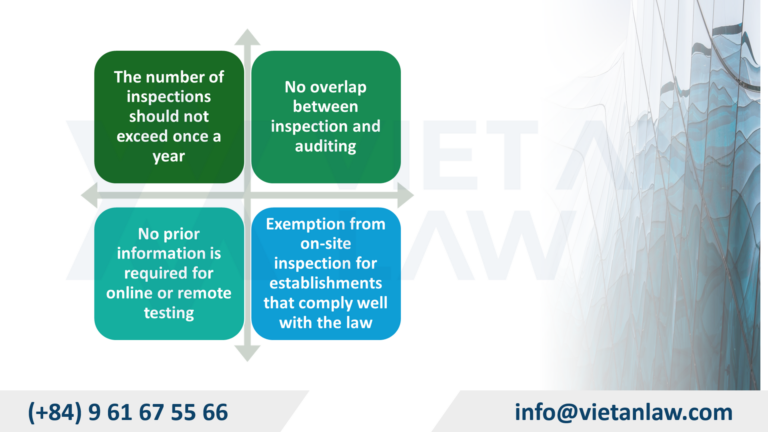
The number of inspections should not exceed once a year
The number of inspections at enterprises, household businesses, and individual businesses, including inter-agency inspections, shall not exceed one per year, except when surprise inspections are necessary due to clear signs of violations.
No overlap between inspection and auditing
If an inspection has already been conducted, no subsequent audit should be carried out, or if an audit has already been conducted, no subsequent inspection of enterprises, household businesses, or individual businesses should be carried out in the same year, except in cases where there are clear signs of violations.
No prior information is required for online or remote testing
When conducting online or remote inspections, enterprises, household businesses, and individual business owners should only be required to provide information and documents that the state agency does not yet possess, ensuring the principle of information confidentiality, and not requiring the re-submission of data that has already been shared or connected within the state agency’s information system.
Exemption from on-site inspection for establishments that comply well with the law
The most notable highlight in the 2026 inspection plan is the exemption from on-site inspections. The Ministry of Public Security affirms that enterprises, households, and individuals who comply well with the law and strictly adhere to regulations will be exempt from direct on-site inspections.
This is a positive sign, reflecting a risk-based management approach and encouraging proactive compliance with the law.
How to prepare for business inspections by the Ministry of Public Security in 2026
To proactively prepare and minimize legal risks during the 2026 inspection by the Ministry of Public Security, enterprises and household businesses should:
Review security and public order conditions
- Re-check eligibility conditions and required licenses (if operating in conditional business lines);
- Ensure that all conditions and documents remain valid, accurate in content, applicable to the correct location, and registered under the proper legal representative.
Standardize management records and dossiers
- Maintain complete personnel files and labor contracts (especially for sectors such as security services, karaoke, accommodation, etc.);
- Maintain customer management records (if required by specialized regulations);
- Keep business operation logs and professional activity records (for specific regulated industries).
Review compliance with reporting and declaration obligations
- Fully implement periodic reporting requirements;
- Ensure proper declaration of temporary residence, accommodation, and customer information in accordance with regulations (where applicable).
Proactively digitize and update data
In the context of increased online inspections, enterprises should:
- Standardize internal data systems;
- Coordinate in updating and connecting information with government systems upon request;
- Assign personnel responsible for legal compliance or as the focal point for working with authorities.
Provide internal training on legal compliance
- Conduct training for managers and employees on regulations related to security and public order;
- Develop procedures for handling official inspections when authorities conduct on-site reviews.
It is evident that the Ministry of Public Security’s 2026 inspection plan both tightens management in areas with potential risks and demonstrates a spirit of procedural reform, reducing overlaps and promoting voluntary compliance. The more proactively businesses prepare, the more significantly the legal risks and operational disruptions will be minimized.
The above is an updated notice regarding the Ministry of Public Security’s inspection of enterprises and household businesses in 2026. For advice and support in reviewing legal conditions, preparing documents, and developing a systematic and effective plan for working with inspection agencies, businesses can contact Viet An Law for timely and in-depth assistance.