Are you planning to set up an FDI company in Vietnam in 2026? Vietnam remains an attractive destination for foreign investment, but choosing the right structure and understanding the legal requirements are essential from the outset. In this guide, Viet An Law outlines the main types of FDI companies in Vietnam, relevant market access restrictions, suitable investment models, practical case examples, and common legal mistakes that foreign investors should avoid.
Two Legal Routes to Enter the Vietnamese Market
Foreign investors generally have two primary legal routes to enter the Vietnamese market:
The choice between these forms directly impacts your timeline, initial costs, and the level of corporate control you will exercise over the entity.
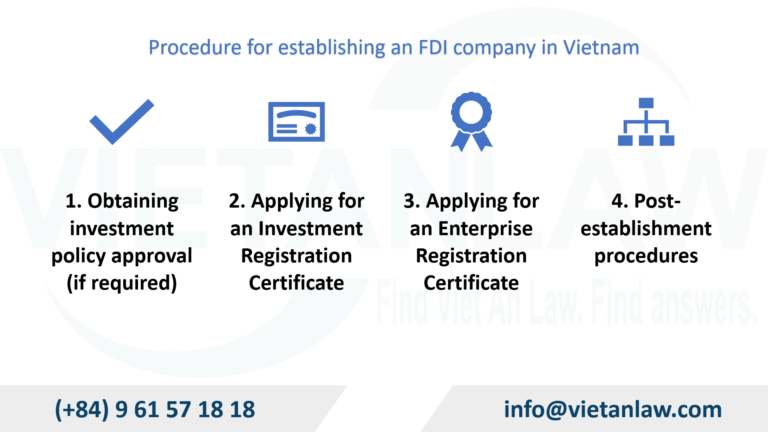
These errors often necessitate formal file adjustments or lead to significant fines.
The actual time required to complete the process of setting up an FDI company in Vietnam typically ranges from 25 to 35 working days, depending on the registered business lines and the completeness and quality of the investor’s documents.
Beyond setting up a new entity, many investors choose to join an existing Vietnamese business. This is often a faster market entry strategy, allowing investors to bypass the initial setup phase and leverage an established business ecosystem.
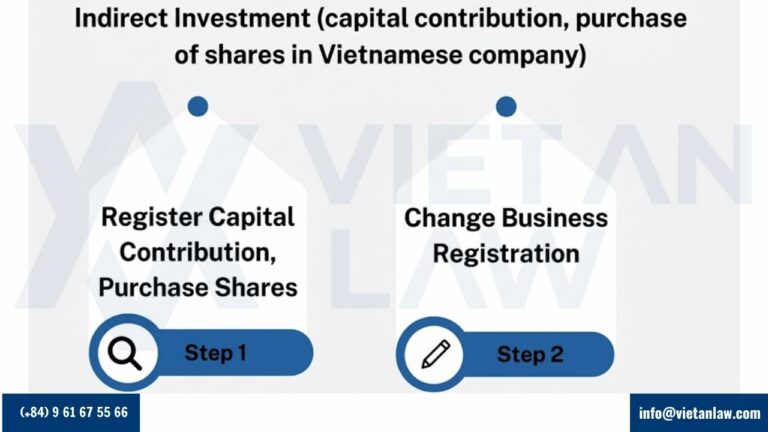
Engaging in capital contribution or share purchase offers significant benefits, particularly during the initial market entry phase:
This is an ideal solution for investors prioritizing speed and the optimization of initial overhead costs.
Legal Risks When Foreign Investors Acquire Shares or Contribute Capital to an Existing Vietnamese Company
In practice, many foreign investors choose share acquisition or capital contribution because it is often faster than establishing a new foreign-invested enterprise. In many cases, this approach helps save time and simplify certain licensing procedures. However, it may also expose the investor to a range of legal, tax, operational, and commercial risks if the target company has not been thoroughly reviewed before the transaction.
Hidden legal liabilities
The target company may already have legal violations, outstanding financial obligations, or unresolved compliance issues that are not immediately visible at the time of the transaction. If these matters are not identified early, the investor may inherit significant legal and financial exposure after completing the acquisition.
Tax risks
Foreign investors should carefully examine whether the target company has unpaid taxes, incorrect tax filings, late payment penalties, or potential tax exposure arising from previous inspections, audits, or reassessments by the tax authorities. Tax risks are among the most common issues discovered during legal and financial due diligence in Vietnam.
Labor and employment liabilities
Existing employment contracts, unpaid social insurance contributions, labor disputes, and severance obligations may create substantial liabilities after the investment is completed. These matters should be reviewed carefully, especially where the company has a large workforce or a history of employee turnover.
Licensing and regulatory compliance history
Investors should review the company’s licenses, permits, business conditions, and operational history to determine whether it has operated within the proper legal scope and whether any breaches of sector-specific regulations have occurred. A company with an incomplete or problematic licensing history may face restrictions or penalties that affect future operations.
Shareholder or member disputes
Disputes among existing shareholders or capital-contributing members may directly affect management rights, decision-making power, and the investor’s ability to exercise effective control after the transaction. This risk is particularly important in closely held companies or businesses with unclear internal governance arrangements.
Land, premises, and lease-related issues
The legal status of land use rights, office leases, factory leases, and project site arrangements should also be reviewed carefully. Weaknesses or inconsistencies in these documents may affect the legality, stability, and continuity of the company’s business operations.
How to mitigate these risks
To reduce legal and financial exposure, foreign investors should conduct comprehensive legal due diligence before acquiring shares or contributing capital to an existing Vietnamese company. The transaction documents should also include clear representations, warranties, indemnities, and post-closing protection mechanisms.
In practice, investors should consider the following measures:
Conclusion
Although share acquisition or capital contribution can be an efficient way for foreign investors to enter the Vietnamese market, this route should only be pursued after careful legal and financial due diligence. A well-structured transaction, supported by strong contractual protections and proper professional review, will significantly reduce post-investment risks and help ensure a safer and more effective market entry strategy.
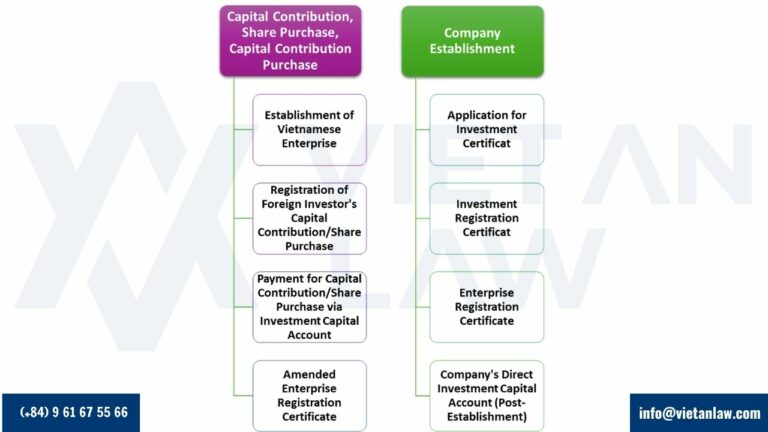
The decision between FDI company formation in Vietnam for foreign investors and purchasing shares depends on your business goals, urgency, and desired level of control. When a foreign investor enters the market, the business lines must align with:
This model is most suitable when:
This model is recommended when:
Investors must carefully evaluate the following factors to ensure a successful set up a company in Vietnam for foreigners:
Choosing the wrong investment form can result in prolonged implementation, unexpected adjustment costs, or the complete rejection of the application.
When establishing a foreign-invested company in Vietnam, foreign investors should not focus only on investment registration and enterprise registration procedures. A more important issue is whether the intended business line is open to foreign investors and, if so, under what conditions market access will be granted. In practice, market access restrictions and foreign ownership limits depend on the specific business sector, Vietnam’s WTO commitments, bilateral treaties between Vietnam and the investor’s home country, the laws on investment and enterprises, and sector-specific regulations applicable to the intended investment field.
Many business sectors in Vietnam are relatively open to foreign investors and may allow 100% foreign ownership, provided that the normal investment procedures are satisfied. These commonly include: trading, consulting, software and technology, construction, machinery maintenance, accounting and auditing, architectural services, and certain hospitality businesses.
Some sectors are subject to foreign ownership limits or market access conditions that make a joint venture with a Vietnamese partner a more appropriate, or even legally required, option. Examples include: international inbound travel services, transport services, agriculture-related services, advertising and market research, and logistics.
Even where foreign investors are allowed to establish a company, some sectors still require additional sub-licenses, eligibility permits, or operational approvals before the business can officially commence. Typical examples include: education services, healthcare services, banking services, restaurant and hotel businesses, e-commerce, food business, international inbound travel services, and transport services.
In some cases, acquiring shares in, or contributing capital to, an existing Vietnamese company may be more practical than establishing a new foreign-invested enterprise. This option is often suitable for sectors where foreign ownership is restricted, where business lines require sub-licenses and strict compliance, or where the business operates in a highly specialized field. However, this approach also requires careful legal and financial due diligence before the transaction is carried out.
With over 19 years of experience in FDI company formation in Vietnam, we have noted that 70% of delays stem from initial document errors, and selecting the wrong form can double the time spent on procedures.
In early 2026, Viet An Law supported a Korean legal entity entering the international travel sector in Hanoi.
Case 3: US Tech Startup Expanding to Ho Chi Minh City
Can foreign investors own 100% of an FDI company in Vietnam?
Yes, depending on the sector. Some fields are restricted under WTO Commitments.
Is share acquisition always faster than setting up a new FDI company?
Not necessarily. It may save time where the target company already has the necessary licenses or operating structure, but legal and financial due diligence remains essential.
Which investment route is more suitable for conditional business sectors?
It depends on the sector, foreign ownership limits, and licensing conditions. Choosing the wrong structure from the outset may lead to delays or additional restructuring later.
Contact Viet An Law today for a free consultation within 24 hours to choose the right investment path for your business.