


Japan, an economic powerhouse with a leading position on the world map, has long been an ideal destination for international investors and businesses. With a large consumer market, high purchasing power, and ever-increasing demand for quality products and services, Japan offers a wealth of attractive business opportunities. One of the key factors that make Japan attractive is the modern and advanced infrastructure, from the transportation system to the telecommunications network, ensuring smooth and efficient business activities. The Japanese workforce is renowned for its high level of expertise, discipline, and sense of responsibility, making it a valuable resource for any business. Besides, the prestige of “Made in Japan” has long become a symbol of quality and reliability. Establishing a company in Japan not only helps to improve brand value but also opens up opportunities for cooperation with reputable partners, accessing the vast Asian market. Viet An Law would like to introduce you to the procedures for establishing a company in Japan through the article below.
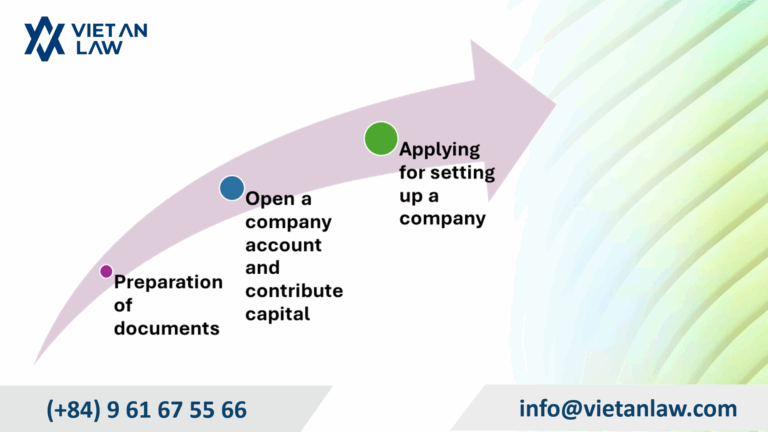
Preparation of documents to carry out the procedures for setting up a company in Japan
For Individuals
- Seal certificate (issued within 3 months) of each investor and director. If an investor is also a director, it is necessary to provide two notarized copies. A seal certificate (inkan shomeisho) can be obtained at the local municipal office if you are registered for residence in Japan. The seal certificate can be replaced with a signature certificate (notarized signature) certified by your country’s Embassy/Consulate in Japan or by a notary public of that country if the person lives abroad.
- The signatures (or seals) of each investor and director are required on the company’s charter and other necessary documents.
- A personal bank account of one of the investors and a passbook/bank statement for capital contribution.
For legal entities
- The registration certificate of the parent company issued within the last 3 months (original or notarized copy if the original cannot be sent).
- A notarized signature certificate of the parent company’s representative. If the representative of the parent company will also appoint as a director of the subsidiary in Japan, 2 notarized copies are required.
- Seal certificate (issued within 3 months) of each investor and director. If an investor is also a director, it is necessary to provide two notarized copies. A seal certificate (inkan shomeisho) can be obtained at the local municipal office if you are registered for residence in Japan. The seal certificate can be replaced with a signature certificate (notarized signature) certified by your country’s Embassy/Consulate in Japan or by a notary public of that country if the person lives abroad.
- The signature (or seal) of the representative of the parent company and each director registered on the company’s charter (the original needs to be sent to Japan).
- The Directors’ personal bank accounts and their passbooks/bank statements are used for capital contributions.
Drafting the company’s charter
- Company Name: Company names can use a variety of characters: letters, numbers, Kanji, Hiragana, Katakana, or a combination. The company name does not overlap with any company registered at the same address.
- Company Address: The address can be the investor/director’s home address or a virtual office address to save costs. However, a physical office location is required if you want to apply for an “Investor/Business Manager” visa.
- Business Activities
- Corporate governance: The company needs to appoint at least one director. Investors/shareholders can become directors at the same time. The representative director should be elected from among the directors (if there is only one director, this person automatically becomes the representative director). There may also be multiple representative directors.
- Charter capital: Although the minimum charter capital is 1 yen, it is recommended to apply for the appropriate capital. The minimum charter capital is 5 million yen (foreign capital) to apply for an “Investor/Business Manager” visa.
- Fiscal year: The company has the right to decide on its own fiscal year, which should be clearly stated in the company’s charter. Many companies in Japan choose the fiscal year ending on March 30, but the company may choose another time that is appropriate.
After the drafting of the charter is completed, it needs to be notarized for submission of dossiers
Open a company account and contribute capital
Directory of documents for opening a bank account
- The company’s charter.
- Certificate of corporate or personal seal
- Identification document of the company representative.
After the company’s bank account is opened, the next step is to transfer the official charter capital into it. You need to carefully keep all relevant transaction documents, including bank statements and remittance receipts, as they will be authentic evidence for the charter capital contribution.
Applying for setting up a company in Japan
Preparation of company registration documents
- Company Incorporation Application
- Directors’ Consent Letter
- Certificate of capital contribution
- Other documents mentioned above
Submission of company establishment dossier at the Legal Department
Incorporation fees: Incorporation fees vary depending on the type of company:
- Joint Stock Company (KK): Minimum 150,000 yen.
- Partnership (GK): 60,000 yen.
If you need to support the procedure for establishing a company in Japan, please contact Viet An Law for the earliest support!