Latest Updates on Tax Administration for Associated Transactions in Vietnam
Vietnam’s transfer pricing market is gradually moving to the next chapter with the issuance of the Ministry of Finance’s new draft Decree on associated transactions, expected to take effect concurrently with the Law on Tax Administration from July 1, 2026, applicable from the 2026 corporate tax year onwards.
The draft Decree regulating tax administration for associated transactions of enterprises with associated relationships was drafted and issued by the Ministry of Finance on March 12, 2026. This aims to detail Clause 5, Article 52 of the Law on Tax Administration No. 108/2025/QH15 (effective July 1, 2026), completely replacing Decree 132/2020/ND-CP (previously amended by Decree 20/2025/ND-CP).
The article below by Viet An Law will update in detail the latest updates of the draft Decree on tax administration for associated transactions, helping enterprises to be proactive in preparing transfer pricing documentation and correctly complying with the current law. Understanding the Latest Updates on Tax Administration for Associated Transactions in Vietnam is essential for businesses operating in Vietnam.
What are Associated Transactions? Associated Parties Under the Latest Regulations in Vietnam
Definition of Associated Transactions Under Vietnamese Law
The form of an associated transaction is also referred to by the name transfer pricing, achieved by self-determining internal prices to shift profits from a place with a high tax rate to a place with a low tax rate in order to minimize the amount of tax payable globally.
Pursuant to Clause 2, Article 5 of Decree 132/2020/ND-CP, an associated transaction is understood as a transaction between parties with an associated relationship by one party or parties participating directly or indirectly in the management, control, capital contribution, or investment in another party.
Cases Identified as Associated Parties
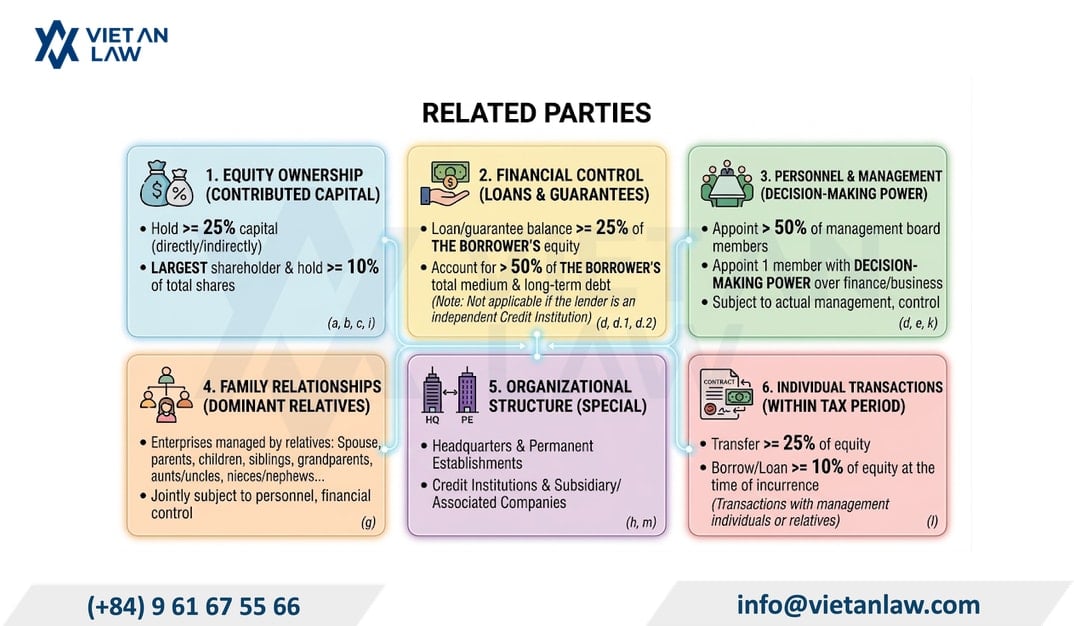
The essence of an “associated relationship” revolves around the Right of Control of the parties. If one party has the ability to dominate the other party (or both are dominated by a third party) through Capital, Finance, Human Resources, or Family Relationships, then those parties are considered an associated party.
Obligations of Enterprises with Arising Associated Transactions
If an enterprise has arising associated transactions, it must declare information about the associated relationship and associated transactions.
The enterprise also needs to note that payments to an associated party cannot be deducted into taxable expenses in the period if they fall into one of the following cases:
The associated party does not carry out any production or business activities related to the industry, production, or business activities of the taxpayer.
The associated party has production or business activities, but the scale is not commensurate with the transaction value that the associated party receives from the taxpayer.
The associated party has no rights or responsibilities related to the assets, goods, or services provided to the taxpayer.
The associated party is a resident of a country or territory that does not collect corporate income tax, and does not contribute to creating revenue or added value for the production and business activities of the taxpayer.
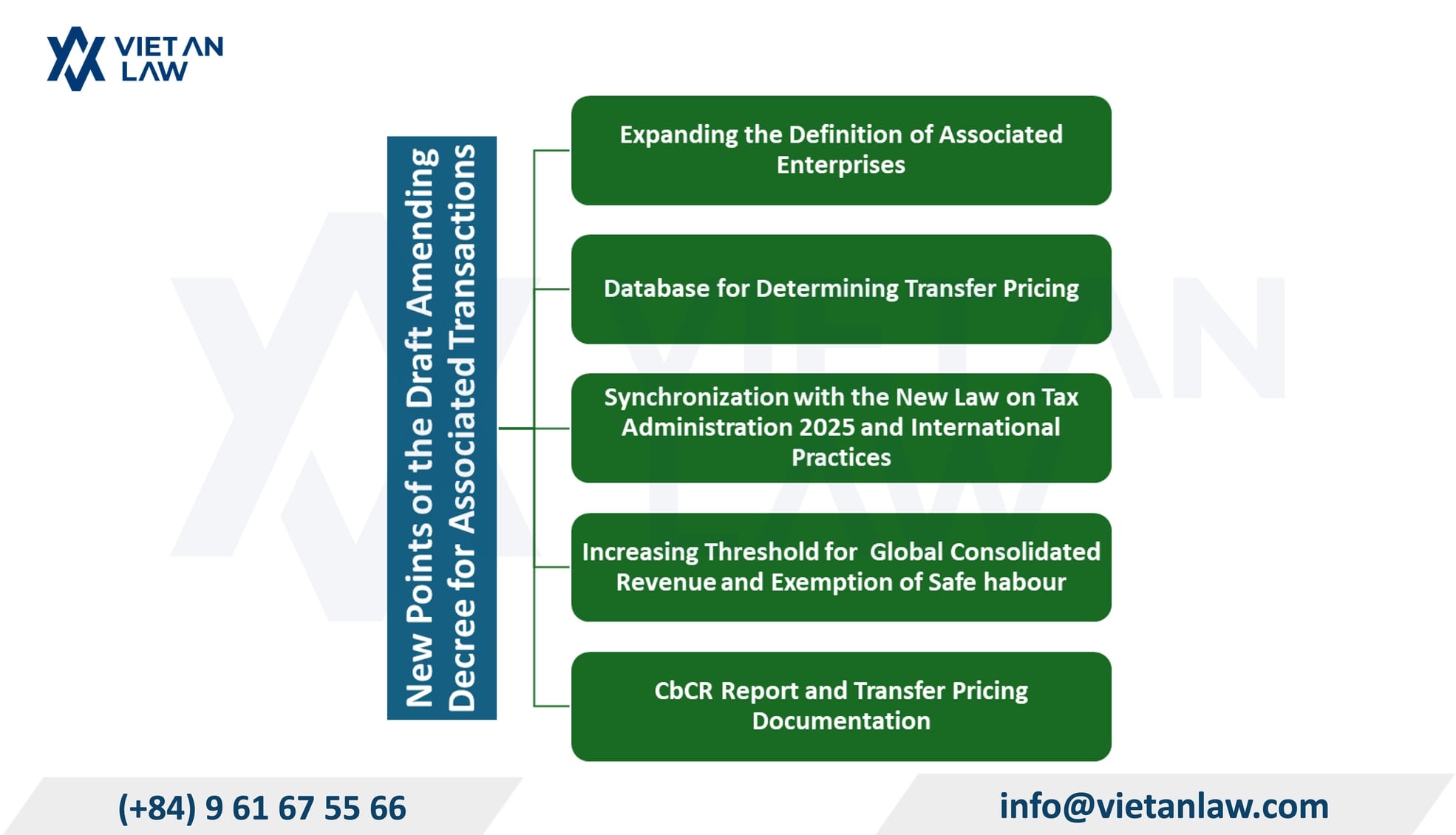
New Points of the Draft Amending Decree 132/2020/ND-CP Resolving Inadequacies in Tax Administration for Associated Transactions
1 – Expanding the Definition of Associated Enterprises
Article 5 of Decree 132/2020/ND-CP lists 12 cases identifying associated relationships (4 capital associations, 6 management/control associations, 2 other associations), in which regulations on “borrowing, lending assets” have not been mentioned.
According to point d, clause 2, Article 5 of Decree 132/2020/ND-CP, an enterprise borrowing bank capital with a guarantee or loan ratio accounting for over 25% of contributed capital and over 50% of the total value of medium and long-term debts is considered to have an associated relationship. This causes frustration because independent commercial banks do not actually participate in the management, control, or capital contribution into the borrowing enterprise.
To resolve these obstacles, the new Draft has proposed amending Article 3 & Article 5, whereby:
Article 5 (Associated Parties): amends point d, clause 2, supplementing a provision excluding the determination of associated relationships for loans from credit institutions, financial institutions, and investment funds if these organizations do not participate in the management, control, capital contribution, or business risk sharing with the enterprise.
Additionally, Article 5 also supplements grounds for identifying associated parties through borrowing and lending assets. Specifically: an enterprise generating transactions of transferring, receiving transferred capital contributions ≥ 25% of owner’s equity; borrowing, lending, borrowing assets, lending assets ≥ 10% of owner’s equity at the time of generating the transaction with an individual managing/controlling the enterprise or a family member of that individual.
👉 Meaning: Preventing the circumvention of associated relationships by using “borrowing/lending asset” contracts instead of “borrowing/lending money” in terms of form.
Article 3 (Interpretation of terms): To synchronize with the above amendment, the draft supplements the explanation of the concept of “Credit institution” to clarify the subjects to which the exception applies.
2 – Database for Determining Transfer Pricing
The declaration and determination of transfer pricing in Vietnam depend heavily on comparative databases. However, enterprises face difficulties because the cost of purchasing commercial databases is very expensive and lacks data on Vietnamese enterprises. Conversely, the tax authority’s database taken from the tax declarations of other enterprises, is confidential, not publicized, making it difficult for taxpayers to defend their viewpoint when being inspected or audited.
To resolve these obstacles, the new Draft has proposed amending Article 17 & Article 20, whereby:
Article 17 (Responsibilities of the Tax Authority): Amends and supplements the commercial database (the taxpayer’s database) according to the guidance in Clause 15, Article 4 of the Law on Tax Administration, supplementing the tax administration database. The tax authority is responsible for building and managing the database on transfer pricing and must have a support mechanism to provide information to taxpayers.
Article 20 (Rights of taxpayers): Affirms and supplements the right of taxpayers to keep the provided information confidential. At the same time, it empowers taxpayers to propose the application of an Advance Pricing Agreement (APA) to create a mechanism to proactively agree in advance with the tax authority, minimizing the risk of tax imposition later.
3 – Synchronization with the New Law on Tax Administration 2025 and International Practices
The Law on Tax Administration No. 108/2025/QH15, effective from July 1, 2026, has new points regarding tax administration for associated transactions. If Decree 132/2020/ND-CP is kept unchanged, it will lead to legal conflicts and fail to keep up with newly updated international principles (such as BEPS).
Therefore, the new Draft has amended the following provisions:
Article 2 + Article 4 (Subjects and Principles of application)
Supplements the explanation of “Tax Treaty” and “Ultimate Parent Company” (consistent with Decree 236/2025/ND-CP and Resolution 107/2023/QH15 on the global minimum tax).
Reviews and adjusts the subjects of application to closely follow and completely unify with the provisions in the new Law on Tax Administration.
Article 21 (Responsibilities for implementation): Article 21 supplements transitional provisions to handle and remove obstacles for retroactive cases (for example: allowing enterprises borrowing from banks to resubmit declarations so as not to be penalized or have interest expenses incorrectly capped under the old regulations).
4 – Increasing the Global Consolidated Revenue Threshold and the Threshold for Exemption from Preparing Transfer Pricing Documentation (Safe Harbor)
Important impact: The change in the threshold for preparing the Country-by-Country Report (CbCR) and the revenue determination period can affect the obligation to prepare and submit the CbCR. If the exemption threshold for preparing transfer pricing documentation is adjusted upwards (currently 200 billion), some SMEs will significantly reduce compliance costs.
Global Consolidated Revenue Threshold for Preparing CbCR Decree 132/2020/ND-CP (Article 18.5) stipulates the Global consolidated revenue threshold is 18,000 billion VND (equivalent to 750 million EUR according to the 2015 exchange rate). The determination period is the reporting year. However, due to the VND/EUR exchange rate frequently fluctuating, rigidly stipulating the threshold in VND units is inappropriate for the current time and inconsistent with Decree 236/2025/ND-CP guiding the implementation of Resolution 107/2023/QH15 (against global tax erosion). Therefore, the new Draft has proposed:
Revenue threshold: Still keeps 750 million EUR but adjusts the conversion method to suit the current exchange rate (750 million EUR currently equates to about 22,000 billion VND). The applicable exchange rate is the central exchange rate or the average cross-calculated exchange rate of December of the year immediately preceding the reference reporting year announced by the State Bank of Vietnam.
Determination period: Switches to the financial year immediately preceding the reporting year (according to consolidated financial statements), compliant with the OECD’s BEPS Action 13 Minimum Standard.
Threshold for Exemption from Preparing Transfer Pricing Documentation (Safe Harbor) The new Draft increases the Revenue threshold for Exemption from preparing transfer pricing documentation to the level of 300 billion VND, an increase of 100 billion VND compared to the previous regulation in Decree 132/2020/ND-CP (Article 19). Therefore, the number of taxpayers exempted from preparing documentation will increase, creating favorable conditions and reducing compliance costs for taxpayers.
5 – CbCR Report and Transfer Pricing Documentation
CbCR Form: Newly updated to conform with OECD standards (supplementing an additional information section).
Submission portal: National Public Service Portal or Tax Administration System or via T-VAN service provider organizations.
CbCR submission deadline: At the latest 12 months from the end date of the financial year of the Ultimate Parent Company for the reporting year.
Information exchange: Supplements specific provisions on the responsibility to secure information during the automatic information exchange process; supplements provisions on cases determined as systemic failures (when the exchange mechanism cannot be performed), handling the CbCR submission obligation in Vietnam in that case.
What Does Transfer Pricing Documentation Include? (Article 18.2)
Information on associated relationships and associated transactions
Local File
Master File
Country-by-Country Report of the Ultimate Parent Company (CbCR)
Note regarding the revenue threshold eligible for documentation exemption but still requiring declaration.
Classification of Tax Reporting Obligations Under CbCR Based on the Ultimate Parent Company’s Location
According to the new Draft, the tax obligation related to the CbCR is clearly delineated as follows:
Case 1: The Ultimate Parent Company is in Vietnam
Obligation: It is mandatory to independently prepare and submit the CbCR to the Vietnamese Tax Authority.
Case 2: The Ultimate Parent Company is overseas (Subsidiary is in Vietnam)
The subsidiary in Vietnam is NOT required by default to submit the report, unless it falls into 1 of the 3 following situations:
The country of the Parent Company does not require the preparation of this report.
The country of the Parent Company has a tax treaty with Vietnam, but there is not yet an agreement to share this type of report.
There is a sharing agreement, but that country’s system is facing errors/suspension (Vietnam does not receive the report). (Note: If there are multiple subsidiaries in Vietnam, the Parent Company is entitled to designate 01 representative company to submit).
✅ 2 Situations EXEMPT from submission in Vietnam:
Not yet reaching the host country’s threshold: The country of the Parent Company has regulations on the revenue threshold for submission higher than 750 million Euro and the Group has not yet reached that threshold.
Having a substitute submitter (Authorization): The Parent Company has designated another company in the group (in another country) to submit on its behalf, and that country has a successful automatic information sharing mechanism with Vietnam. (Accompanying condition: There must be a written notice to the Vietnamese Tax Authority on time).
Is your enterprise facing difficulties in determining, declaring, or seeking tax consultation regarding associated transactions? Please contact our team of consulting lawyers directly today to be consulted and supported in reviewing tax risks in the fastest and most accurate way! Navigating the Latest Updates on Tax Administration for Associated Transactions in Vietnam correctly ensures your business minimizes risks and optimizes compliance.
Fast & Reliable Legal Assistance
Fill out the form below and get connected with a lawyer quickly.
Can AI receive industrial property protection in Vietnam? Learn the legal requirements, significant human contribution criteria, and registration procedures under Decree 100/2026.
On May 15, 2026, the Ministry of Finance promulgated Circular 55/2026/TT-BTC prescribing the forms of documents and reports related to investment activities in Vietnam and investment promotion. This represents a…
PIT Tax Rules for Lunch & Mid-Shift Meals in Vietnam explained. Learn how to calculate personal income tax on meal allowances under 2025 regulations and Official Dispatch 5106.
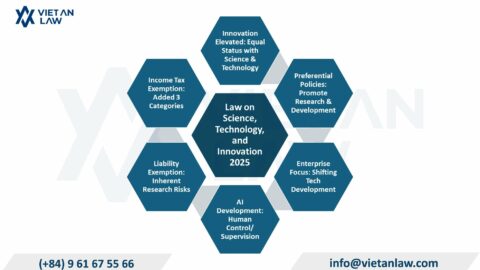
Law on Science, Technology and Innovation 2025 brings breakthrough changes for Vietnam. Discover new policies on innovation, AI control, tax exemptions, and business incentives.
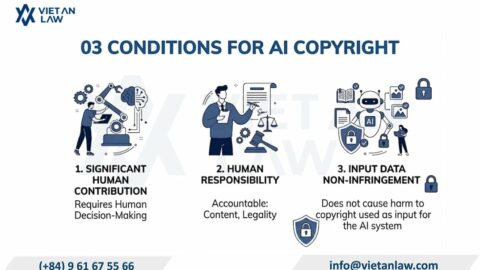
Decree 134/2026/ND-CP on AI copyright in Vietnam: New regulations for AI-generated works, ownership requirements, and data usage for training AI systems. Legal guide for compliance.