(+84) 9 61 67 55 66
info@vietanlaw.vn

Step-by-Step Guide to Company Dissolution in Vietnam

Closing a business in Vietnam is not merely a strategic decision – it is a legally regulated process that must be carried out in full compliance with applicable laws to avoid tax penalties and future liabilities. In practice, many enterprises encounter difficulties in tax finalization, document preparation, and compliance procedures when implementing company dissolution. This article provides a comprehensive and detailed guide to the company dissolution process in Vietnam, helping businesses with step-by-step guide to company dissolution in Vietnam procedures legally, efficiently, and with minimal risk.

Table of contents

Hide

    What is company dissolution?

    Currently, Vietnamese law does not provide a direct statutory definition of company dissolution. However, based on the Law on Enterprises 2020 and its guiding instruments, it can be interpreted as follows:

    Company dissolution is a legal procedure that terminates the existence and legal status of an enterprise, carried out either voluntarily by the business owner or compulsorily by a competent authority.

    This procedure results in the complete withdrawal of the enterprise from the market and the removal of its legal status in the business registration system.

    Common cases of company dissolution in Vietnam

    Pursuant to Article 207 of the Law on Enterprises 2020 (as amended), enterprises may be dissolved in the following circumstances:

    • The expiry of the operating term stated in the company charter without extension
    • Dissolution based on a resolution or decision of the enterprise owner or governing body
    • Failure to maintain the minimum number of members or shareholders for six consecutive months without conversion of business form
    • Revocation of the Enterprise Registration Certificate by competent authorities

    Legal conditions for tep-by-step guide to company dissolution in Vietnam

    To distinguish company dissolution from bankruptcy, enterprises must satisfy the following legal conditions:

    • The enterprise must fully settle all outstanding debts and financial obligations
    • The enterprise must not be involved in any ongoing dispute at a Court or Arbitration
    • In cases of compulsory dissolution, the enterprise and its managers must bear joint liability for outstanding debts

    These conditions are designed to prevent enterprises from abusing dissolution procedures to evade financial obligations.
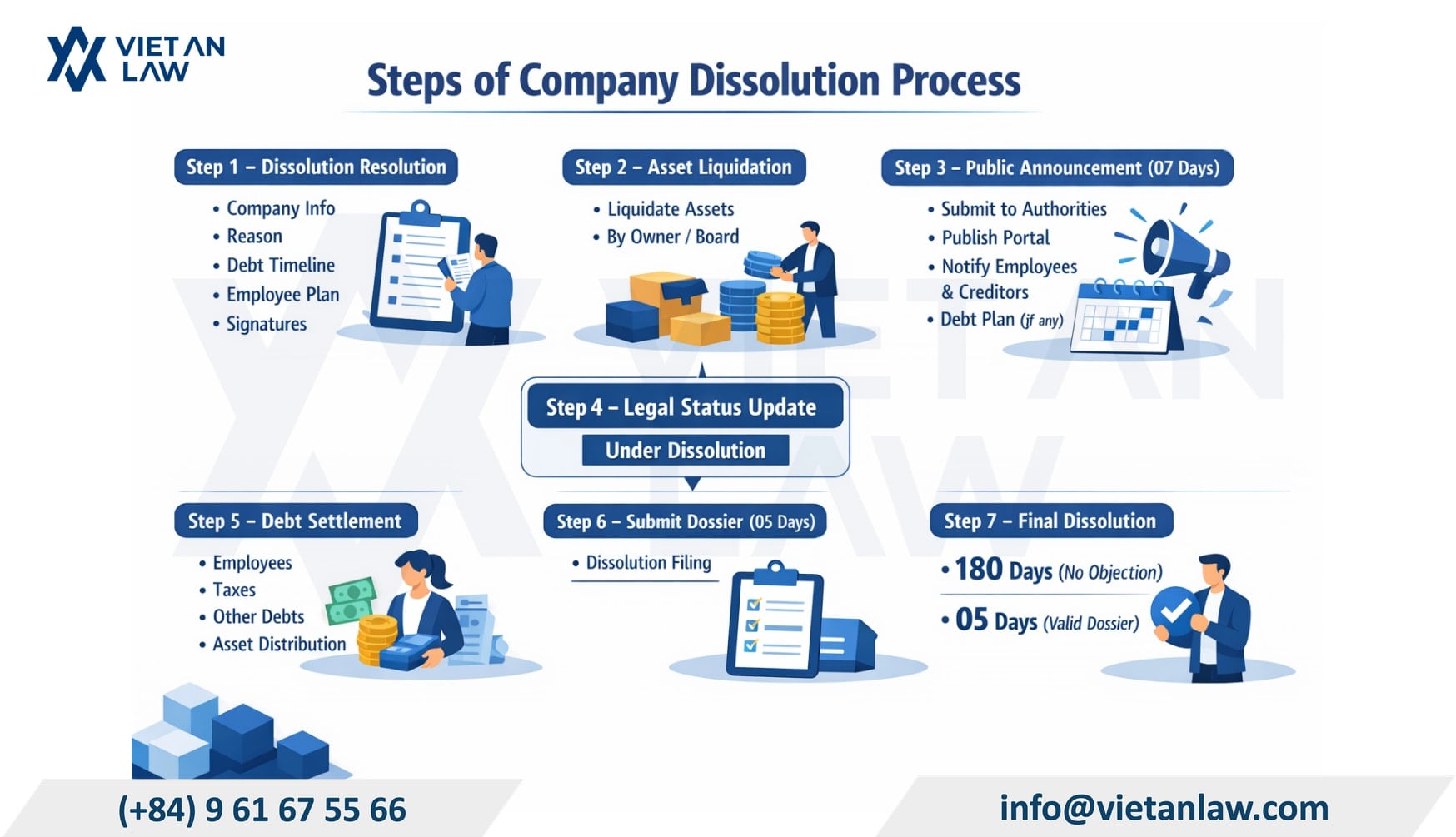
    Step-by-step guide to company dissolution in Vietnam

    Step-by-step guide to company dissolution in Vietnam

    Step-by-step guide to company dissolution in Vietnam

    Step 1 – Adopt the dissolution resolution

    The enterprise must organize a meeting and issue a resolution or decision on dissolution, including:

    • Company name and head office address
    • Reasons for dissolution
    • Timeline and procedures for contract liquidation and debt settlement
    • Plan for handling employee rights and obligations
    • Signatures of competent representatives

    Step 2 – Liquidate company assets

    The enterprise owner, Members’ Council, or Board of Directors shall directly conduct the corporate liquidation process, unless otherwise specified in the company charter.

    Step 3 – Public announcement of dissolution

    Within 07 working days from the date of approval:

    • Submit the dissolution resolution to the Business Registration Authority, tax authority, and employees
    • Publish the decision on the National Business Registration Portal
    • Publicly post the decision at the company’s headquarters and branches

    If the enterprise still has outstanding debts, it must attach a debt settlement plan specifying creditors, amounts, and payment timelines.

    Step 4 – Update company legal status

    Upon receipt of the dissolution decision, the Business Registration Authority will update the company’s status to: “Under dissolution process” on the national database system.

    Step 5 – Settle debts and financial obligations

    The enterprise must settle debts in the following priority order:

    1. Employee salaries, severance pay, social insurance, health insurance, and other benefits
    2. Tax obligations (tax clearance before dissolution)
    3. Other outstanding debts

    After fulfilling all obligations, the remaining assets shall be distributed to owners, members, or shareholders in proportion to their capital contributions.

    Step 6 – Submit dissolution dossier

    Within 05 working days from the completion of debt settlement, the legal representative must submit the company dissolution dossier to the Business Registration Authority.

    Step 7 – Final legal status update

    The enterprise will be officially dissolved in the following cases:

    • After 180 days from the date of public announcement without objections
    • Within 05 working days from the submission of a valid dossier

    Compulsory dissolution (by authorities or court)

    In cases where the enterprise is dissolved by a competent authority or court decision:

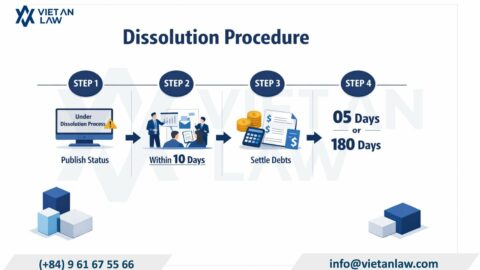
    Key procedures

    • The Business Registration Authority publishes the dissolution status
    • The enterprise must convene a dissolution meeting within 10 days
    • Public notification and creditor communication must be carried out
    • Debt settlement and dossier submission follow the same legal framework

    Required documents for company dissolution in Vietnam

    According to Article 210 of the Law on Enterprises 2020 the required documents for company dissolution in Vietnam include some essential documents:

    • Notice of company dissolution
    • Asset liquidation report
    • List of creditors and confirmation of debt settlement (including tax and insurance obligations)

    A properly prepared dossier is crucial to ensure a smooth business deregistration Vietnam process.

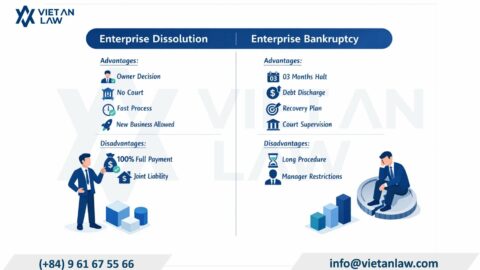
    Company dissolution vs bankruptcy (key differences)

    Criteria Bankruptcy Dissolution
    Nature Judicial procedure Administrative procedure
    Condition Insolvency Must settle all debts
    Authority Court Business Registration Authority
    Outcome Possible restructuring Complete termination

    Important legal notes when establishing guide to company dissolution in Vietnam

    Prohibited actions during dissolution

    From the time the dissolution decision is issued, the enterprise is strictly prohibited from:

    • Concealing or dissipating assets
    • Waiving debt claims
    • Converting unsecured debts into secured debts
    • Entering into new contracts (except for dissolution purposes)
    • Pledging, mortgaging, gifting, or leasing assets
    • Raising capital

    Violations may result in civil liability or criminal sanctions.

    Tax finalization – The most critical step

    Tax procedures are often the most complex aspect of how to close a company legally. Enterprises must:

    • Complete all tax filings (VAT, CIT, PIT)
    • Finalize tax obligations with the tax authority
    • Close the tax identification number
    • Cancel unused invoices

    Failure to complete tax clearance before dissolution may result in prolonged delays or administrative penalties.

    Completing the company dissolution process in Vietnam in compliance with legal requirements is essential to avoid post-dissolution risks. From corporate liquidation steps to final deregistration, each stage must be carried out meticulously. A properly executed dissolution ensures that the enterprise achieves a clean legal exit, safeguarding the rights and interests of all stakeholders. For further information on the guide to company dissolution in Vietnam, please contact Viet An Law!
    Fast & Reliable Legal Assistance
    Fill out the form below and get connected with a lawyer quickly.

      Related Acticle

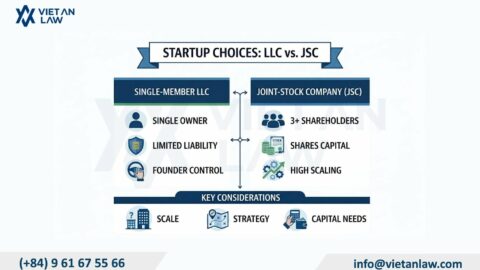
      LLC vs. JSC: Which Business Structure is Best for Startups?

      LLC vs. JSC: Which Business Structure is Best for Startups?

      LLC vs JSC: Which business structure is best for startups? Compare single-member LLC and joint-stock company advantages, capital raising, costs, and tax obligations to choose wisely.
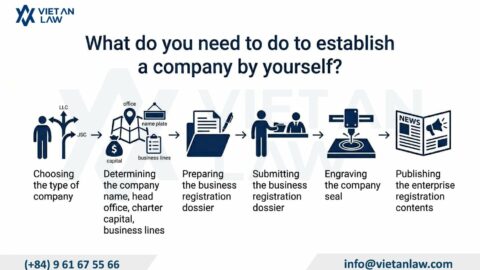
      Step-by-Step Guide: How to Incorporate Your Own Company in Vietnam

      Step-by-Step Guide: How to Incorporate Your Own Company in Vietnam

      Complete step-by-step guide on how to incorporate your own company. Learn business registration procedures, enterprise types, legal requirements, and post-establishment obligations.
      Corporate Reorganization, Dissolution and Bankruptcy under Vietnam Enterprise Law 2020

      Corporate Reorganization, Dissolution and Bankruptcy under Vietnam Enterprise Law 2020

      Corporate Reorganization, Dissolution and Bankruptcy under Vietnam Enterprise Law 2020 explained. Complete guide covering procedures, legal requirements, and choosing between dissolution vs bankruptcy.
      How to Dissolve a Limited Liability Company (LLC) in Vietnam

      How to Dissolve a Limited Liability Company (LLC) in Vietnam

      Learn how to dissolve a Limited Liability Company (LLC) in Vietnam. Complete guide covering legal procedures, required documents, debt settlement, and compliance with Enterprise Law 2020.
      Form an Arts and Entertainment Service Company in Vietnam

      Form an Arts and Entertainment Service Company in Vietnam

      Form an arts and entertainment service company in Vietnam with our complete 2025 guide. Learn legal requirements, licensing procedures, and SME tax incentives.

      CONTACT VIET AN LAW

      In Hanoi: (+84) 9 61 67 55 66
      (Zalo, Viber, Whatsapp, Wechat)

      WhatsApp Chat

      whatsapp-1

      In Hochiminh: (+84) 9 61 67 55 66
      (Zalo, Viber, Whatsapp, Wechat)

      WhatsApp Chat

      whatsapp-1

      ASSOCIATE MEMBERSHIP