Trademark Refusal Appeal Services in Vietnam (2026): Expert Legal Support
Receiving a refusal notice from the intellectual property office is a significant but common hurdle for businesses seeking trademark registration in Vietnam. Causes often include the trademark being evaluated as identical or confusingly similar to an existing mark, failing to meet statutory conditions for trademark protection, or containing deficiencies within the application dossier. However, in most instances, applicants retain the legal right to challenge this decision to safeguard their legitimate interests. If you are facing this regulatory obstacle, trademark refusal appeal services in Vietnam (2026): expert legal support provides the strategic intervention necessary to overcome it. In practice, appealing a trademark refusal is not merely an administrative formality but an in-depth legal process that requires:
Accurate analysis of the refusal grounds
Development of persuasive legal arguments
Preparation of comprehensive supporting evidence
Assessment of the success probability before submitting the appeal
If improperly executed, the appeal petition may be rejected, resulting in the complete loss of the opportunity for trademark protection. Therefore, selecting professional trademark registration services and appeal support is the optimal solution to accurately assess appeal viability, formulate appropriate legal strategies, increase the approval rate for granting the protection title, save time, and mitigate risks. With practical experience in processing intellectual property dossiers, Viet An Law – a leading Viet Nam law firm – provides comprehensive support, from analyzing the refusal notice and preparing the appeal dossier to representing clients before state authorities, maximizing the capability to protect your trademark rights in Vietnam.
When a trademark is refused, do not abandon the application immediately; proper evaluation and an appropriate appeal are necessary to protect your rights.
Cases of refusal for trademark registration
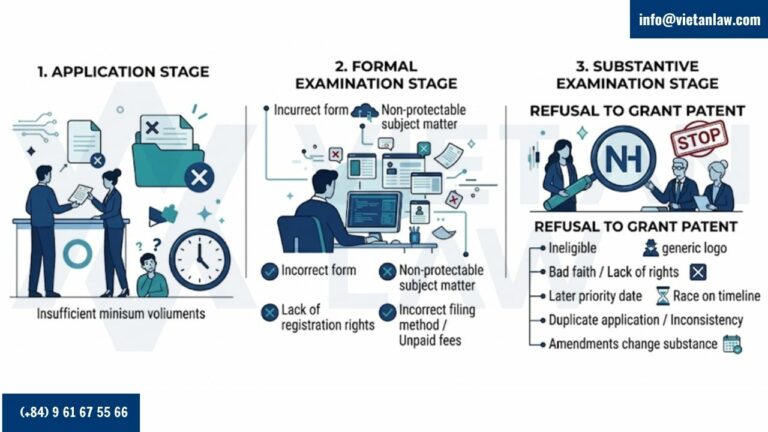
Under the Law on Intellectual Property 2005, amended in 2009, 2019, 2022, and 2025 (hereinafter referred to as the Law on IP) and Circular 10/2026/TT-BKHCN, during the processing of a trademark registration application, the competent authority may refuse to accept the application or refuse to grant a protection title if the application fails to meet statutory conditions. Refusals can occur at various stages of the examination process, including the submission phase, formal examination, and substantive examination. Specifically:
Application submission stage
Pursuant to Clause 3, Article 70 of Circular 10/2026/TT-BKHCN, if an application lacks any of the minimum required documents, the receiving officer shall:
Refuse to accept the application; or
Send a notice of refusal to accept the application from the National Office of Intellectual Property to the applicant (if the application is filed via postal service or electronically via the online filing system).
For applications submitted via postal service that are refused acceptance, the National Office of Intellectual Property is not required to return the application documents to the applicant, except for original documents submitted for verification purposes.
Formality examination stage
According to Clause 2, Article 109 of the Law on IP, as guided by Article 71 of Circular 10/2026/TT-BKHCN, an industrial property registration application is deemed invalid in the following cases:
The application does not meet the formal requirements;
The subject matter stated in the application is an unprotectable subject matter;
The applicant does not have the right to register, including cases where the registration right jointly belongs to multiple organizations or individuals, but one or more of them do not agree to the filing;
The application is filed contrary to the regulations on filing methods;
The applicant fails to pay the required state fees.
In these instances, the National Office of Intellectual Property will issue a notice on the formal examination results, explicitly stating the intention to refuse the application due to invalidity. The notice content typically includes:
Name and address of the applicant;
Name of the authorized representative (if any);
Name of the subject matter stated in the application;
Filing date and application number;
Reasons and deficiencies leading to the intended refusal.
Simultaneously, the notice will set a time limit of 02 months from the date of issuance for the applicant to submit an opinion or correct the deficiencies.
Substantive examination stage (most important)
This is the decisive stage determining whether a trademark will be granted trademark protection. Common grounds for refusal include:
The trademark does not meet the protection conditions
The trademark is identical or confusingly similar
The applicant lacks the right to register or registers with bad faith
The application does not possess the earliest priority date
There are multiple identical applications without consensus among applicants
Amendments to the application alter the inherent nature of the trademark
Response process for refusal of trademark protection
The National Office of Intellectual Property issues a notice of intended refusal
Response time limit: 02 months
If the applicant fails to respond or the response is invalid → an official refusal decision is issued.
Important notes when a trademark is refused
Do not abandon the application immediately upon refusal
Accurately identify the root cause of the refusal
Prepare clear legal arguments and evidence
Possible handling methods include:
Explanation
Amending the scope of registration
Appealing the refusal decision
In practice, many cases can still be approved if handled properly.
Optimal solutions when a trademark is refused
Handling a trademark refusal requires profound legal expertise and practical experience. Therefore, utilizing services from professional entities like Viet An Law will help to:
Accurately analyze the refusal reasons
Develop rigorous legal arguments
Increase the approval rate for granting the protection title
Save time and costs
Understanding the cases of refusal for trademark registration is a crucial step to proactively mitigate risks and enhance brand protection capabilities in Vietnam.
Right to appeal upon refusal of trademark registration in Vietnam
During the trademark registration process in Vietnam, receiving a refusal notice or decision does not equate to a complete loss of registration rights. Under current legal regulations, the applicant has full authority to file a trademark refusal appeal to protect their lawful rights and interests.
Quick summary of trademark appeal rights
The applicant has the right to appeal or initiate a lawsuit in Court
Applicable to: refusal notices or decisions issued by the National Office of Intellectual Property
Implemented in accordance with the Law on IP and Circular 10/2026/TT-BKHCN
Appeals can be filed for a first time or a second time
Success rates depend on legal arguments & evidence
Conclusion: A refusal is not the end-appealing correctly can overturn the result.
Right to appeal when trademark registration is refused
According to intellectual property law, the applicant and directly related organizations or individuals have the right to:
Appeal against the decision or notice regarding the processing of the trademark registration application
Initiate a lawsuit in Court if they disagree with the appeal resolution result
Decisions and notices subject to appeal include:
Notice of refusal to accept the application
Decision to refuse acceptance of the application
Decision to refuse the grant of a protection title.
Procedures for a trademark refusal appeal in Vietnam
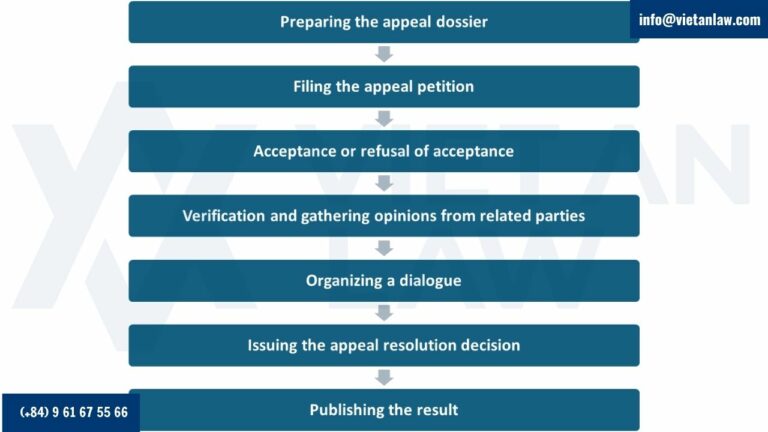
The trademark appeal process is executed through several strict steps:
Preparing the appeal dossier
An appeal dossier must include:
The appeal petition in the prescribed form
A copy of the contested decision/notice
Supporting documents and legal arguments
A copy of the relevant trademark registration application
Note: Additional evidence can be submitted within 01 month after filing the petition.
Filing the appeal petition
Domestic individuals/organizations: file directly or through an authorized representative
Foreign organizations and individuals: mandatory filing through a legal representative in Vietnam
Acceptance or refusal of acceptance
Within 10 days, the competent authority shall:
Accept the appeal petition for processing; or
Refuse acceptance (if unqualified)
Cases of refusal for acceptance:
The appeal targets the wrong subject
No direct relation to legal interests
Filing beyond the statutory time limit
Lack of clear legal grounds
Verification and gathering opinions from related parties
Time limit for gathering opinions: 01 month
Appellant’s response time limit: 02 months
This is a critical step to reinforce legal arguments.
Organizing a dialogue (if necessary)
In cases of disputes or a lack of consensus:
The competent authority organizes a dialogue
Clarifies the content and the direction for resolution.
Issuing the appeal resolution decision
The competent authority will:
Review the entire dossier
Issue a decision to accept the appeal or uphold the refusal
Publishing the result
Publication on the Web Portal: 15 days
Publication in the Industrial Property Official Gazette: 02 months
Important notes when appealing a trademark in Vietnam
Accurately determine the exact reason for refusal
Prepare rigorous legal arguments
Provide convincing evidence
Strictly comply with the appeal time limit
If improperly executed, the probability of the appeal being rejected is very high.
Optimal solutions when appealing a trademark
In practice, executing a trademark refusal appeal requires profound expertise and practical experience. Therefore, utilizing services from a reputable Viet Nam law firm like Viet An Law will help to:
Assess the probability of success prior to appealing
Develop an effective legal strategy
Prepare a correct and complete dossier
Increase the approval rate for granting the protection title
Conclusion: The right to appeal is a vital legal tool helping businesses maintain trademark protection upon refusal. Understanding the process and executing it correctly directly dictates the likelihood of success.
Special crucial considerations for your trademark refusal appeal
Pay attention to the statute of limitations for appeals
The applicant must execute the appeal within the statutory time limit from the date of receiving or becoming aware of the contested decision or notice. Filing an appeal petition beyond this time limit can lead to the competent authority’s refusal to accept the case. Therefore, applicants must closely monitor notices from the National Office of Intellectual Property to promptly exercise their right to appeal.
Appeal arguments must have clear legal grounds
In many instances, a refusal decision is issued because the trademark fails to meet protection conditions, has the potential to cause confusion with a previously registered trademark, or possesses descriptive characteristics.
Thus, when conducting an appeal, the applicant must specifically analyze the relevant legal provisions, while concurrently providing arguments and evidence proving that the trademark still fulfills the conditions for trademark protection under the law.
Prepare comprehensive documents and supporting evidence
Evidence may include documents proving the trademark’s distinctiveness, evidence of actual trademark usage, comparative documents against cited marks, or other relevant materials.
Preparing sufficient and appropriate evidence will reinforce the appeal arguments and increase the likelihood of acceptance.
Appeal procedures in the industrial property sector frequently demand deep comprehension of legal regulations as well as practical examination practices at the competent authority.
Consequently, engaging the services of an industrial property representation organization or an experienced legal consulting unit will assist in accurately evaluating the appeal viability, constructing an appropriate argumentative strategy, and mitigating potential legal risks.
Related questions – trademark refusal appeal
What can be done when a trademark is refused?
When a trademark is refused, the applicant can:
Amend or supplement the dossier
Provide explanations to the examining authority
File a trademark refusal appeal against the decision
Or submit a new registration application
The selection of the appropriate option depends on the underlying cause of the refusal.
How long is the time limit for appealing a trademark registration refusal?
Normally:
First-time appeal: 90 days from the date of receiving the decision
Second-time appeal: subject to subsequent statutory regulations
Exceeding the time limit forfeits the right to appeal.
Does appealing a trademark incur fees?
Yes. The appellant must pay:
Re-examination fees
Search fees (if any)
Service fees (if hiring a consulting unit)
Fee levels vary depending on the dossier’s complexity.
What is the success rate for a trademark appeal?
There is no fixed percentage; however, it depends on:
The degree of trademark identicality/similarity
The quality of legal arguments
The evidence provided
A robust dossier can successfully overturn a refusal decision.
Should I appeal by myself or hire a service?
Self-execution is possible, but not recommended because:
Legal dossiers are highly complex
Arguments are easily flawed
The rejection rate is high
Using specialized IP legal consulting services from an entity like Viet An Law significantly increases the success rate.
When should I appeal instead of filing a new application?
An appeal is advisable when:
The trademark possesses high protectability
The refusal stems from an inaccurate assessment
There are sufficient legal grounds for rebuttal
If the mark is clearly identical → filing a new application is recommended.
How long does a trademark appeal take to yield results?
Processing time typically spans:
From 2 to 6 months depending on complexity
Potentially longer if a dialogue or supplementary evidence is required
Can a trademark refused due to duplication be appealed?
Yes, if it can be proven that:
It does not cause confusion
There are structural or semantic differences
Or it has been widely used in the market
Can evidence be supplemented after filing an appeal?
Yes. The applicant may:
Supplement documents within the prescribed time limit
Provide additional evidence to strengthen the legal arguments
If the appeal fails, what is the next step?
You may:
File a second-time appeal
Initiate a lawsuit in Court
Or re-register a new trademark.
Reputable trademark registration services and appeal support in Vietnam (2026)
During the trademark registration process in Vietnam, receiving a refusal notice or decision is not an uncommon scenario. However, if handled correctly, applicants can absolutely execute a trademark refusal appeal to safeguard their legitimate interests and enhance the probability of obtaining a protection title.
Featuring a team of seasoned lawyers and experts in intellectual property law, Viet An Law provides specialized trademark registration services and appeal support, assisting clients in precisely evaluating the likelihood of success and building an effective legal strategy.
Trademark appeal services at Viet An Law include:
Consulting & assessing appeal viability: Detailed analysis of the refusal decision, identifying appeal opportunities and suitable handling methods.
In-depth legal basis analysis: Evaluating legal regulations alongside the practical examination practices of the intellectual property authority.
Drafting comprehensive appeal dossiers: Preparing appeal petitions, rigorous legal arguments, and a persuasive evidence system.
Representing clients before state agencies: Submitting dossiers and negotiating directly with the National Office of Intellectual Property on behalf of the client.
Continuous tracking and consulting: Updating on processing progress and proposing subsequent legal solutions when necessary.
Why use trademark appeal services?
Increases the probability of being granted a protection title
Reduces the risk of appeal rejection due to flawed arguments
Saves time and dossier processing costs
Backed by experts with profound practical understanding
Contact for trademark appeal consulting and trademark registration services
Drawing on extensive practical experience in processing registration and protection dossiers, Viet An Law is committed to accompanying clients in effectively and sustainably defending their intellectual property rights.
Contact 09 61 37 18 18 today to receive:
Free consultation on appeal viability
Development of optimal handling strategies
Prompt and professional support
Utilizing expert IP legal consulting for a trademark refusal appeal is a vital solution enabling businesses to seize every opportunity for brand protection. Selecting the right Viet Nam law firm will directly dictate your success. We hope our trademark refusal appeal services in Vietnam (2026): expert legal support provides the definitive pathway forward for your brand’s legal security.
Fast & Reliable Legal Assistance
Fill out the form below and get connected with a lawyer quickly.
Can AI receive industrial property protection in Vietnam? Learn the legal requirements, significant human contribution criteria, and registration procedures under Decree 100/2026.
Learn how to Register Industrial Design in Vietnam for food processing businesses. Complete guide covering procedures, requirements, fees, and legal protection for your products.
Vietnam Trademark Registration for Korean cosmetics & retail brands. Complete guide to trademark classification, legal protection, and registration services to combat counterfeits.