Spain is becoming an attractive destination for foreign investors. Setting up a company here not only opens the door to the vast European market, but also brings many significant benefits. First, this Spain possesses a skilled and highly qualified workforce, along with modern infrastructure, which facilitates business activities. In addition, Spain is also part of the European Union, which allows companies to access the broad single market and benefit from free trade agreements. However, there are some notes when setting up a company in Spain that investors should note below.
Notes on the charter capital when setting up a company in Spain
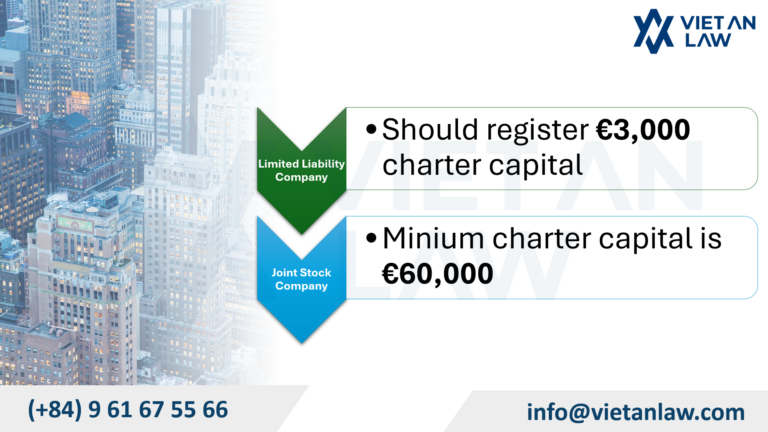
When setting up a company in Spain, charter capital is an important factor to keep in mind. The minimum charter capital depends on the type of company you choose to establish. The two most common types of investors when established are
- Limited Liability Company (Sociedad de Responsabilidad Limitada – S.L. or S.R.L.): Since Law 18/2022 (the “Law on Business Creation and Development” – Ley Crea y Crece) came into force at the end of 2022, the minimum charter capital to establish an S.L. company. has been reduced to just 1 Euro (€1). However, there are important notes if the capital contribution is less than €3,000:
- Mandatory reserves: The company must set aside a legal reserve equal to 20% of its profits until the total value of this reserve and its charter capital reaches €3,000.
- Profit Distribution Restrictions: Profits can only be distributed to shareholders if the net asset value is not lower than or does not become less than €3,000 after distribution.
- Joint liability: In the event that the company is dissolved due to insufficient assets to pay its debts, the shareholders will be jointly and severally liable for the difference between the €3,000 capital and the actual contributed capital.
- €3,000 is still popular: Despite the €1 minimum, many companies still choose to contribute €3,000 in the first place to avoid the above binding and complicated regulations, as well as to create a better reputation with partners and banks.
- Joint Stock Company (Sociedad Anónima – S.A.): The minimum charter capital to establish is €60,000 and the investor must contribute at least 25% of the charter capital (€15,000) at the time of incorporation.
Notes on applying for an investment license when setting up a company in Spain
Depending on the type and field of investment, investors will have to apply for an investment license.
General principles of investing in Spain
Spain follows the principle of foreign investment liberalization. This means that most foreign investments do not need to obtain a license for prior approval from the Spanish government. This principle applies to both investors from the EU/EFTA and investors from third countries (outside the EU/EFTA).
Exceptions to the need to apply for an investment license
However, there are important exceptions that foreign investors must obtain approval before making an investment. This mechanism is called “FDI Screening”, in recent years, the mechanism has been increasingly tightened through Royal Decree 571/2023 – Real Decreto 571/2023) specifically as follows:
- Investing in Strategic Areas:
- Target of application: Mainly investors from third countries (outside the EU/EFTA). Investors from the EU/EFTA may also be subject if they are controlled by an entity outside the EU/EFTA.
- Investment threshold: When the investment results in the investor holding 10 % or more of the shares of the Spanish company, or gaining control of the company.
- Areas considered strategic include (but are not limited to): Critical infrastructure (energy, transportation, water, health, communications, data storage/processing, aerospace, defense, finance, elections, etc.); Critical technologies and dual technologies (artificial intelligence – AI, robots, semiconductors, cybersecurity, quantum technology, nuclear, biotechnology…); Security provides essential inputs (energy, raw materials, food security); Areas with access to sensitive information (personal data); Communication.
- Investing in Defense Sectors:
- Object of investment: Any company whose main or significant part of the activity is related to the production and trading of weapons, ammunition, military equipment, defense technology, or the provision of essential services to the armed forces and national security.
- Contrary to the general liberalization principle, almost all forms of foreign investment in companies or activities directly related to National Defense require prior approval from the Ministry of Defense.
Notes on tax filing obligations when setting up a company in Spain
Corporate Income Tax (IS)
The standard tax rate is currently 25%, however, newly established companies can enjoy a preferential rate of 15% for the first two years of profit (with conditions). IS declarations are made annually through the Modelo 200 return, which is usually filed by July 25 if the fiscal year ends on December 31. Notably, the company also has to make tax payments (pagos fraccionados) three times a year (April, October, December) through Modelo 202 returns based on previous business results. Taxable profits will be based on accounting books according to Spanish standards, after adjustments have been made according to tax law.
Value Added Tax (IVA)
This is the consumption tax that the company collects from customers and revolves back to the state after deducting the IVA paid to the supplier. The company needs to register for an IVA and declare periodically, usually quarterly, via Modelo 303 declaration (with deadlines on April 20, July, October and January 30 for the last quarter of the year). IVA tariff rates include 21% (standard), 10% and 4% (for preferential goods/services). In addition, investors need to file a full-year IVA summary (Modelo 390) early next year.