Procedures for incorporation of a company in India
India, as one of the world’s fastest-growing economies and a vast market of more than 1.4 billion people, is emerging as an attractive destination for international businesses. Setting up a company in India not only provides access to a huge consumer market with diverse needs but also brings many significant competitive advantages. The Indian market is full of potential with the world’s second largest population, creating a vast consumer market with diverse needs. A growing middle class with a high disposable income, driving the demand for goods and services. India’s rapid economic growth has also created many new business opportunities for businesses. India’s strategic geographical location is an important bridge between East and West, facilitating access to nearby markets. India can be a gateway to access other developing markets in the South Asian region. In conclusion, setting up a company in India offers many opportunities and advantages for businesses. Viet An Law would like to guide you through the procedures for establishing a company in India through the article below.
Documents Required When Carrying Out Company Incorporation Procedures in India
In order to make the process of registering a company in India smooth and fast, the government has implemented the SPICe (Simplified Proforma for Incorporating a Company Electronically) platform – a business registration system that makes it easy for businesses to complete the necessary legal procedures. SPICe supports steps such as registering a company name, applying for a Director Identification Number (DIN) and simultaneously issuing a Permanent Resident Account Number (PAN) and Tax Deduction and Collection Account Number (TAN) to the newly established company. Below is a list of documents that shareholders and directors need to prepare during the company registration process:
Required documents from shareholders and directors
Identity card:
PAN Card (required)
Alternatively, one of the following documents can be used: Aadhaar Card, Passport, Driver’s License, or Citizen Identity Card.
Other proofs:
Recent phone or mobile bill
Recent electricity or water bill
Bank account statement or bank statement (within the last 2 months)
Passport-size photo: 3 photos/person
Important note
All documents must be self-certified by the submitter himself.
Papers, especially electricity and water bills, telephone bills, need to be valid and not more than 2 months to comply with regulations.
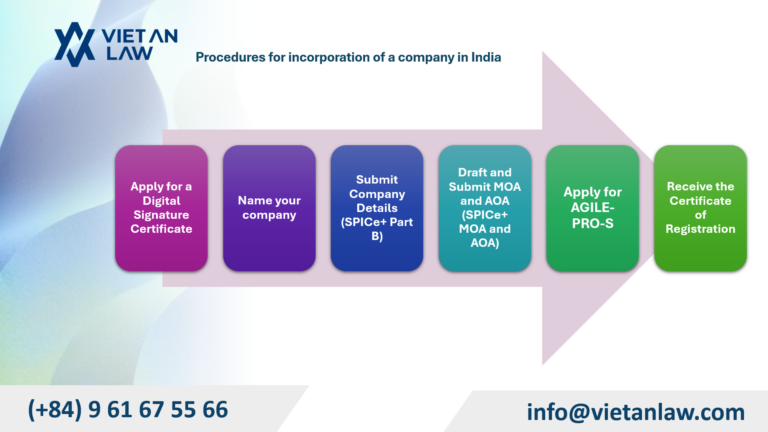
Step 1: Apply for a Digital Signature Certificate (DSC)
The application for a DSC Digital Signature Certificate is mandatory to electronically sign documents submitted to the Ministry of Enterprises (MCA).
Process: Apply for a DSC through DSC-granting bodies authorized by the Department of Control of Certification Bodies (CCA).
Requirements for Indian Citizens: Passport size photo, PAN card, Aadhaar Card (for address verification), phone number, and email.
Requirements for foreigners: Passport-size photo, notarized and consular legalized copy of passport and proof of address.
Step 2: Name your company
Process: Complete the SPICe+ Part A form on the MCA portal, providing information about the type of company, areas of operation, and a brief description of the business.
Note: Submit two proposed names in order of priority, ensure compliance with naming regulations and do not infringe on trademarks.
Step 3: Submit Company Details (SPICe+ Part B)
Provide necessary information: Charter capital, address of the registered office, information about shareholders and directors, registration tax, application for PAN and TAN.
Declaration of Compliance: The Declaration of Compliance with the Companies Act 2013 needs to be signed electronically by a Chartered Accountant, Company Secretary, Cost Accountant or Solicitor.
Step 4: Draft and Submit MOA and AOA (SPICe+ MOA and AOA)
Charter (MOA): Defines the company’s objectives, activities, and scope, as well as the relationship between the company and the outside world.
Articles of Association (AOA): Regulations on the internal management of the company, including the roles and responsibilities of directors and the rights of shareholders.
Note: MOA and AOA need to be submitted with the digital signatures of shareholders and witnesses.
Bước 5: Apply for AGILE-PRO-S
Register for Value Added Tax (GST), Employee Contingency Fund (EPFO), Employee State Insurance (ESIC), open a bank account, and apply for a business license (depending on the state).
Process: Submit along with the SPICe+ form, which simplifies post-incorporation procedures.
Step 6: Receive the Certificate of Registration
Once all documents and forms are verified, the MCA will issue a Certificate of Registration (COI), which includes the Company Identification Number (CIN), PAN, and TAN.
Fast & Reliable Legal Assistance
Fill out the form below and get connected with a lawyer quickly.
Vietnam's draft Commercial Law 2026 removes the 8% contract penalty cap, allowing unlimited breach penalties. Learn how this affects your contracts, liquidated damages clauses, and dispute strategy.
Electronic employment contract Vietnam: Complete guide to Circular 08/2026/TT-BNV key updates on ID codes, eContract platform access, and digital labor contract requirements effective July 2026.
Can you dissolve a company with a locked tax code in Vietnam? No—but dissolution is possible after restoring tax compliance. Learn the legal requirements, costs, timeline, and step-by-step procedures to…
Capital contributing members in law firms Vietnam: Draft Law on Lawyers 2026 allows non-lawyer investors in limited liability law firms for the first time. Effective March 2027.
Avoid costly employment contract mistakes in 2026. Expert guide covers Labor Code 2019 compliance, contract types, social insurance, and common violations. Professional labor law consultancy from Viet An Law.