From January 1st, 2026, the reduction based on family circumstances will be applied according to new regulations: 15.5 million VND per month for taxpayers and 6.2 million VND per month for each dependant. Viet An Law has received many questions regarding 2025 salary paid in Jan 2026: Which PIT deduction rate applies in Vietnam? Viet An Law will now advise and answer this question for our clients.
Based on Article 2, Resolution 110/2025/UBTVQH15, the effective date is stipulated as follows:
“This Resolution comes into force from January 01, 2026 and is applied from the tax period of 2026.”
At the same time, Clause 8, Article 4, Law on tax administration 2025 stipulates:
“The tax period and the period for calculating other revenues means a period of time used to determine tax liabilities and other that must be paid towards the state budget in accordance with provisions on taxation, tax administration, and other relevant legal regulations, including periods for each occurrence, monthly, quarterly, annually, or settlement periods.”
Therefore, the time of determining taxable income for salaries and wages is the time when the organization or individual pays the taxpayer.
Therefore, when enterprises pay salaries for December 2025 and 13th-month bonuses for the previous year in 2026, these incomes will be taxable income from the 2026 tax year, and the new personal income tax deduction rate according to Resolution 110/2025/UBTVQH15 (effective from January 1, 2026) will apply.
According to Clause 1, Article 19, Law on personal income tax 2007, amended by Clause 4, Article, Law on personal income tax 2012, reduction based on family circumstances is the amount of money deducted from the taxable income before calculating tax on incomes from business, or wages earned by the resident taxpayer.
Reduction based on family circumstances consists of:
The reduction based on family circumstances stipulated for each period are applied as follows:
| Subject of deduction | Law on Personal Income Tax 2007 | Resolution 954/2020/UBTVQH14 (from July 1, 2020) | Resolution 954/2020/UBTVQH14 (from July 1, 2020) |
| The taxpayer | 4 million VND /month | 11 million VND /month | 15.5 million VND /month |
| Each dependant of the taxpayer | 1.6 million VND /month | 4.4 million VND /month | 6.2 million VND /month |
Therefore, according to current regulations, from January 1, 2026, based on Article 1, Resolution 110/2025/UBTVQH15, the reduction based on family circumstances will continue to be adjusted as follows:
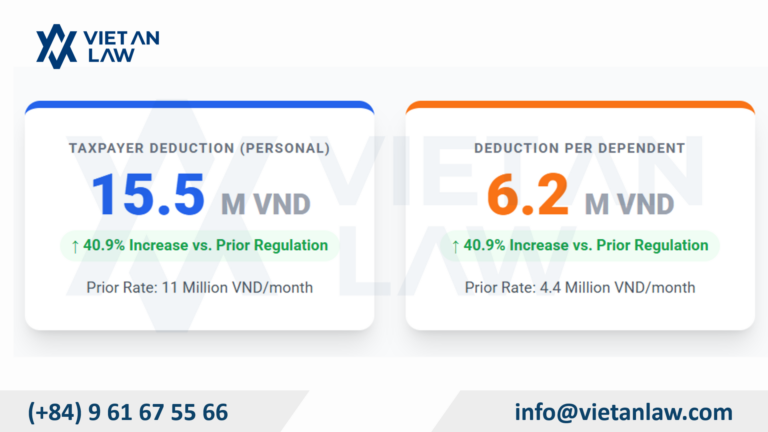
Reduction based on family circumstances from January 1, 2026
Accordingly, when enterprises pay salaries/bonuses to employees after January 1, 2026, the tax deduction for personal income tax on these payments will be calculated according to the newly applied rate, increasing reduction based on family circumstances by nearly 41% compared to the reduction before 2026.
The new reduction based on family circumstances in Resolution 110/2025/UBTVQH15 is based on the growth rate of average per capita income and average per capita GDP from 2020 to the present (approximately 40-42%). The application of this increased reduction based on family circumstances is expected to contribute to a greater reduction in tax obligations for taxpayers compared to adjustments based on the CPI index, helping people benefit from socio-economic development.
According to Clause 1, Article 7, Circular 111/2013/TT-BTC, amended by Clause 6, Article 25, Circular 92/2015/TT-BTC, the method for calculating personal income tax on income from salaries and wages is as follows:
PIT = Taxed income x Tax rate
Including:
Taxed income = Taxable income – (Reduction based on family circumstances + Insurance contributions, voluntary retirement funds + Reduction for charity or humanitarian donations)
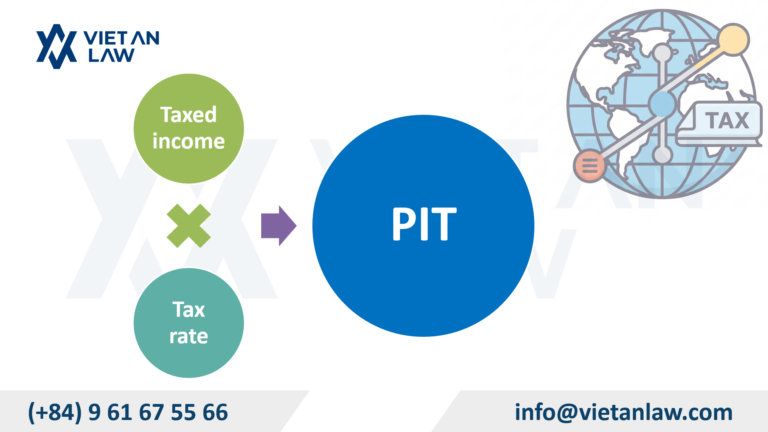
How to calculate taxed income from salaries and wages
The personal income tax rates for income from business activities, salaries, and wages are applied according to the progressive tax rate schedule stipulated in Article 22, Law on personal income tax 2007 as follows:
| Tax grade | Taxed income per year (VND million) | Taxed income per month (VND million) | Tax rate (%) |
| 1 | Up to 60 | Up to 5 | 5 |
| 2 | Between over 60 and 120 | Between over 5 and 10 | 10 |
| 3 | Between over 120 and 216 | Between over 10 and 18 | 15 |
| 4 | Between over 216 and 384 | Between over 18 and 32 | 20 |
| 5 | Between over 384 and 624 | Between over 32 and 52 | 25 |
| 6 | Between over 624 and 960 | Between over 52 and 80 | 30 |
| 7 | Over 960 | Over 80 | 35 |
Thus, personal income tax on income from salaries and wages is the total tax calculated according to each income grade. The tax calculated according to each income grade is equal to the taxed income of that grade multiplied by the corresponding tax rate of that grade.
For convenience in calculation, the simplified calculation method according to Appendix No. 01/PL-TNCN issued with Circular 111/2013/TT-BTC can be applied as follows:
| Level | Assessable income/month | Tax rate | Tax payable | |
| Method 1 | Method 2 | |||
| 1 | Up to 5 million VND | 5% | 0 million VND + 5% of assessable income | 5% of assessable income |
| 2 | From over 5 million VND to 10 million VND | 10% | 0.25 million VND + 10 % of assessable income in excess of 5 million VND | 10% of assessable income – 0.25 million VND |
| 3 | From over 10 million VND to 18 million VND | 15% | 0.75 million VND + 15 % of assessable income in excess of 10 million VND | 15% of assessable income – 0.75 million VND |
| 4 | From over 18 million VND to 32 million VND | 20% | 1.95 million VND + 20 % of assessable income in excess of 18 million VND | 20% of assessable income – 1.65 million VND |
| 5 | From over 32 million VND to 52 million VND | 25% | 4.75 million VND + 25 % of assessable income in excess of 32 million VND | 25% of assessable income – 3.25 million VND |
| 6 | From over 52 million VND to 80 million VND | 30% | 9.75 million VND + 30 % of assessable income in excess of 52 million VND | 30% of assessable income – 5.85 million VND |
| 7 | From over 80 million VND | 35% | 18.15 million VND + 35 % of assessable income in excess of 80 million VND | 35% of assessable income – 9.85 million VND |
According to Clause 3, Article 19, Law on personal income tax 2007, dependants of a taxpayer means persons a taxpayer is responsible for nurturing or taking care of, including:
According to point c.2, clause 1, Article 9, Circular 111/2013/TT-BTC, the determination of dependants must ensure the following principle:
This is advice regarding 2025 salary paid in Jan 2026: Which PIT deduction rate applies in Vietnam? If you have any related questions or require advice on taxes or invoices, please contact Viet An Law for the best advice and support!