Norway, a Nordic country known for its prosperity and majestic natural landscapes, is increasingly becoming an attractive investment option for investors. Norway’s ability to innovate in pioneering fields such as renewable energy, green technology, marine and aquaculture, are the core factors that attract international investors looking for sustainable and long-term development opportunities. The procedure for establishing a company in Norway will become time-saving and cost-saving if investors understand the establishment process, Viet An Law would like to provide information to customers through the article below.
Norway has many different types of businesses, each with its own unique advantages, disadvantages, and requirements. Here are details about the two most common types and some others:
Aksjeselskap (AS): Private Limited Liability Company/ Private Joint Stock Company
Essence: An AS is an independent legal entity, which exists completely separate from the owner (shareholder). This means that the company has its own assets, rights and obligations, independent of the personal assets of the capital contributors.
Liability: Owners (shareholders) are only liable for the company’s debts and obligations to the extent of the capital they have committed or contributed to the company. Shareholders’ personal assets are protected and cannot be used to pay the company’s debts in the event of financial difficulties or bankruptcy.
Charter Capital: The minimum share capital requirement to form an AS is NOK 30,000 (Norwegian Kroner).
Management structure: It is mandatory to have at least one Director (Styrets leder). If the charter capital is NOK 3 million or more or the company has more than 50 employees, it is mandatory to have a Board of Directors (Styret) consisting of at least three members.
Suitability: The AS type is very suitable for medium and large-sized businesses, businesses that plan to develop and expand, have a certain level of risk, or need to raise capital from external investors. It creates professionalism and transparency, makes it easier to attract capital, and separates business risks from personal assets.
Enkeltpersonforetak (ENK): Private Enterprise
Essence: ENK is the simplest type of business, owned and operated by a single individual. There is no legal separation between the owner and the business.
Liability: The core difference of ENK is the unlimited liability of the owner. This means that the owner is liable with all of his personal assets for all debts and financial obligations of the business.
Charter capital: There is no minimum charter capital requirement when establishing an ENK.
Suitability: ENK is the right choice for independent business individuals, freelancing activities, consulting services, or small business ventures.
Norway also has other legal forms as follows:
Norskregistrert utenlandsk foretak (NUF): This is a form of registration for a branch or representative office of a company that has been legally established and registered abroad that wants to do business in Norway. The overseas parent company will be legally responsible for the NUF branch.
Ansvarlig selskap (ANS/DA): Partnership: Established by two or more people/businesses in joint ventures. Partners are jointly responsible for the company’s obligations. With ANS (Ansvarlig selskap), partners are infinitely and severally responsible. With DA (Delt ansvar), liability is limited (usually indefinite, but shared in proportion to capital contribution or other agreement between partners).
Samvirkeforetak (SA): Cooperative: It is a type of business that is owned and operated by members (usually employees or customers) for the common benefit of those members. Profits are usually redistributed to members or reinvested in the cooperative.
Preparation of information to carry out the procedures for setting up a company in Norway
Company Name
You need to choose a company name that satisfies the conditions for registration as unique and has not been used by any other business in Norway. For the Aksjeselskap (AS) type, it is mandatory for the company name to contain the phrase “Aksjeselskap” or the abbreviation “AS” at the end of the name. The name must be clear, not confusing, and comply with Norwegian business naming regulations.
To check the availability of the name, you can access and search the online database of the Brønnøysund Register Centre (Brønnøysundregistrene) via the following link: https://www.brreg.no/en/?nocache=1745806090730
Apply for a Norwegian Identification Number
In order to establish a legal business in Norway, all individuals who hold a key role in the business are required to have a Norwegian-issued personal identification number. This number is essential for Norwegian public authorities, including the Business Registration Centre (Brønnøysundregistrene) and the Tax Authority (Skatteetaten), to be able to accurately identify the individuals involved when processing registration documents, tax administration, and other legal matters. Individuals in this category include:
Sole proprietorship of a Private Enterprise (Enkeltpersonforetak – ENK).
Founding members, major shareholders (holding a significant proportion), members of the Board of Directors and members of the Board of Directors of a Private Limited Liability Company (Aksjeselskap – AS).
And individuals with other important management or legal roles depending on the specific type and structure of the business.
Norway has two main types of identifiers that these individuals can possess:
National identity number
D-number
Number Type
This is an 11-digit national identification number, issued to Norwegian citizens at birth.
This is a temporary identification number, also consisting of 11 digits (usually starting with the number 4 or 5).
Purpose
It is also issued to foreigners who have moved to Norway to live, have a long-term residence permit, and have registered their lawful permanent residence with the Norwegian Tax Authority (Skatteetaten) and the Population Registration Office (Folkeregisteret).
Issued to foreigners who are not eligible for fødselsnummer but have a need to establish official contacts or transactions with Norwegian public authorities including the procedure for incorporation of a company.
The application for a D-nummer is usually done through one of the following ways:
Through the business registration process in Brønnøysundregistrene: When submitting your business registration application, you can fill in the required information in the application form and at the same time request the issuance of a D-nummer to the individuals involved who do not already have it. Brønnøysundregistrene will forward this request to the Tax Authority (Skatteetaten) for processing.
Contact the Tax Authority directly (Skatteetaten): You can proactively contact the Norwegian Tax Authority and apply for a D-nummer before submitting your business registration application.
Contributed capital for setting up a company in Norway
Under current Norwegian law, the minimum charter capital required to form an AS is NOK 30,000. This charter capital is not remitted directly to the Registrar of Enterprises (Brønnøysundregistrene). Instead, founders need to transfer this money to a bank account opened for the purpose of contributing capital to establish the company. Two common forms of confirmation are:
Official confirmation from a bank in Norway: This is the most common way. The bank where the capital is deposited will issue a written confirmation that the capital has been fully contributed.
Confirmation from a registered auditor (revisor) licensed in Norway: In some cases (e.g., the contributed capital is not entirely in cash), you can use this form of confirmation.
Compose internal documents
When setting up an AS in Norway, drafting and finalizing the underlying legal documents is an extremely important step. There are two main documents that need to be prepared and submitted together with the application to Brønnøysundregistrene:
Memorandum of Incorporation (Stiftelsesdokument): This is the official legal document that records the establishment of the company by the founders. This document includes basic but crucial information that underpins the existence of the company, such as: Full and official name of the newly established company; The amount of charter capital that the founders commit to contribute to the company; Total number of shares of the company; The nominal value (par value) of each share; A complete list of founders (individual or legal entity) along with their Norwegian identifier (fødselsnummer or D-nummer); The number of shares that each original founder will hold; List of the first members of the Board of Directors (Styret) if the election of these members is conducted at the inaugural meeting. In addition, the Stiftelsesdokument must be signed by all the founders.
Charter of the Company (Vedtekter): While the Stiftelsesdokument records the event of incorporation, the Charter of the company (Vedtekter) serves as the set of internal rules that govern the entire operation, governance structure, and interests of the stakeholders in the company since its inception. The Charter details the core issues, including but not limited to: Objectives and scope of official business activities of the company (purpose of establishment); The company’s registered official headquarters address in Norway; The amount of charter capital and regulations related to capital increase/decrease; Share structure (if there are many different types of shares with different interests); Rules on convening and conducting meetings of the General Meeting – the highest decision-making body of the company; Rules for convening and conducting meetings of the Board of Directors and the Board of Directors; Rights and obligations of shareholders; Rules for distribution of profits (dividends); Procedures for changing the company’s charter in the future; Other important internal governance issues depend on the specific structure and needs of the business.
Filing for setting up a company in Norway
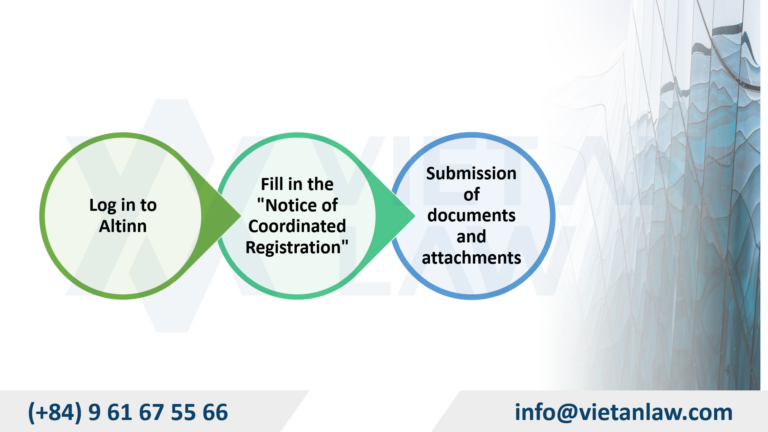
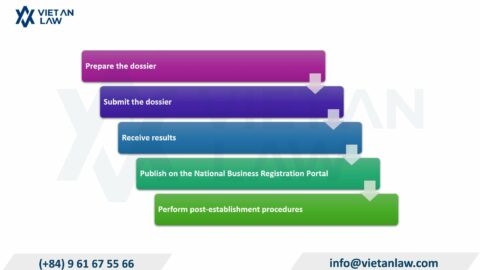
In Norway, the business registration process has been digitized and centralized on the Altinn (altinn.no) national web portal platform. The main steps to incorporate a company through Altinn include:
Log in to Altinn
In order to access and use the services on Altinn, including the application for incorporation of a company, you need to have an electronic identification method (Electronic ID – eID). The most popular methods today are MinID, BankID, Buypass, or Commfides.
For foreigners who are establishing a business for the first time and these eID methods are not yet available. In this case, you may need assistance from authorized third parties (e.g. notary accountants, lawyers or Norwegian business formation service companies).
Fill in the “Notice of Coordinated Registration” (Samordnet registermelding):
Samordnet registermelding is an electronic form that allows you to register your business information at the same time with various registers with just one declaration and submission. Through Samordnet registermelding, you can also register with:
Brønnøysund Registration Center (Brønnøysundregistrene): This is a mandatory step for all types of businesses to be issued a unique organization number (organisasjonsnummer) – the official identification number of the business in every transaction.
Business Register (Foretaksregisteret): Registration in this register is mandatory for Private Equity Companies (AS) and limited liability partnerships (DAs). For Private Enterprises (ENKs), registration in the Foretaksregisteret is optional except in certain specific cases required by law (e.g. doing business in certain industries or when the business scale reaches a certain threshold in terms of revenue or number of employees).
Value Added Tax Register (Merverdiavgiftsregisteret – VAT/MVA): You need to opt in to this register if you expect your business’s VAT revenue to exceed the applicable registration threshold (currently NOK 50,000 for a continuous 12-month period).
Employer Register (Arbeidsgiverregisteret): If you plan to hire and pay employees, you need to tick this section to register your business as an employer.
Submission of documents and attachments
After filling out the Samordnet registermailing application form, you will need to upload the necessary additional documents depending on the type of business you are registering. For the establishment of an AS, the required documents to be attached include: Signed Memorandum of Incorporation (Stiftelsesdokument), Company Charter (Vedtekter) and proof of full contribution of charter capital (confirmation by bank or auditor).
After completing the steps of filling in information, attaching documents and paying the fee (if any), you proceed to submit the application. Brønnøysundregistrene will receive and process the application. Once the application is approved, your business will be officially established, receive an organization number (organisasjonsnummer) and be recorded in the relevant registers.
Fast & Reliable Legal Assistance
Fill out the form below and get connected with a lawyer quickly.
Decree 96/2026/ND-CP Guiding the Vietnam Investment Law 2025 introduces special investment procedures, new incentives for AI and semiconductors, and streamlined processes effective March 31, 2026.
Landscape company establishment business lines in Vietnam: Complete guide on required business codes, conditions, procedures, and registration steps for 2025.
Immigration consulting company establishment business lines in Vietnam explained. Complete guide to required licenses, registration procedures, and legal business codes for 2025.
Environmental company establishment business lines in Vietnam 2025. Complete guide to waste management, wastewater treatment, and environmental services registration procedures.
E-commerce business registration business lines in Vietnam explained. Complete guide covering legal requirements, business line codes, conditions, and procedures for 2025.