France is one of the countries with the world’s leading developed economy, with a favorable business environment and many opportunities for businesses. Setting up a company in France can be an important step forward for the growth of you or your business. Understanding the process and procedures for establishing a company in France can help customers save time and costs. Viet An Law would like to guide you through the procedures for establishing a company in France through the article below.
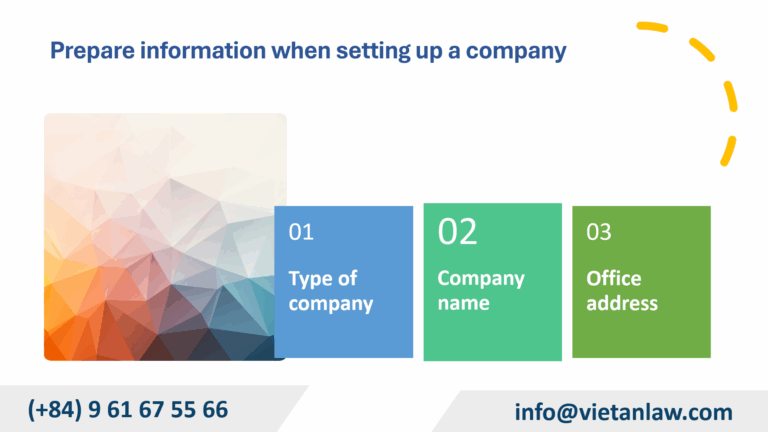
Determining the type of company is an important step in the process of setting up a company in France. This decision will affect many aspects of the business, from legal liability, management structure to tax and capital regulations.
Popular Types of Companies in France
France has many different types of businesses, each with its own characteristics. Here are some common types:
Limited Liability Company (SARL): This is the most popular type in France, suitable for small and medium-sized businesses. SARLs have limited liability, meaning that members are only responsible for the company’s debts within the scope of their capital contribution.
Simple Joint Stock Company (SAS): SAS is a more flexible type than SARL, allowing more freedom in setting up management and executive structures. SAS is suitable for businesses that are larger in size or have plans to grow rapidly.
Joint Stock Company (SA): SA is a type suitable for large enterprises that plan to list on the stock market. SA has a more complex management structure than SARL and SAS, with a Board of Directors and a Board of Directors.
Enterprise individual: This is the simplest type, suitable for business individuals. Individual businesses do not have a separate legal status, so the business owner is liable for unlimited liabilities of the business.
Factors to consider when determining the type of company
When determining the type of company, you need to consider the following factors:
Size of the business: SARL is suitable for small and medium-sized enterprises, SAS is suitable for larger enterprises, SA is suitable for very large enterprises.
Liability: If you want to limit your liability, SARL or SAS is the right choice.
Management structure: SAS gives you more freedom in setting up your management structure.
Charter capital: Each type of enterprise has different requirements for charter capital.
Choosing the right registered office address when establishing a company in France
The address of the registered office will be used in the Business Registration Certificate and other legal documents, and will be published on official databases. Therefore, choosing the right address is extremely important.
Options for the registered office address:
Physical address: This is the address where your company actually operates. The advantage of this option is that it shows transparency and clarity in business operations.
Office address rental service (domiciliation): This is a service that allows you to use the address of another company as the registered office address for your company. This option is suitable for small or start-up businesses, which saves on office rental costs.
Legal representative’s address: You can also use your company’s legal representative’s address as your registered office address.
Opening a bank account and contributing capital when setting up a company in France
Steps to contribute capital to a bank account
Open a business bank account: You need to open a business bank account at a bank in France.
Prepare documents: The bank will ask you to provide some documents such as:
Company Charter
Legal representative’s identity document
Deposit money into the account: Contribute capital in many different forms such as bank transfer, cash deposit,…
Receive a confirmation: After making a deposit, you will receive a confirmation from your bank. This certificate will be used to register the charter capital.
Procedures for filing a company establishment dossier in France
Registering with the Corporate Procedure Center (CFE) is an important step in the process of setting up a company in France. The CFE (Centre de Formalités des Entreprises) is a government agency that acts as a “one-stop-shop” for business registration in France.
Why register at CFE?
Required by law: According to French law, all businesses must register with the CFE before starting operations.
Get a SIREN number: After registering, you will receive a unique registration number called SIREN (Système d’Identification du Répertoire des Entreprises). This SIREN number is the identifier of your business and is used in all official business transactions.
Register other information: In addition to registering a business, CFE also allows you to register other information such as tax identification number, social insurance,…
Steps to register a company at CFE
Prepare documents: You need to prepare some documents such as:
Apply: You can apply online or in person at one of CFE’s offices.
Pending: CFE will process your application and issue a SIREN number to your business.
Receive registration information: After completing the procedure, you will receive the registration information of the business, including the SIREN number.
Fast & Reliable Legal Assistance
Fill out the form below and get connected with a lawyer quickly.
Environmental company establishment business lines in Vietnam 2025. Complete guide to waste management, wastewater treatment, and environmental services registration procedures.
E-commerce business registration business lines in Vietnam explained. Complete guide covering legal requirements, business line codes, conditions, and procedures for 2025.
Employment service business registration business lines in Vietnam explained. Complete guide covering conditions, license requirements, and registration procedures for 2025.
Latest Updates on Tax Administration for Associated Transactions in Vietnam 2026. Complete guide covering transfer pricing, CbCR requirements, and compliance obligations.
Enterprise Formation & Registration Services in Binh Duong, HCMC. Expert guidance on company setup, legal compliance, tax incentives, and FDI procedures. Contact us today!