


Personal data protection in e-commerce businesses in Vietnam is a critical compliance requirement for e-commerce platforms, sales websites, and online enterprises. Throughout ordering, payment, delivery, and marketing processes, businesses regularly collect, store, and share customer information. Improper handling of personal data can expose enterprises to risks of data breaches, disputes, and legal liability. In 2026, businesses must pay particular attention to the Vietnamese Law on Personal Data Protection No. 91/2025/QH15, effective from January 1, 2026, alongside relevant regulations on e-commerce and consumer rights protection. In the article below, Viet An Law provides a detailed analysis to help enterprises navigate these legal requirements effectively.
What personal data do e-commerce businesses process in Vietnam?
Personal data is generated through various activities such as account registration, placing orders, making payments, delivery, customer service, and online advertising:
| Data category | Practical examples | Risks |
| Identification information | Full name, phone number, delivery address | Information leakage, impersonation |
| Transaction data | Purchase history, orders | Disclosure of consumer habits |
| Payment data | Transaction information linked to customers | Fraud, unauthorized access |
| Behavioral data | Search history, product views | Tracking, inappropriate advertising |
| Account data | Email, login credentials | Account takeover |
Businesses need to determine the types of data being collected, the purposes for processing, the parties authorized to access the data, and the retention period. Data management must align with the nature of the information and the applicable legal requirements.
What measures must businesses implement for personal data protection in Vietnam?
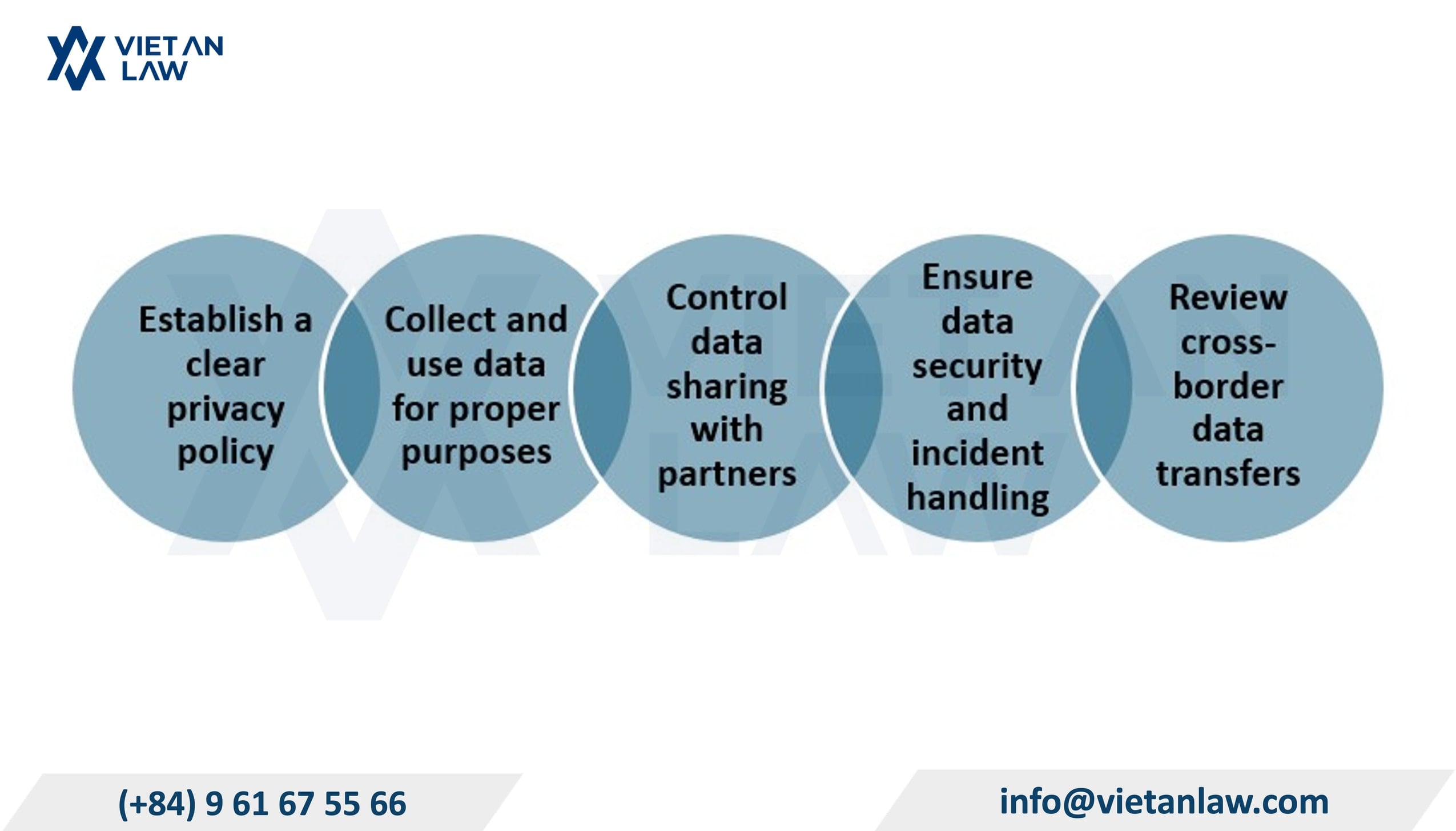
Establish a clear privacy policy
A privacy policy must accurately reflect how a website or e-commerce platform collects and uses data, including:
- The types of data collected and the purposes for which it is processed;
- The legal basis for processing and the mechanisms for obtaining consent, where required by law;
- Parties that receive the data, such as shipping carriers and technology providers;
- Data retention periods and security measures;
- Customer rights and the procedures for exercising those rights;
- Mechanisms for receiving feedback and handling data-related incidents.
A privacy policy should not merely rely on a generic template; rather, it must be tailored to the specific, actual operations of the business.
Collect and use data for proper purposes
When customers place an order, a business may require their full name, phone number, and delivery address to complete the transaction. However, using this information for advertising, behavioral analysis, or sharing it with third-party partners requires a separate assessment of the purpose and legal basis for such processing. When collecting and using data, businesses should:
- Collect only the necessary data;
- Provide transparent notification regarding data processing activities;
- Obtain consent when required by law;
- Respect customers’ rights as stipulated by regulations;
- Avoid assuming that a customer has consented to receive advertisements simply because they have made a purchase.
Control data sharing with partners
- E-commerce operations typically involve shipping providers, payment gateways, advertising platforms, and hosting service providers.
- Businesses must determine what data is being shared, the purpose of such sharing, and the responsibilities of each party. Contracts should specify confidentiality obligations, access rights, incident handling procedures, and mechanisms for the deletion or return of data upon the termination of the partnership.
- For instance, a shipping provider may require a recipient’s name, phone number, and address to facilitate delivery, but they do not necessarily need access to the customer’s entire purchase history.
- For businesses that have yet to establish data control processes, legal consulting services regarding personal data protection – such as those offered by Viet An Law – can assist in reviewing privacy policies, partner contracts, and the legal liabilities of all involved parties.
Ensure data security and incident handling
Enterprises should implement technical and managerial measures tailored to the type of data and the level of risk, such as:
- Assigning access rights based on job roles;
- Securing accounts and implementing appropriate authentication;
- Backing up data and monitoring for unusual access;
- Training employees on information security;
- Establishing procedures for handling and reporting incidents in accordance with regulations.
In the event of a data breach, enterprises must promptly contain the incident, mitigate damage, verify the cause, and fulfill any notification obligations required by law.
Review cross-border data transfers
- Some businesses utilize CRM systems, analytical tools, or cloud computing services based abroad. Such businesses must determine whether these activities fall within the scope of regulations governing the cross-border transfer of personal data.
- If the regulations apply, the business must prepare an impact assessment dossier and complete the required procedures in accordance with the Vietnam Personal Data Protection Law and Decree 356/2025/ND-CP, while also verifying whether any exceptions apply.
Personal data protection compliance checklist for sales websites and e-commerce platforms in Vietnam
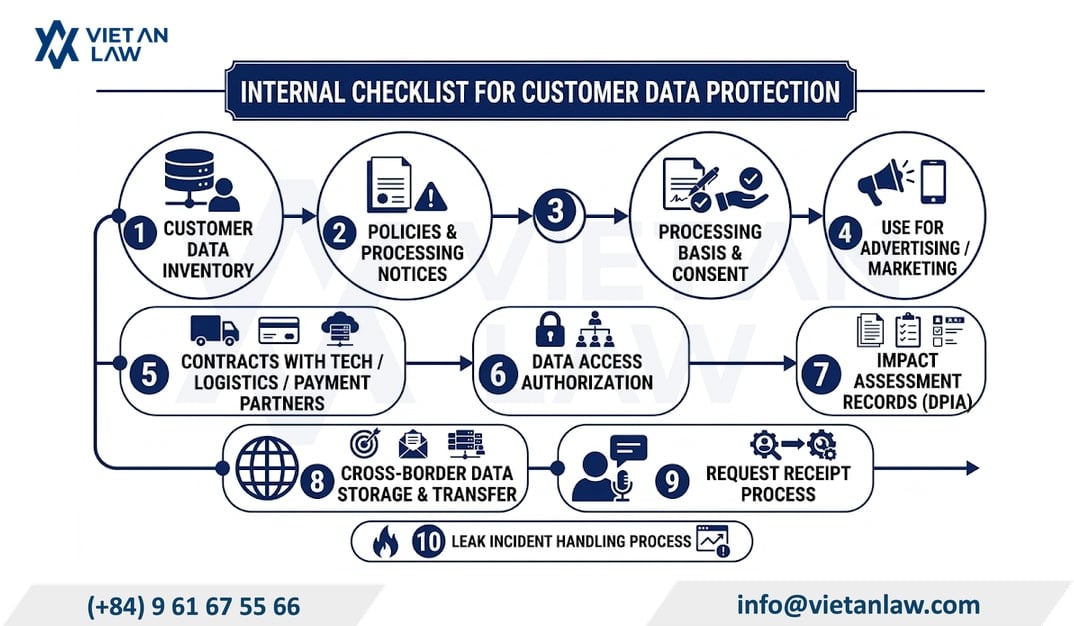
Businesses can use the following checklist for internal review:
- Create an inventory of the customer data being collected.
- Review privacy policies and data processing notices.
- Examine the legal bases for processing and the mechanisms for obtaining consent where required.
- Check how data is used for advertising and marketing purposes.
- Review contracts with shipping providers, payment processors, and technology vendors.
- Manage access rights to customer data privacy.
- Determine obligations regarding the preparation of e-commerce data protection impact assessments.
- Examine data storage practices and cross-border data transfers.
- Develop procedures for handling customer requests.
- Establish protocols for managing data breach incidents.
This checklist serves as an initial review tool and does not replace a comprehensive assessment of specific legal obligations based on a business’s unique operational model.
Sanctions for violations of personal data protection in Vietnam for e-commerce businesses
Effective August 19, 2026, Decree 330/2026/ND-CP provides specific regulations on administrative violations, forms of penalties, and remedial measures in the field of personal data protection. Businesses may face penalties for processing data in a manner that fails to meet legal requirements, infringing upon the rights of data subjects, neglecting to conduct impact assessments, or transferring personal data across borders in violation of regulations.
You can find further details on this topic in the following article: Personal data protection legal advisory services in Vietnam of Viet An Law.
Frequently asked questions
Do e-commerce websites need a privacy policy?
Businesses are required to provide information regarding their data processing activities in compliance with applicable laws. The policy must accurately reflect how data is actually collected and used.
Can businesses use customers’ phone numbers for advertising purposes?
Only if the legal requirements and conditions concerning personal data, advertising, and marketing are met. The fact that a customer has made a purchase does not automatically grant permission to send them all types of advertisements.
Is it permissible to share customer data with shipping or logistics providers?
Data necessary for delivery may be shared, provided that applicable legal requirements are met and the scope of the shared data is strictly controlled.
What should a business do in the event of a data breach?
The business must address the incident promptly, mitigate potential damage, investigate the root cause, and fulfill any mandatory notification obligations as required by law.
When should a business seek personal data protection legal advisory services in Vietnam?
Consultation is advisable when launching a new website or application, implementing advertising tools, outsourcing data processing services, or transferring data across national borders.
Personal data protection legal advisory services in Vietnam at Viet An Law
Websites in general, and e-commerce websites in particular, serve as direct touchpoints with customers and often involve multiple, simultaneous data processing activities. Consequently, businesses must ensure consistency across the information disclosed on their websites, the mechanisms for obtaining user consent, the functionality of technical tools, and agreements with third parties.
Viet An Law provides support to businesses by:
- Reviewing the collection, storage, use, and sharing of personal data;
- Assessing legal obligations based on the specific website operating model;
- Reviewing data protection policies, data processing notices, and consent-gathering mechanisms;
- Examining contracts with website operators, advertising platforms, and technology providers;
- Evaluating issues related to the cross-border transfer of personal data;
- Guiding on establishing procedures for handling data subject requests and responding to data incidents.
For more detailed advice regarding the above information, please contact Viet An Law for the best possible assistance!