Joint Stock vs. Limited Liability Company: Which to Choose for a Startup in Vietnam?
In the context of an ever-evolving economy and the growing popularity of startups, selecting the appropriate business entity type from the outset is crucial. Among the various business structures available today, joint stock companies (JSCs) and limited liability companies (LLCs) are the two most frequently considered. Each type has its advantages and disadvantages, directly impacting management capabilities, capital mobilization, and long-term development orientation. Therefore, joint stock vs. limited liability company: Which to choose for a startup in Vietnam? Viet An Law will help you answer this question.
Table of contents
Hide
Characteristics of startup businesses
Founders should consider the following characteristics of startup businesses when deciding between a joint stock company and an LLC for their venture. Startups often have the following common characteristics:
Startups are businesses without a long operational history, typically characterized by a small scale, limited personnel, low initial capital, and a lack of a tight organizational structure.
Have a business model that can be easily scaled up.
Have the potential for rapid growth due to the application of science and technology, innovative business models, and products/services that meet market demand.
The capital of a startup is usually small, primarily sourced from the founder’s private capital or contributions from family and friends, with no significant external capital mobilization yet.
What are the similarities and differences between a joint stock company and a limited liability company?
To help founders easily choose between establishing a joint stock company or a limited liability company when starting up, it’s essential to understand their key similarities and differences.
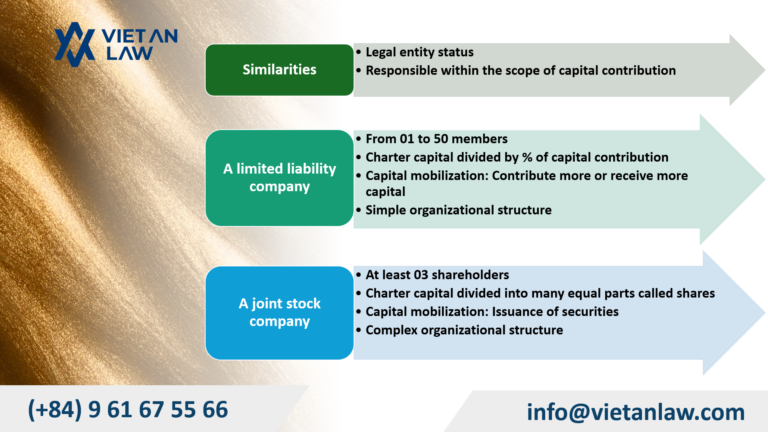
Similarities
Both joint stock companies and limited liability companies share the following common characteristics:
Both types of companies possess legal entity status.
Members or shareholders of both company types are only liable for the company’s debts and other property obligations up to the extent of their contributed charter capital.
Differences
Number of members:
Single-member limited liability company: Owned by one organization or one individual.
Multiple-member limited liability company: Must have between 2 and 50 members.
Joint stock company: Requires a minimum of 3 shareholders, with no maximum limit on the number of shareholders.
Charter capital
LLC charter capital: Divided according to the percentage of capital contributions made by the members.
JSC charter capital: Divided into many equal parts called shares.
Capital mobilization methods
LLC capital mobilization: Achieved through additional capital contributions from the owner or existing members, or by receiving new capital contributions from others.
JSC capital mobilization: Achieved by issuing shares and bonds.
Organizational and management structure
Single-member limited liability company: Operates under one of two models: Company President, Director/General Director; or Board of Members, Director/General Director.
Multiple-member limited liability company: Organized with a Board of Members, Chairman of the Board of Members, and Director/General Director.
Joint stock company: Has a more complex organizational and management structure, operating under one of two models: General Meeting of Shareholders, Board of Directors, Supervisory Board, and Director/General Director; or General Meeting of Shareholders, Board of Directors, and Director/General Director.
Advantages and disadvantages of choosing a joint stock company vs. a limited liability company for your startup
Should you choose a joint stock company for your startup?
Advantages:
Large and flexible capital mobilization capacity because joint stock companies have the right to issue all types of securities, so they easily attract investors;
Shareholders can easily transfer their shares to others (with exceptions for voting preference shares and transfer restrictions on common shares of founding shareholders within 3 years from the date of business registration certificate issuance). This process is generally less restricted and less complicated than transferring capital contributions in an LLC.
JSCs are suitable for businesses with a wide development scale, particularly those aiming for stock exchange listing and intending to operate in most sectors and industries.
Disadvantages:
The organizational and management structure is complex, and the company is bound by numerous legal regulations, especially regarding accounting and finance.
Operating, accounting, and auditing costs are typically high.
Personal income tax must be paid when transferring capital.
If the number of shares is not well-controlled, founders might lose control of the company.
Should you choose a limited liability company for your startup?
Advantages:
LLCs have a simpler operational structure, making them easier to manage.
The law imposes strict regulations on the transfer of capital contributions, which makes it easier to manage and control members’ capital contributions and restricts the involvement of outsiders in the company.
No personal income tax is required when transferring capital.
The cost of operating the company is not high.
Disadvantages:
LLCs face challenges in raising capital because they cannot issue shares and are limited in the number of members.
The process of transferring capital contributions is restricted.
Joint stock vs. limited liability company: Which to choose for a startup in Vietnam?
The decision of whether to establish a joint stock company or a limited liability company for your startup depends on various factors, e.g., the business scale, available capital, number of contributors, business development orientation, capital mobilization needs, and the desired level of control. Specifically:
You should choose a joint stock company for your startup if:
Have multiple individuals participating in capital contributions to establish the company (three or more).
Have a clear orientation for rapid growth, expanding business activities into numerous industries or sectors, or significantly enlarging your business scale.
Aim to mobilize a large amount of capital.
You should choose a limited liability company for your startup if:
Have low capital and want to establish a small or medium-sized company.
Have between 1 and 50 individuals contributing capital.
Your business operates in a limited number of industries or sectors.
Flexible, simple management, and want to minimize administrative procedures.
The company members have close relationships and wish to maintain control over the company’s business operations.
Does not have an immediate need for capital mobilization.
Documents for establishing a joint stock company and a limited liability company
Based on the amended and supplemented Enterprise Law 2025 and Article 24 of Decree 168/2025/ND-CP, effective from July 1, 2025, the documents for registering the establishment of a joint stock company and a limited liability company have undergone several changes. Specifically:
Documents:
Application for company establishment;
Company charter;
List of members (for Multiple-member LLCs); list of founding shareholders, list of foreign investor shareholders (for JSCs);
List of ultimate beneficial owners (if any);
Copy of the organization establishment certificate for owners, members, or shareholders that are organizations;
Copy of the investment registration certificate
Additional list of beneficial owners (if any)
In cases where the owner, member, shareholder, legal representative, or authorized representative of the owner, member, or shareholder (if an organization) declares their personal identification number, the enterprise registration dossier will not require copies of these individuals’ legal documents.
New forms for establishing new joint stock companies and limited liability companies
Applications for establishing an LLC or JSC must be completed using Forms No. 02, 03, 04 issued with Circular 68/2025/TT-BTC.
List of members and list of founding shareholders must be completed using Form No. 06, 07 issued with Circular 68/2025/TT-BTC.
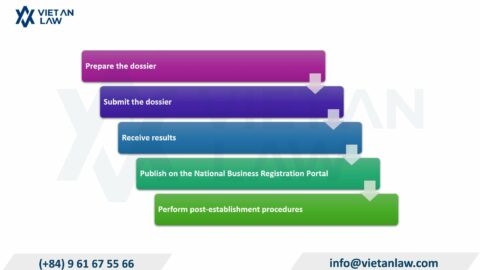
Step 1: Submit the company establishment dossier to the Business Registration Office under the Department of Finance, where the company plans to have its head office, at the national portal on business registration at the website:https://dangkykinhdoanh.gov.vn/.
Step 2: Business Registration Office receives and processes the application.
Step 3: Notification for Application Supplement/Amendment (if the application is incomplete or invalid) within 03 working days from the date of receipt.
Step 4: Return of Application Results.
If the application is valid: A Certificate of Business Registration will be issued.
If the application is invalid: A notice of refusal to issue the Certificate of Business Registration will be provided, clearly stating the reasons for the refusal.
How long does it take to register a joint stock company or a limited liability company?
According to Article 26 of the Enterprise Law 2020, the processing time for establishing both a joint stock company and a limited liability company is the same. The business registration authority is responsible for reviewing the validity of the business registration application and providing the results within 03 working days from the date of receiving the application.
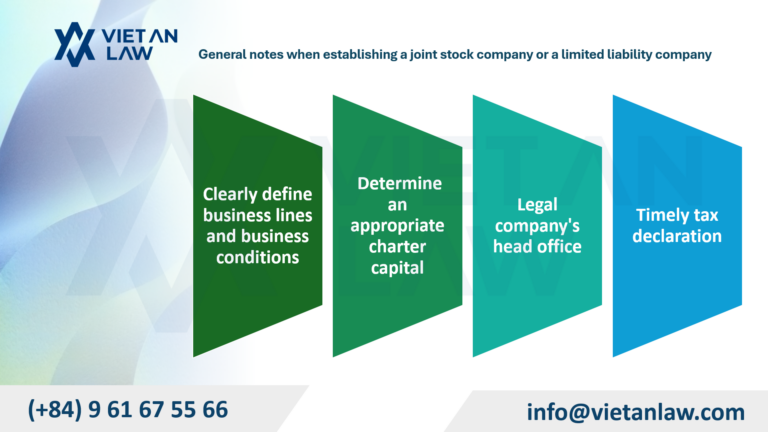
General notes when establishing a joint stock company or a limited liability company
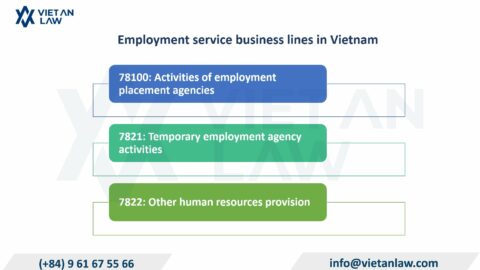
Clearly define your business lines and review the business conditions in relevant legal regulations for conditional business lines.
Determine an appropriate and realistic charter capital, avoid declaring inflated charter capital or using incorrect types of assets for capital contribution when establishing the company.
Do not establish the company’s head office in an apartment or collective housing unit intended for residential purposes.
Declare and register initial taxes within 10 days from the date of receiving the Certificate of Business Registration.
If you would like a consultation on joint stock vs. limited liability company: Which to choose for a startup in Vietnam, please contact Viet An Law Firm for the best support!
Fast & Reliable Legal Assistance
Fill out the form below and get connected with a lawyer quickly.
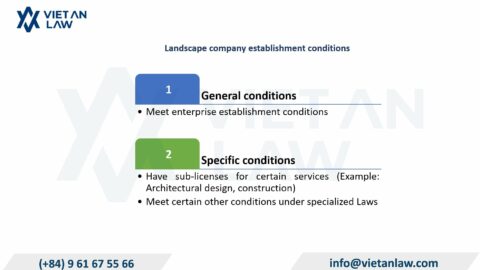
Landscape company establishment business lines in Vietnam: Complete guide on required business codes, conditions, procedures, and registration steps for 2025.
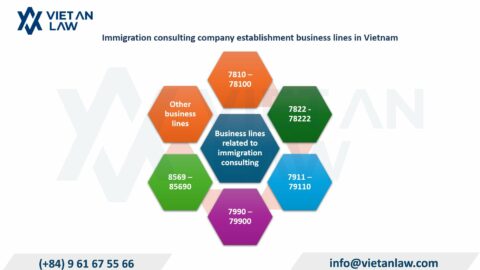
Immigration consulting company establishment business lines in Vietnam explained. Complete guide to required licenses, registration procedures, and legal business codes for 2025.
Environmental company establishment business lines in Vietnam 2025. Complete guide to waste management, wastewater treatment, and environmental services registration procedures.
E-commerce business registration business lines in Vietnam explained. Complete guide covering legal requirements, business line codes, conditions, and procedures for 2025.
Employment service business registration business lines in Vietnam explained. Complete guide covering conditions, license requirements, and registration procedures for 2025.