In the rapidly evolving digital economy, assessing a customer’s creditworthiness has become a critical process that demands speed, accuracy, and efficiency. Rather than relying solely on traditional methods, many financial institutions are now implementing modern technologies such as Artificial Intelligence (AI), Machine Learning (ML), and Big Data analytics to build robust scoring systems. These innovations not only automate workflows and mitigate risks but also expand credit access to underserved market segments. However, the adoption of such technologies introduces significant challenges regarding transparency, security, and legal compliance. In this article, Viet An Law provides an in-depth analysis of Credit Scoring Regulations: Using Technology for Credit Assessment in Vietnam.
A credit score is an index used to evaluate a customer’s creditworthiness based on their borrowing history with banks and financial institutions. In Vietnam, individual credit scores are assessed and recorded by the National Credit Information Center of Vietnam (CIC). Generally, a higher credit score increases the likelihood of loan approval, whereas a lower score makes it significantly more difficult for a customer to access credit facilities.
Credit scores typically range from 150 to 750, serving as a metric for the financial reliability of an individual or an enterprise. This score is calculated based on your credit history, including timely or late payments of loans and credit card balances, the number of open credit accounts, and the total amount of outstanding debt.
The correlation between credit scores and loan approval probability is outlined in the table below:
| Credit Score | Risk Level | Loan Approval Assessment |
| 150 – 321 | Very High Risk | Ineligible for credit |
| 322 – 430 | High Risk | Unlikely to meet repayment obligations |
| 431 – 569 | Moderate Risk | Eligible for credit, but subject to high interest rates |
| 570 – 679 | Low Risk | Eligible for credit; likely to repay on time; eligible for low interest rates |
| 680 – 750 | Very Low Risk | Eligible for credit; high repayment probability; eligible for high limits and low interest rates |
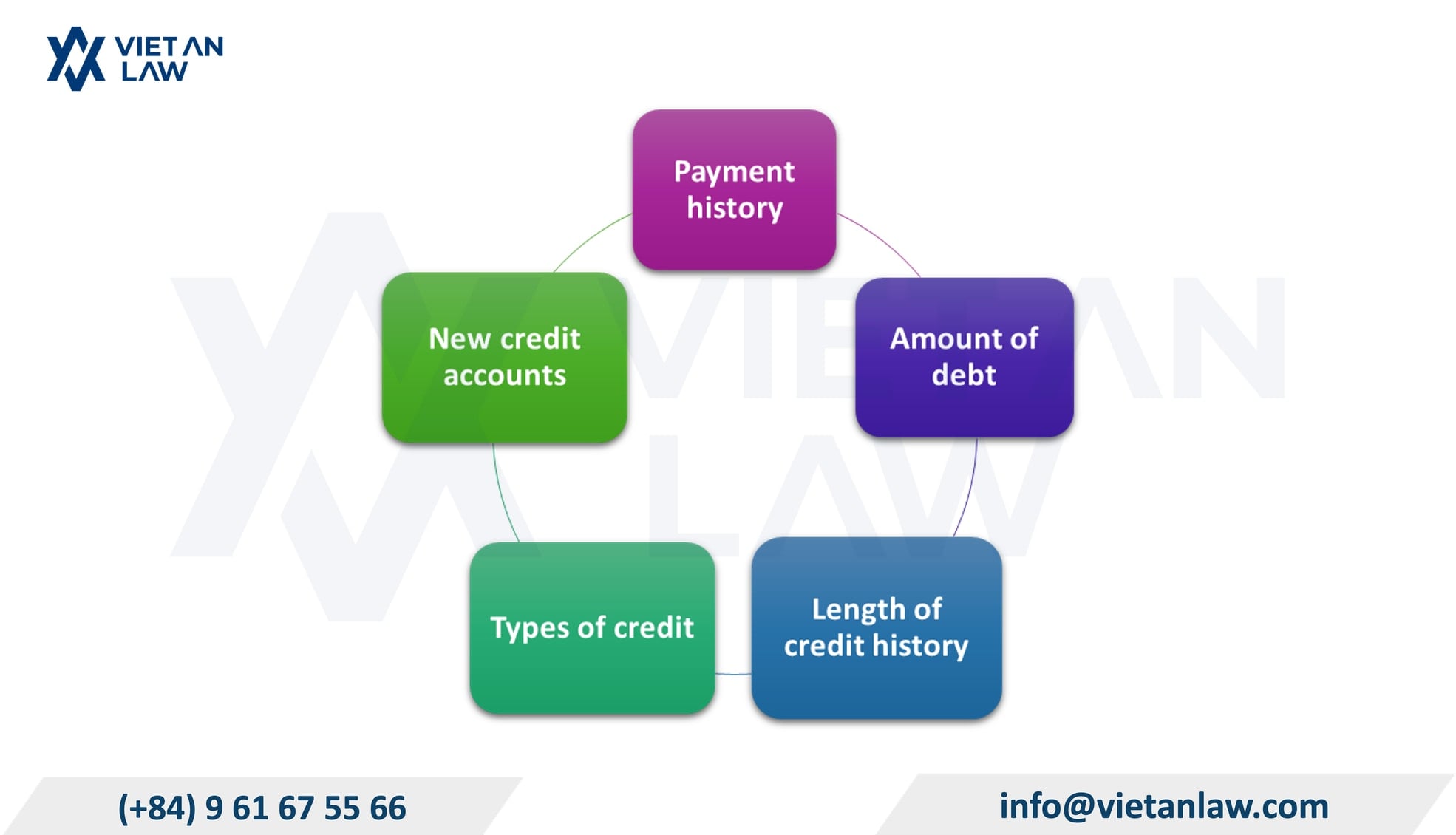
This is the most significant factor and forms the foundation of a healthy personal credit score. Payment history indicates whether you settle outstanding balances on time. Key components include the frequency and severity of late payments.
This refers to the total outstanding balance across all your loans. A high debt-to-income ratio may suggest financial distress, making creditors hesitant to extend further credit. Components include total debt amounts and credit limit utilization rates.
A long-term credit history generally demonstrates that a borrower is reliable and has a proven track record of repayment. Banks and financial organizations highly value customers with stable and long-standing credit profiles.
Utilizing a diverse range of credit types reflects effective financial management. A combination of installment loans (such as mortgages or auto loans) and revolving credit (such as credit cards) helps build a comprehensive credit profile, thereby improving the overall score.
This factor reflects the number of new loans or credit cards opened within a specific period. Opening too many accounts in a short duration may lead creditors to perceive the borrower as being under financial pressure or at a higher risk of default. Furthermore, this can decrease the credit score by increasing credit risk and creating an additional financial burden.
Technology is no longer just a support tool; it is becoming the core foundation of modern credit evaluation systems. However, the application of technology must be accompanied by clear credit scoring regulations, moral risk controls, and the protection of borrower privacy to maximize its benefits.
AI can automate the credit scoring process by analyzing borrower data and assigning numerical values that reflect reliability. This not only accelerates loan processing speeds but also reduces the manual workload for credit officers.
The roles that technology plays in modern credit assessment include:
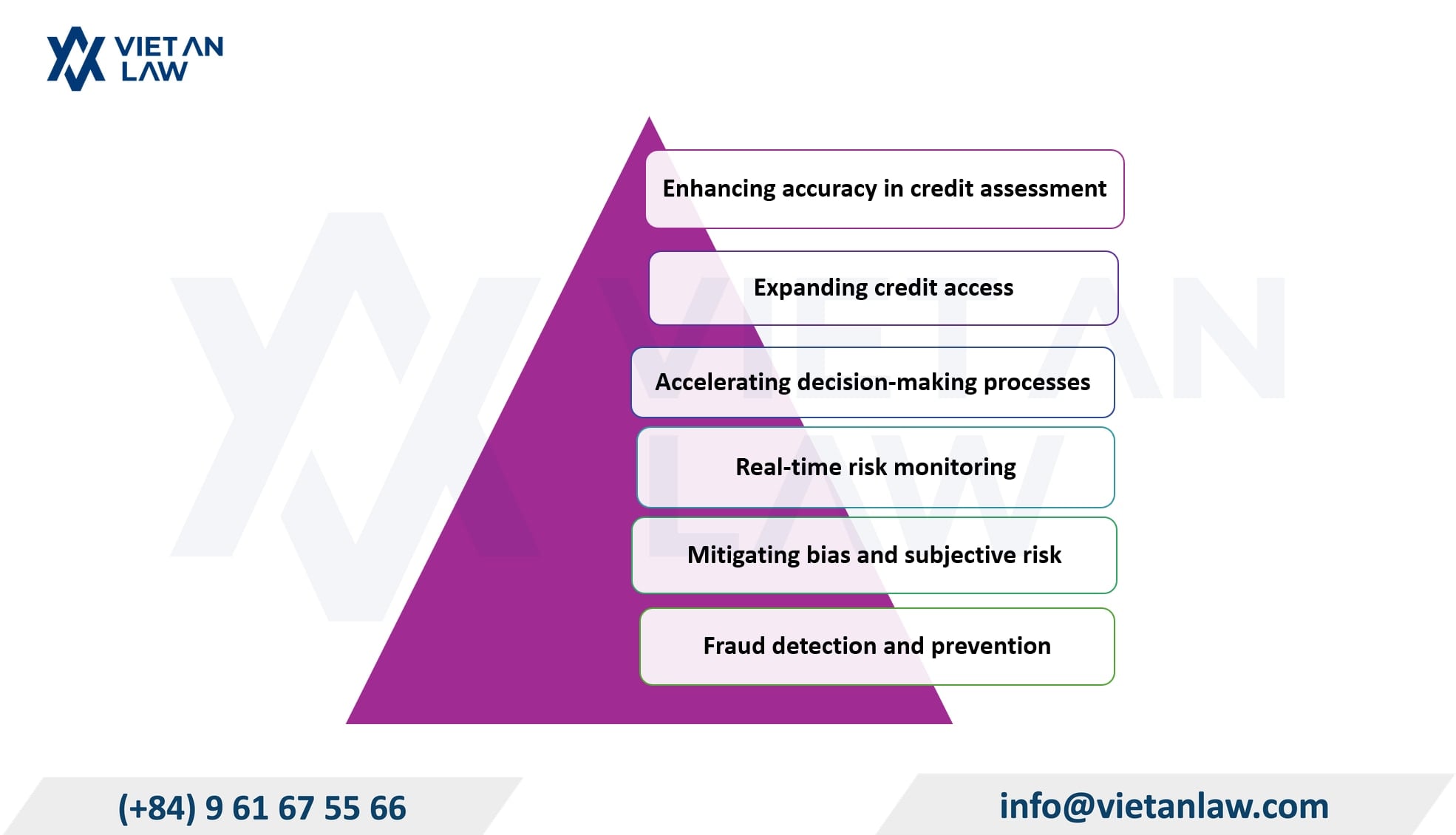
Technology—specifically AI, Machine Learning, and Big Data—enables the analysis of vast amounts of complex data from multiple sources. Consequently, credit scoring models can identify hidden trends and correlations, leading to a more precise evaluation of each customer’s credit risk.
Technology allows for the exploitation of alternative data sources, such as utility bill payment history, social media activity, or electronic transaction records. This is particularly vital for “thin-file” customers who lack traditional credit histories, thereby promoting financial inclusion.
Through automation, technological systems can evaluate and process credit applications in a fraction of the time required for manual reviews. This improves the customer experience and optimizes the operations of financial institutions.
Advanced systems can update and analyze a customer’s financial data in real-time. This allows credit institutions to detect early warning signs of risk and implement preventive measures promptly, rather than relying on periodic financial reports.
Compared to manual assessment processes which may be influenced by emotional factors, data-driven technological models ensure fairness and consistency in credit decisions—provided that the models are designed and monitored transparently.
AI and advanced analytical tools can detect anomalies in borrower behavior—such as credit score manipulation or information forgery—helping financial institutions prevent fraud more effectively.
The information provided above covers the essential Credit Scoring Regulations: Using Technology for Credit Assessment in Vietnam as advised by Viet An Law. Should you require detailed legal consultation or professional support, please contact the legal advisory department at Viet An Law Firm.