On December 15, 2025, the Government issued Decree 320/2025/ND-CP detailing some provisions and measures to organize and guide the implementation of the Corporate Income Tax Law. During the research process, many businesses wondered about mandatory bank transfers: new salary payment rules in Vietnam from December 15, 2025. This regulation directly affects the calculation of deductions when calculating corporate income tax. Below, Viet An Law Firm will analyze this new regulation for our clients to better understand.
According to point c, Clause 1, Article 9 of Decree 320/2025/ND-CP, the following is stipulated:
“Article 9. Deductible expenses when determining taxable income
1. Except for non-deductible expenses as stipulated in Article 10 of this Decree, enterprises are allowed to deduct expenses when determining taxable income if they meet the conditions in points a, b, and c below:
[…]c) Expenses with non-cash payment documents for the purchase of goods, services, and other payments with a value of VND 5 million or more per transaction. Non-cash payment documents shall comply with the provisions of the laws on value-added tax.”
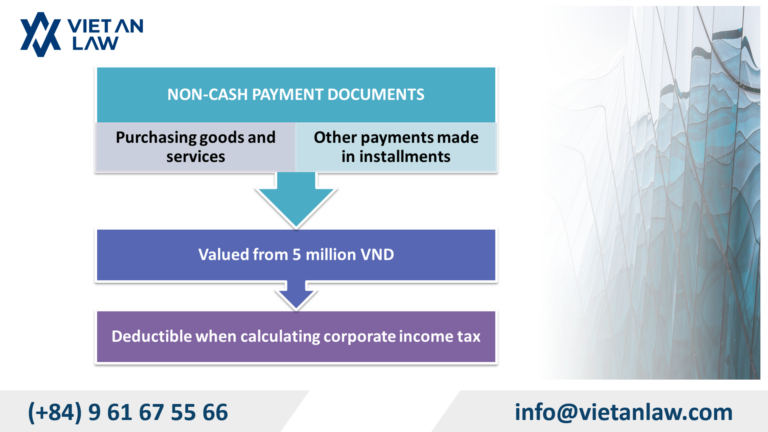
Salaries exceeding 5 million VND/month must be transferred via bank transfer starting from December 15, 2025, to be eligible for corporate income tax deduction
Therefore, according to this regulation, from December 15, 2025, in order to be deductible when calculating corporate income tax, “other payments of 5 million VND or more per transaction” must have non-cash payment documents to be deductible when determining taxable corporate income.
In addition, according to Clause 8, Article 10 of Decree 320/2025/ND-CP, expenses for employees are not deductible when determining taxable corporate income if they fall into one of the following cases:
“Article 10. Expenses not deductible when determining taxable income
[…]8. Expenses for employees in one of the following cases:
a) Expenses for salaries, wages and other payments to employees that the enterprise has accounted for as production and business expenses in the period but have not actually paid or have no payment documents as prescribed by law;
b) Salaries, wages, and bonuses for employees that do not specifically state the conditions for entitlement and the amount of entitlement in one of the following documents: Labor contract or document from a foreign enterprise sending a person to work in Vietnam (for cases where a foreigner is transferred or moved within the Group, between the parent company and the subsidiary); Collective labor agreement; Financial regulations of the Company, Corporation, Group; Bonus regulations stipulated by the Chairman of the Board of Directors, General Director, Director according to the financial regulations of the Company, Corporation, Group…”
Therefore, it can be understood that salary payments exceeding 5 million VND per month must be transferred by the employer to the employee’s bank account from December 15, 2025, according to the regulations in the employment contract or equivalent document, to be deductible when determining corporate income tax. Only then will the employer have sufficient documentation, and the payment will be considered a “other payment of 5 million VND or more per transaction.” If the employer continues to pay in cash, this salary payment will not be considered a deductible expense when determining corporate income tax.
Although not yet officially regulated, many accountants and businesses have already begun to apply 100% salary payment via bank transfer to ensure transparency and tax deductions when calculating corporate income tax.
According to point c1, clause 1, Article 9 of Decree 320/2025/ND-CP, from December 15, 2025, in cases where goods or services are purchased from a single seller with a value of less than 5 million VND but multiple purchases are made on the same day with a total value of 5 million VND or more, these expenses can only be deducted if there is non-cash payment documentation.
Additionally, please note:
According to point c, Clause 1, Article 9 of Decree 320/2025/ND-CP, non-cash payment documents used to determine deductible expenses when calculating taxable income shall comply with the provisions of the laws on value-added tax.
Based on Article 26 of Decree 181/2025/ND-CP, non-cash payment documents are regulated as follows:
“Businesses must have non-cash payment documents for goods and services purchased with a value of VND 5 million or more, including value-added tax. Specifically:
Non-cash payment documents are documents proving non-cash payment as stipulated in Decree 52/2024/ND-CP on non-cash payments, excluding documents where the buyer deposits cash into the seller’s account.”
Some specific cases as stipulated in point b, clause 2, Article 14 of the Value Added Tax Law 2024 include:
According to Article 6 of the Corporate Income Tax Law of 2025, the basis for calculating corporate income tax is as follows:
CORPORATE INCOME TAX = Taxable income x Tax rate
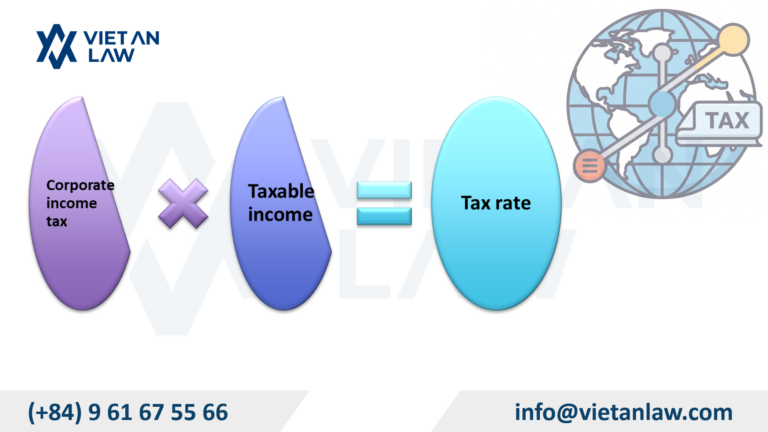
In which:
Taxable income for the tax period is determined as follows:
| TAXABLE INCOME | = | Taxable income | – | Tax-exempt income | + | Losses carried forward according to regulations |
Taxable income is determined as follows:
| TAXABLE INCOME | = | Revenue | – | Deductible expenses | + | Other income (including income received outside Vietnam) |
The above is an update on the new regulations answering the question of mandatory bank transfers: new salary payment rules in Vietnam from December 15, 2025. For any related questions or to request advice on taxes and invoices, please contact Viet An Law Firm’s Tax Agency for the best advice and support!