Key Changes in Enterprise Accounting in Vietnam under Circular 99/2025
On October 27, 2025, the Minister of Finance issued Circular 99/2025/TT regulating the enterprise accounting regime. This Circular replaces Circular 200/2014/TT-BTC, takes effect from January 1, 2026, and applies to fiscal years starting on or after that date. The issuance of Circular 99/2025/TT-BTC marks an important step in standardizing, modernizing, and digitizing accounting work, towards alignment with International Financial Reporting Standards (IFRS) and in line with the trend of digital transformation in financial management – accounting. Below, Luat Viet An will update key changes in enterprise accounting in Vietnam under Circular 99/2025.
Table of contents
Hide
Regulations on the principles of financial reporting when changing currency units in accounting
Previously, Circular 200/2014/TT-BTC only stipulated the principles. When Circular 200/2014/TT-BTC, the new regulation in Article 5 of Circular 99/2025/TT-BTC has stipulated the principles of preparing financial statements when changing the currency unit in accounting, specifically as follows:
In the first accounting period since the change, the enterprise shall convert the balances of items in the accounting books and the Financial Position Statement to the new currency at the average transfer buying and selling exchange rate (the average between the transfer buying and selling exchange rates) of the commercial bank where the enterprise regularly transacts on the date of change of currency in accounting.
For comparative information (previous period column) on the Income Statement and Cash Flow Statement, the enterprise uses the average transfer exchange rate of the commercial bank where the enterprise regularly conducts transactions in the accounting period immediately preceding the period of change in accounting currency.
Enterprises are responsible for clearly stating in the Notes to the Financial Statements the reasons for changing the accounting currency, as well as the impacts on the Financial Statements due to this change.
This regulation helps ensure consistency, transparency, and comparability of financial information while facilitating enterprises with international operations to use foreign currencies as accounting units, in line with the trend of global economic integration.
New regulations on the accounting voucher forms system in Vietnam
Circular 99/2025/TT-BTC has devoted a separate chapter to regulating accounting documents. Accordingly, Circular 99/2025/TT-BTC has prescribed the form of the accounting document system in Appendix I for businesses to refer to.
When applying accounting documents, businesses need to note:
In order to suit the characteristics of production and business activities and management requirements, enterprises are allowed to design additional or modify and supplement accounting voucher forms compared to the guidance forms.
When designing, modifying, or supplementing an enterprise’s accounting voucher form, it must comply with the provisions of Article 16 of the Law on Accounting and must fully, promptly, honestly, transparently, and easily check, control, and compare the enterprise’s assets and capital.
When designing additional or amending and supplementing accounting voucher forms, enterprises are responsible for issuing accounting regulations (or equivalent documents) on the amended and supplemented contents to serve as a basis for implementation. The regulations must clearly state the necessity of such amendments and supplements and the enterprise’s responsibility before the law for the amended and supplemented contents.
In case the enterprise does not design or modify, or supplement the accounting voucher form, it shall apply the accounting voucher system as guided in Appendix I.
Update the new guidance on the accounting system in Vietnam
Enterprises apply the accounting system according to the new regulations in Appendix II issued with Circular 99/2025/TT-BTC to serve the accounting recording of economic transactions arising at the enterprise.
However, it should be noted:
In order to suit the characteristics of production and business activities and management requirements of the unit, the enterprise may amend and supplement the name, number, structure, and reflection content of the accounting accounts as guided in Appendix II issued with Circular 99/2025/TT-BTC.
The amendments and supplements must ensure the classification and systematization of arising transactions according to economic content, no duplication of subjects, compliance with prescribed accounting principles, and must not change or affect the expenditures and information presented in the Financial Statements.
When amending or supplementing the names, numbers, structures, and contents of accounting accounts, enterprises are responsible for issuing accounting regulations (or equivalent documents) on the amended or supplemented contents to serve as a basis for implementation. The regulations must clearly state the necessity of such amendments or supplements and the enterprise’s responsibility before the law for the amended or supplemented contents.
In case an enterprise has economic transactions that have not been guided by accounting in Circular 99/2025/TT-BTC, the enterprise shall base on the content and nature of the economic transactions, the provisions of the Law on Accounting, documents guiding the Law on Accounting, Vietnamese Accounting Standards, and the guiding principles in Circular 99/2025/TT-BTC to implement.
The new accounting system is built to approach IFRS, helping Vietnamese enterprises’ financial information to be comparable and internationally integrated, while encouraging enterprises to improve their financial management capacity.
Update the new form on the accounting books
Enterprises need to pay attention to updating the new accounting book form in Appendix III issued with Circular 99/2025/TT-BTC.
Also, please note:
In order to suit the characteristics of production and business activities and management requirements, enterprises are allowed to design additional or modify and supplement accounting book forms compared to the guidance forms.
When designing additional or amending and supplementing accounting forms, enterprises are responsible for issuing accounting regulations (or equivalent documents) on the amended and supplemented contents as a basis for implementation.
New regulations on the Enterprise Financial Reporting System
Previously, Article 100 of Circular 200/2014/TT-BTC stipulated that the Financial Reporting System includes: Annual Financial Reports and Interim Financial Reports.
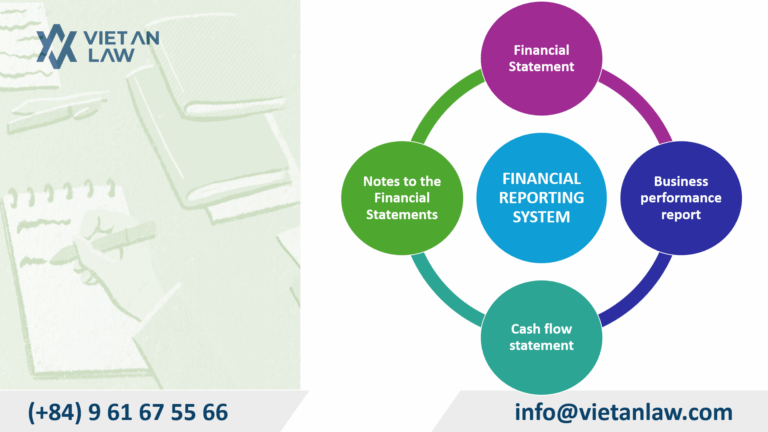
However, according to the new regulations in Circular 99/2025/TT-BTC, the Financial Reporting system includes:
New regulations on the Enterprise Financial Reporting System
Financial statement;
Business performance report;
Cash flow statement;
Notes to the Financial Statements;
In which each annual Financial Report and Interim Financial Report will include the above Financial Reporting systems. Specifically:
Annual financial report
Annual financial report includes:
Financial statements for enterprises meeting the going concern assumption;
Annual financial statements for enterprises that do not meet the going concern assumption.
Interim financial report
Interim financial statements include:
Full interim financial statements;
Condensed interim financial statements.
Standardizing the structure of Financial Statements helps increase transparency, supports comparison and analysis of financial performance between accounting periods, and is more consistent with international accounting models.
The deadline for submitting financial reports is 90 days at the latest
Previously, Article 109 of Circular 200/2014/TT-BTC stipulated the deadline for submitting financial reports with different deadlines depending on the quarterly/annual financial reports, as well as depending on the state-owned enterprise/enterprise.
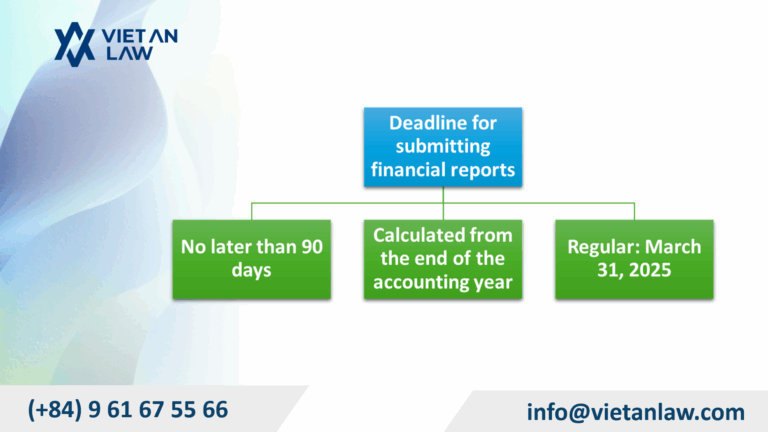
However, according to the new regulations in Circular 99/2025/TT-BTC, the deadline for submitting financial reports is generally stipulated as “no later than 90 days from the end of the annual accounting period”. This unified regulation helps simplify administrative procedures, increase the initiative of enterprises, and is consistent with the progress of preparing and publishing Financial Reports according to international practices.
The deadline for submitting financial reports is 90 days at the latest
However, businesses need to note:
Enterprises that are parent companies or corporations shall stipulate the deadline for submitting Financial Reports of subsidiaries and affiliated units to consolidate or summarize Financial Reports in accordance with current legal regulations and management requirements of the unit.
For enterprises whose relevant laws have provisions on submitting Financial Reports according to other accounting periods (Quarterly, semi-annual Financial Reports…), the deadline for submitting these Financial Reports shall comply with the provisions of such relevant laws.
New regulations on minimum requirements for accounting software
One of the key changes in enterprise accounting in Vietnam under Circular 99/2025 is the first regulation on minimum conditions for accounting software.
Enterprises can use accounting software to perform accounting work. According to the new regulations in Article 29 of Circular 99/2025/TT-BTC, the accounting software that enterprises choose to use must ensure at least the following professional and technical requirements on accounting:
The accounting processes and operations established on the software must ensure compliance with the provisions of accounting law, tax law, and other relevant laws, and must not change the nature, principles, accounting methods, and information and data presented in accounting books and financial statements as prescribed.
The processing of accounting procedures, information, and related data must ensure accuracy, consistency, and no duplication. When making corrections, traces of the recorded accounting contents must be kept in chronological order.
Information and data on accounting software must ensure confidentiality, security, and must comply with legal regulations on information security and safety. The information system is set up to be able to warn or prevent intentional interference that changes information and data recorded in accounting books.
Provide complete and timely information and output data as required by competent authorities and data and information users.
Able to connect or ready to connect with relevant software when performing accounting work (electronic invoice software, digital signature,…).
Able to upgrade, modify, and supplement in accordance with changes in accounting, tax, and other relevant laws.
Business managers, chief accountants/accounting managers, and relevant persons are responsible for the accuracy and truthfulness of accounting information and data provided from accounting software.
This is an important step in standardizing and digitizing accounting work, contributing to ensuring transparency, safety, and connectivity of financial data, and meeting national digital transformation requirements.
This article has presented key changes in enterprise accounting in Vietnam under Circular 99/2025. If you have any related questions or need advice on the enterprise accounting regime, please contact Luat Viet An for the best advice and support!
Fast & Reliable Legal Assistance
Fill out the form below and get connected with a lawyer quickly.
Landscape company establishment business lines in Vietnam: Complete guide on required business codes, conditions, procedures, and registration steps for 2025.
Immigration consulting company establishment business lines in Vietnam explained. Complete guide to required licenses, registration procedures, and legal business codes for 2025.
Environmental company establishment business lines in Vietnam 2025. Complete guide to waste management, wastewater treatment, and environmental services registration procedures.
E-commerce business registration business lines in Vietnam explained. Complete guide covering legal requirements, business line codes, conditions, and procedures for 2025.
Employment service business registration business lines in Vietnam explained. Complete guide covering conditions, license requirements, and registration procedures for 2025.