Norway, with its reputation as one of the leading countries in innovation, is well aware of the vital importance of protecting trade secrets. The protection of proprietary information is not only a mandatory requirement but also an integral part of the country’s business culture. By protecting intellectual property, Norwegian businesses not only maintain a competitive advantage in the international market but also contribute to the sustainable development of the economy. Viet An Law would like to guide customers on how to protect trade secrets in Norway through the article below.
Table of contents
Hide
A Preliminary Guide to the Definition of Trade Secrets in Norway
Trade secrets in Norway, like many other countries, are understood as any information that has commercial value, is not made public, and is protected by the owner in order to maintain a competitive advantage. Some of the trade secrets that can be mentioned include:
Technical Information: Formula, production process, product design, technical drawings, etc.
Business information: Business strategy, marketing plan, customer list, supplier information, etc.
Financial Information: Financial forecasts, information about revenue, expenses, etc.
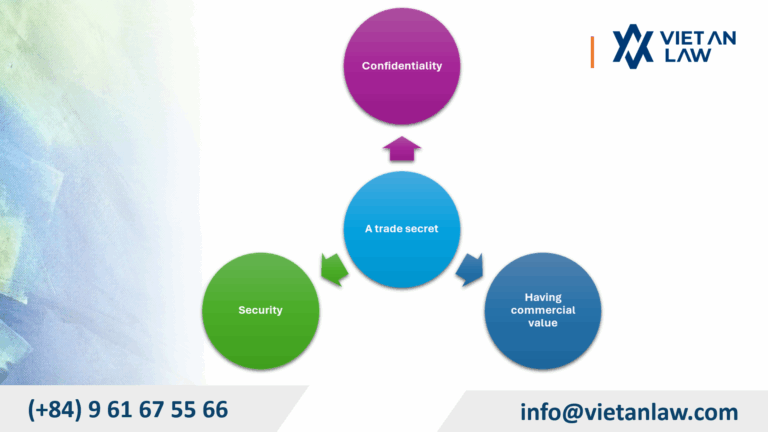
Conditions for an information to be considered a trade secret
Confidentiality: Information that has not been widely disclosed and is not easily accessible to people outside the organization.
Having commercial value: Information must bring competitive advantages to businesses, capable of creating economic value.
Security: The business has taken reasonable measures to protect information from being disclosed to unauthorized persons.
Guidel to identifying acts of infringement of trade secret protection in Norway
Disclosure of confidential information
Disclosure of information to competitors, unauthorized partners, or public disclosure of information without permission.
Due to negligence in information management, such as sending the wrong email, revealing important documents in public, etc.
Unauthorized use
Copy confidential information for your own business purposes or that of others.
Change the confidential information and use that modified version.
Collecting information without permission
Using fraudulent methods to collect information, such as breaking in, eavesdropping, installing spyware.
Taking advantage of personal or work relationships to lure someone with access to confidential disclosures.
Unfair competition
Sell products at a lower price than the cost of production to eliminate competitors.
Spreading misinformation about a competitor’s product or service.
Refusal to trade with competitors’ counterparts.
Exceptions to the infringement of trade secrets
In some special cases, the disclosure of trade secrets may be permitted by law. Example:
Requests from state agencies: When there is a lawful request from a state agency, enterprises may be forced to disclose confidential information for the purpose of investigating and prosecuting crimes or protecting national security.
Protection of public interest: In some cases, the disclosure of confidential information may be necessary to protect the health and safety of the public or to prevent a serious violation of the law.
Acts that are not considered violations of trade secrets
There are acts that, although related to confidential information, are not considered a violation of the law on protection of trade secrets. Example:
Independent Discovery: If someone else independently invents a technology or process similar to yours, they are not considered to be infringing your trade secrets.
Information that has been made publicly available: If the information has been made publicly available, it loses its confidentiality and is not protected by law.
Cases in which confidential information is allowed
In limited circumstances, the use of other people’s confidential information may be allowed. Example:
Lawful use of published information: If the information has been lawfully published, anyone can use it.
Use of information to protect legal interests: In some cases, the use of other people’s confidential information may be necessary to protect their legitimate interests.
Guide to protect trade secrets according to the process in Norway
Clearly define trade secrets
Full list: Make a detailed list of information, data, formulas, production processes, etc. are considered trade secrets of enterprises.
Classification: Classify secrets according to their importance for appropriate protection.
Build a security management system
Clear regulations: Promulgate internal regulations on information security, information processing processes, and responsibilities of each individual.
Restrict access: Give access to information only to those who really need it, and grant permissions on a “need to know” basis.
Secure storage system: Use secure data storage systems, with data backup and recovery mechanisms.
Password and authentication: Apply strong authentication measures such as complex passwords, two-factor authentication.
Data encryption: Encrypt sensitive data to prevent unauthorized access.
Raising awareness for employees
Training: Organize training courses on information security for all employees.
Sign a commitment: Ask employees to sign a commitment to keep information confidential when coming to work.
Physical Protection
Security system: Install security systems and surveillance cameras to protect documents and equipment containing confidential information.
Access Control: Restrict people from entering and exiting areas that contain important information.
Protect information online
Firewall: Use a firewall to prevent attacks from the outside.
Antivirus software: Update your antivirus software regularly.
Data Backup: Back up your data regularly to prevent the risk of data loss.
Signing a confidentiality contract
With partners: When cooperating with partners and suppliers, it is necessary to sign a confidentiality contract to ensure that information is not disclosed.
With employees: Sign confidentiality contracts with employees, especially those who have direct contact with trade secrets.
Monitoring and Evaluation
Regular Reviews: Regularly evaluate the effectiveness of security systems and update protection measures.
Handling of violations: There are strict handling measures for cases of violation of security regulations.
Fast & Reliable Legal Assistance
Fill out the form below and get connected with a lawyer quickly.
Trademark registration for entertainment industry in Vietnam explained. Complete guide covering Class 41 services, application process, costs, and requirements for media brand protection.
Protecting industrial designs for household goods in Vietnam: Complete guide to registration conditions, procedures, and legal requirements for appliance design protection.
Industrial Design Registration for Construction Materials in Vietnam: Complete guide on protecting building products, materials, and equipment under IP Law 2022. Expert filing support available.
Trademark registration for electroplating & metal treatment services in Vietnam. Complete guide to Class 40 protection, filing procedures, and legal requirements under IP Law.