(+84) 9 61 67 55 66
info@vietanlaw.vn

Procedures for setting up a company in Switzerland

Switzerland has long established itself as one of the world’s leading economic and financial centers, attracting the attention of global businesses and investors. Choosing this country as a place to invest is a strategic step that takes advantage of the outstanding advantages that the Swiss economy and business environment offer. With a combination of political stability, a strong economy along with a competitive tax policy and a highly skilled workforce, Switzerland is an ideal place for growth, innovation, and access to international markets. This is why Switzerland has become a “landing place” for many businesses and investors in the international market. The procedure for establishing a company in Switzerland will become fast, time-saving and cost-saving if investors understand the process, Viet An Law would like to provide some information about the procedure for establishing a company in Switzerland through the article below.

Table of contents

Hide

    Prepare information for setting up a company in Switzerland

    Choosing a company type

    You need to choose which type of company is most suitable for the nature of business activities, the number of founders, financial capacity (expected capital size). You can refer to some information below:

    • Limited Liability Company (GmbH / Sàrl): This is a popular choice, especially suitable for small and medium-sized businesses, or companies owned by a small number of individuals/organizations. The main advantage is that the owner’s liability is limited to the amount of capital contributed to the company, protection of personal property.
    • Joint Stock Company (AG/SA): This type is usually chosen by businesses that are larger in size or plan to raise capital widely from the public or large investors through the issuance of shares.
    • Other types: In addition, Switzerland also has other legal forms such as sole proprietorship or partnership. However, these forms are often less preferred by foreign investors due to some limitations such as unlimited liability of the owner (for private enterprises and general partnerships) or complexity in management.

    Choosing a State (Canton) to be headquartered

    Deciding which canton of Switzerland the company will register and operate in is a profound influencing factor, especially in terms of taxation. Although there is a generally applicable Federal tax law, each of Switzerland’s 26 cantons has the autonomy to set its own laws and tax rates (as well as the tax coefficients of its affiliated communes). As a result, corporate income tax and capital tax rates can vary from state to state.

    Based on recently updated figures, the combined effective tax rate (Federal + Canton + Commune) for corporate income tax in Switzerland is as follows:

    • Low Tax Rates: Some states are known for their tax rates that are among the lowest in Europe. Typical examples include:
      • Zug (ZG): Regularly in the lowest group, with a combined effective tax rate of around 11.8% – 12%.
      • Lucerne (LU) and Nidwalden (NW): Also states with low tax rates, usually at 12% – 12.5%.
    • States with Average to Higher Tax Rates: Major economic centers or some other states may have higher tax rates, although they are still considered competitive at the international level:
      • Geneva (GE) and Vaud (e.g.): After recent tax reforms, the combined effective tax rate in these states is usually around 13.5% – 14%.
      • Basel-Stadt (BS): This state has a tax rate of around 13% – 13.5%.
      • Zurich (ZH): As the largest financial center, Zurich has a higher combined effective tax rate, which usually hovers around 19.5% – 20%.
      • Bern (BE): The capital city of Bern is one of the cantons with the highest effective tax rates, which can reach around 20.5% – 21%.
      • Ticino (TI): The Italian-speaking state in the south also has a higher tax rate, around 19% – 19.5%.

    Choosing and naming a company

    According to Swiss law, a firm name must be unique and clearly distinguishable from all other business names registered and published in the Commercial Register throughout the Federal territory. The company name must also not be misleading about the nature of the business’s operations, size or affiliation. In addition, the name of the company registered in the Trade Register must clearly include the suffix indicating the legal type at the end of the name, e.g. “ABC Consulting GmbH”, “Global Trade AG”, “Swiss Innovation Sàrl”, “Pharma SA”.

    To make sure the name you choose meets the above requirements, you need to conduct an availability lookup. This inspection is carried out through the Federal Commercial Registry Office’s system.

    Drafting of company charter and notarization of charter for setting up a company in Switzerland

    The company’s charter is a document detailing core information such as business name and objectives, charter capital and division, organizational and management structure, regulations on meetings of owners/shareholders, rights and obligations of the board of directors, etc. etc. The company’s charter needs to be notarized in order for the company registration dossier to be considered by the Commercial Registration Authority.

    Deposit of the company’s charter capital for setting up a company in Switzerland

    • For a Limited Liability Company (GmbH/Sàrl), the minimum charter capital by law is CHF 20,000, and all of this must be paid in full at the time of incorporation.
    • For a Joint Stock Company (AG/SA), the requirement is higher with a minimum nominal charter capital of CHF 100,000. However, you only need to make an initial contribution and pay a minimum of CHF 50,000, the rest can be contributed later as stipulated in the Charter.

    You will then need to open a freezing account at a bank in Switzerland. This account is temporarily blocked. The purpose is to ensure that the charter capital is already available and reserved for the new company, which cannot be used for any other purpose before the company officially has legal status and is incorporated. Once the capital has been deposited into the deposit account, the bank will issue an official document confirming this as a Capital Margin Certificate – this certificate will be required by the Commercial Registry to be included in the company incorporation dossier to prove that you have met the initial charter capital requirement in accordance with Swiss law Si before proceeding to the next steps of establishment.

    Appointment of the company’s legal representative in Switzerland

    Next, you need to proceed with the appointment of the right individuals to the top management positions of the company. For a Joint Stock Company(AG/SA), this position is the Board of Directors – the body responsible for monitoring and making strategic decisions. In addition, with a Limited Liability Company (GmbH / Sàrl), you will appoint members of the Management Board – the day-to-day management team.

    Note that you need to make sure that at least one of the members of the Board of Directors (for AGs) or the Board of Management (for GmbH) must simultaneously meet two important criteria:

    • Have the right to legal residence;
    • Lives in Switzerland;

    Representatives will be empowered to sign papers and work with state agencies on behalf of the company.
    Filing documents for company incorporation in Switzerland

    Filing documents for company incorporation in Switzerland

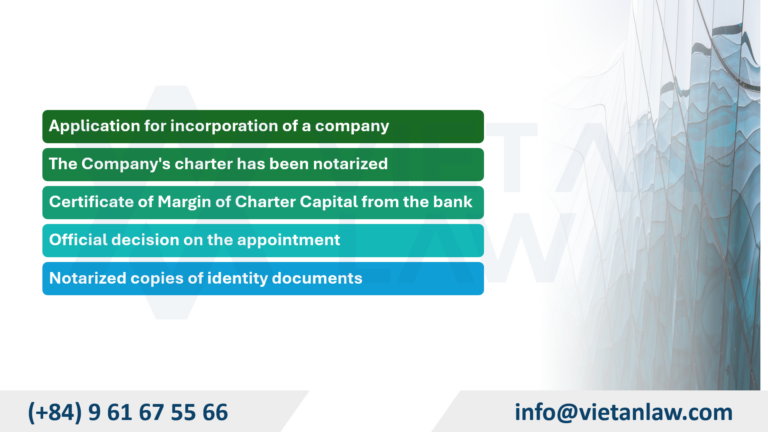
    List of documents to prepare

    • Application for incorporation of a company according to the form prescribed by the state;
    • The Company’s charter has been notarized;
    • Certificate of Margin of Charter Capital from the bank;
    • Official decision on the appointment of members of the Management Board (GmbH) or the Board of Directors (AG);
    • Notarized copies of identity documents (passports) of founders, members of the management board/directors;

    The company incorporation application will be filed at the Commercial Register (Handelsregister) of the state where you have chosen to locate the company’s headquarters. The Commercial Registry will review the records to ensure the completeness, accuracy, and validity of the documents in accordance with Federal and state law.

    Once the application is fully validated, the Commercial Registry will officially register your new company name in the state Register of Commerce. Information about the formation of the company, including the name, head office address, legal type, charter capital and personal information of the members of the management/directors authorized to represent, will be published publicly in the Swiss Official Gazette of Commerce (SHAB / SHAB / FOSC / FUSC).
    Related Acticle

    Key Changes in Vietnam’s Amended Law on Prices (Applied from 2026)

    Key Changes in Vietnam’s Amended Law on Prices (Applied from 2026)

    Vietnam's Amended Law on Prices 2025 takes effect January 1, 2026. Discover key changes including price stabilization transfers, state pricing updates, and new business requirements.
    Decree 03/2026/ND-CP: Stricter Management of Charity & Social Funds in Vietnam

    Decree 03/2026/ND-CP: Stricter Management of Charity & Social Funds in Vietnam

    Decree 03/2026/ND-CP introduces stricter management of charity & social funds in Vietnam from March 2026. Learn new disclosure rules, establishment conditions & penalties.
    Vietnam’s AI & Semiconductor Strategy: The Impact of Decree 353/2025

    Vietnam’s AI & Semiconductor Strategy: The Impact of Decree 353/2025

    Vietnam's AI & Semiconductor strategy under Decree 353/2025 explained. Comprehensive guide to tax incentives, investment support, and preferential policies for digital technology industry.
    Decree 356/2025 vs. Decree 13/2023: Updates on Personal Data Protection in Vietnam

    Decree 356/2025 vs. Decree 13/2023: Updates on Personal Data Protection in Vietnam

    Decree 356/2025 vs Decree 13/2023: Complete guide to Vietnam's Personal Data Protection updates. Learn new DPO requirements, cross-border transfer rules, and compliance deadlines for 2026.
    Electronic Labor Contracts in Vietnam: New Standards under Decree 337/2025

    Electronic Labor Contracts in Vietnam: New Standards under Decree 337/2025

    Electronic Labor Contracts in Vietnam explained under Decree 337/2025. Learn new standards, legal validity, eContract requirements, and digital signing procedures effective 2026.

    CONTACT VIET AN LAW

    In Hanoi: (+84) 9 61 67 55 66
    (Zalo, Viber, Whatsapp, Wechat)

    WhatsApp Chat

    whatsapp-1

    In Hochiminh: (+84) 9 61 67 55 66
    (Zalo, Viber, Whatsapp, Wechat)

    WhatsApp Chat

    whatsapp-1

    ASSOCIATE MEMBERSHIP