Circular 15/2024/TT-NHNN: New Rules for Cashless Payments in Vietnam
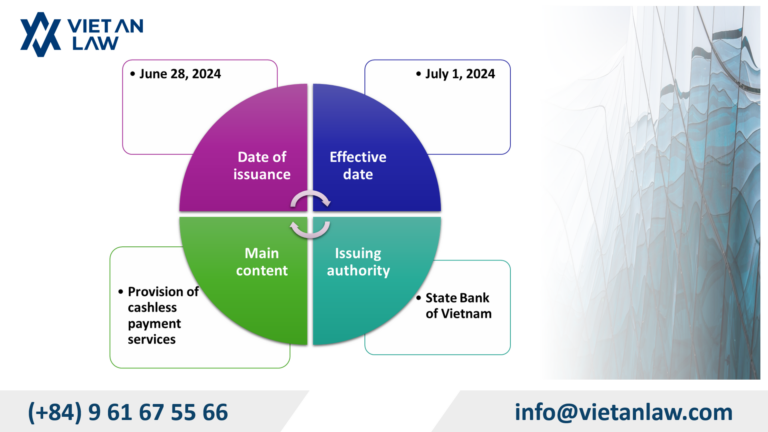
Recently, cashless payment services have seen an increase in service scale, the technical infrastructure serving cashless payment activities has improved, and many new, modern, and convenient payment instruments and services have been born based on the application of science and technology achievements. Recently, the new Decree 52/2024/NĐ-CP and Circular 15/2024/TT-NHNN were issued with new regulations adjusting this service. Below, Viet An Law Firm will analyze the current Circular 15/2024/TT-NHNN: New Rules for Cashless Payments in Vietnam.
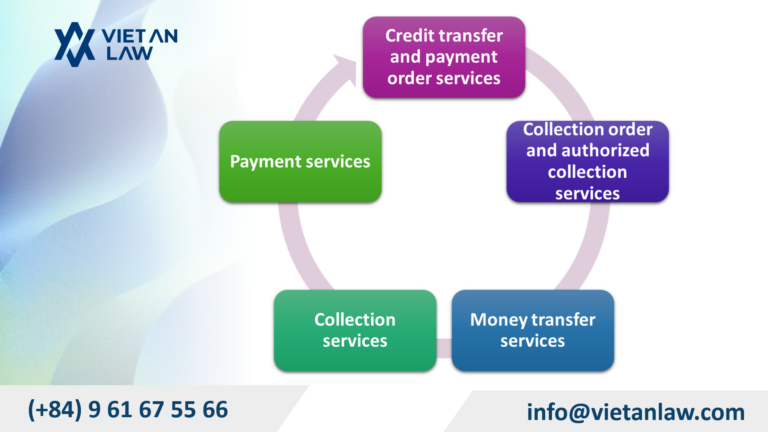
Credit transfer and payment order services are where the bank performs the payer’s request to deduct a certain amount of money from the payer’s payment account to pay or transfer money to the beneficiary. The beneficiary may simultaneously be the payer.
According to Article 8 of Circular 15/2024/TT-NHNN, banks providing payment order services shall ensure rapid, strict, accurate, safe, and secure processing in accordance with the law; they must issue internal procedures, which must include the following contents:
Preparing and sending payment order documents
Controlling payment orders
Processing documents and accounting: At the payer’s bank and the beneficiary’s bank.
Collection order and authorized collection services
Collection order and authorized collection services are where the bank, at the request of the beneficiary, deducts a certain amount from the payer’s payment account to transfer to the beneficiary based on a written agreement on authorized collection between the payer and the beneficiary.
According to Article 9 of Circular 15/2024/TT-NHNN, the content regarding authorized collection services is similar to the content of payment orders. In particular, note the control of authorized collection as follows:
At the beneficiary’s bank: Upon receiving the authorized collection and accompanying documents from the client, the bank must strictly control to ensure the legality and validity of the authorized collection according to the bank accounting document regime. If the authorized collection is not legal or valid, the bank shall notify the client for adjustment, supplementation, or return it to the client.
At the payer’s bank: Upon receiving the authorized collection payment file, the bank proceeds to control the legality and validity of the authorized collection and check the payment capacity.
If the authorized collection has errors, within 01 working day at the latest from the time of receiving the authorized collection, the payer’s bank shall send a request for tracing or return the authorized collection to the beneficiary’s bank or the beneficiary.
Money transfer services
Money transfer services are where the payment service provider performs according to the payer’s request to transfer a certain amount of money to the beneficiary. The beneficiary may simultaneously be the payer.
Similar to the Circular 15/2024/TT-NHNN: New Rules for Cashless Payments in Vietnam, money transfer services under the new regulations also include two forms:
Money transfer services via payment account: According to Article 10 of Circular 15/2024/TT-NHNN, the process for performing money transfer services via the client’s payment account is carried out similarly to the payment order service process.
Money transfer services are not via the client’s payment account.
The process for performing money transfer services not via the client’s payment account: The bank providing money transfer services shall ensure rapid, strict, accurate, safe, and secure processing in accordance with the law; it must issue internal procedures, which must include at least the following contents:
Preparing and controlling documents;
Processing documents and accounting;
The bank shall perform timely credit notification (báo Có) for the client opening a payment account at its unit.
Collection services
Performing the beneficiary’s authorization to collect money from the payer.
Based on a written agreement between the payment service provider and the beneficiary.
Includes collection services via the client’s payment account and collection services not via the client’s payment account.
Payment services
Performing the payer’s authorization to pay the beneficiary on behalf of the payer.
Based on a written agreement between the payment service provider and the payer.
Includes payment services via the client’s payment account and payment services not via the client’s payment account.
Payment services via people’s credit funds and microfinance institutions
According to Clause 2, Article 18 of Decree 52/2024/NĐ-CP and Article 13 of Circular 15/2024/TT-NHNN:
People’s credit funds are permitted to provide money transfer services and perform collection and payment services for members and clients of that people’s credit fund.
Microfinance institutions are permitted to provide money transfer, collection, and payment services for clients of the microfinance institution.
Payment services via public postal service enterprises
Article 19 of Decree 52/2024/NĐ-CP added regulations on the conditions for providing payment services not via the client’s payment account by public postal service enterprises. At the same time, it guides the application file, process, and procedures for written approval and revocation of written approval for payment services not via the client’s payment account activities of public postal service enterprises.
According to the guidance in Article 14 of Circular 15/2024/TT-NHNN, public postal service enterprises granted a written approval must operate strictly according to the contents specified in the written approval:
It is not permitted to erase, repair, buy, sell, transfer, lease, lend, or forge the written approval;
It is not permitted to entrust or delegate agents to other organizations or individuals to perform activities permitted under the written approval.
Notes on payment services performed by electronic means
Payment services performed by electronic means involve the creation, sending, and processing of payment orders through electronic means.
According to Article 8 of Circular 15/2024/TT-NHNN, payment service providers, when providing payment services performed by electronic means, must meet the following requirements:
Comply with regulations on creating, processing, using, preserving, and storing electronic documents.
Build payment processes that ensure sufficient information for checking, comparing, and identifying the client; meet technical infrastructure; manage risk, safety, and security when payment services are performed by electronic means.
Have a written agreement with the client and related parties, clearly defining the rights and obligations of the parties and the dispute resolution mechanism (if any).
The bank shall have measures to notify the client in the electronic environment regarding evidence of payment transactions performed by electronic means, which at a minimum specifies the transaction reference number, transaction date, and transaction amount.
Comply with the provisions of the law on anti-money laundering.
The above is the analysis of Viet An Law Firm regarding cashless payment services. If clients have related questions, please contact Viet An Law Firm for the best support!
Fast & Reliable Legal Assistance
Fill out the form below and get connected with a lawyer quickly.
Learn the 2026 cases of work permit revocation Vietnam under Decree 219/2025: contract termination, incorrect job roles, fake documents, and enterprise closure. Essential guide for FDI compliance.
Whether foreigners working remotely in Vietnam need a work permit depends on the nature of their work, their duration of residence, and their labor relationship with entities in Vietnam. In…
Official work permit application form 2026 (Form No. 01) under Decree 219/2025/ND-CP for Vietnam. Download template, filling instructions, and avoid common mistakes.
Legal services for foreigners in Vietnam: visas, work permits, TRC, FDI company setup, marriage, contracts & dispute resolution. 20 years experience, transparent costs.
Expert service to change outward investment certificate in Vietnam under Law on Investment 2025. Handle offshore investment adjustments, forex registration & Ministry of Finance procedures efficiently.