


In the context of increasingly fierce market competition, creativity and technological innovation are key factors that help businesses affirm their position. Especially in the field of mechanics, an industry closely linked to production, manufacturing, and technical application, new inventions not only bring economic benefits but also create a foundation for sustainable development. However, to protect research results and prevent the risk of being copied, patent registration is an important and necessary step. In this article, Viet An Law will provide basic information to help customers better understand the process of registering a patent for mechanical engineering products in Vietnam, thereby providing appropriate directions to protect their legitimate rights.
What is a patent for mechanical engineering products?
Definition of mechanical engineering product patent
An invention is one of the objects protected by industrial property rights. According to Clause 12, Article 4 of the Vietnamese Law on Intellectual Property 2005 (amended and supplemented in 2025), invention means a technical solution in the form of a product or process which is intended to solve a problem by application of natural laws.
On that basis, a mechanical engineering product patent is a technical solution in the form of a specific product in the mechanical field, created to solve a certain technical problem through the application of natural laws and mechanical principles.
Some patents for mechanical engineering products in Vietnam
- Water pump equipment to create oxygen in aquaculture with the feature of pumping 30 m³ of water/hour, pushing water 15 m away, low power consumption, non-sinkable, long life;
- Multi-purpose solar dryer with vertical shaft drying technology with the ability to dry fish, shrimp, fruits, medicinal herbs, … the device is registered for exclusive patents, with high transfer potential;
- Motorless transplanter with simple mechanical features, no need for a motor, suitable for field conditions, solving the need for a transplanter at low cost.
Protection conditions of patent for mechanical engineering products in Vietnam
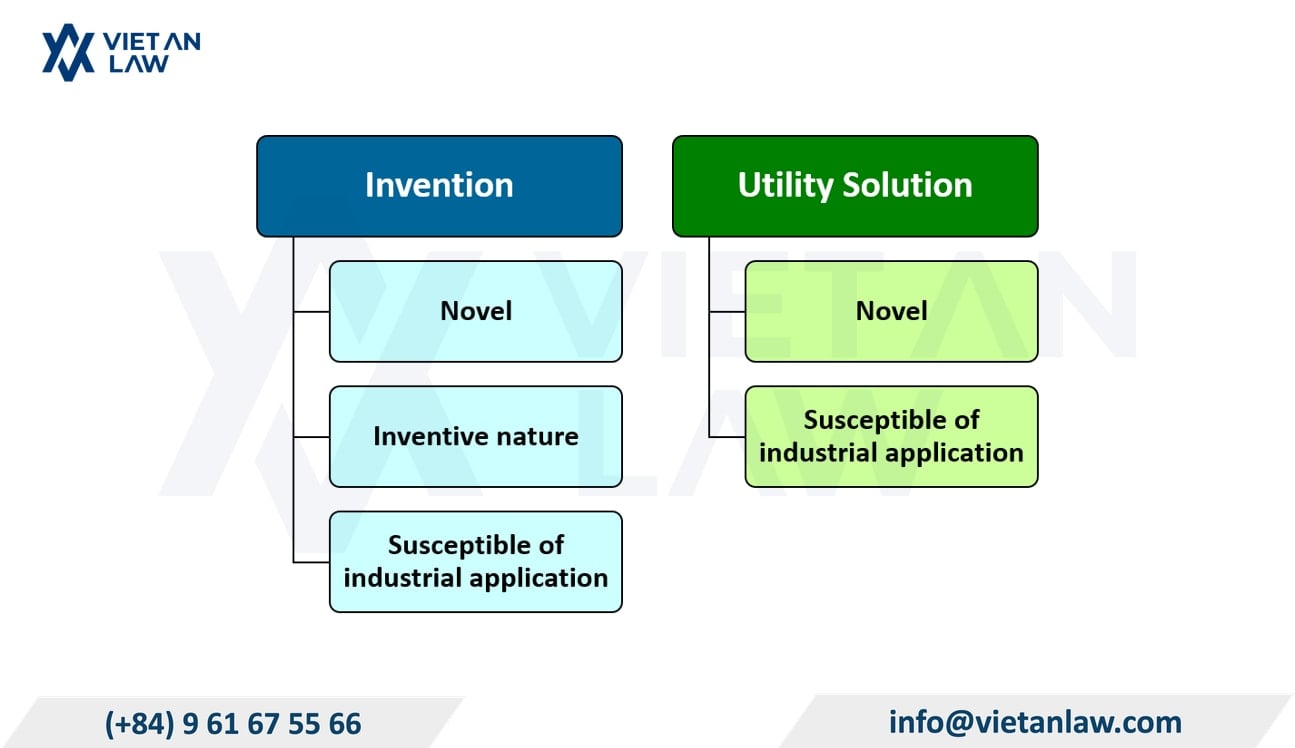
According to Article 58, Law on Intellectual Property 2005 (amended and supplemented in 2009, 2019, 2022), inventions will be protected in two forms: granting a Patent for Invention or a Patent for Utility Solution. Specifically, as follows:
- An invention shall be protected by the mode of grant of an invention patent when it satisfies the following conditions:
- It is novel;
- It is of an inventive nature;
- It is susceptible of industrial application.
- Unless an invention is common knowledge, it shall be protected in the form of the grant of a utility solution patent when it satisfies the following conditions:
- It is novel;
- It is susceptible of industrial application.
Classification classes of mechanical engineering products
In the “International Patent Classification” section of the application, the applicant must state the classification index of the technical solution to be protected according to the IPC Classification latest version (full classification, including part, class, subclass, group (main group or subgroup)). If the applicant does not classify or classifies incorrectly, the National Office of Intellectual Property will classify, and the applicant must pay the classification fee as prescribed.
According to the above Classification Table, the mechanical classes are mainly spread in subclasses F and B and some classes in classes C, E, G. Specifically as follows:
Section F: Mechanical engineering, lighting, heating, weapons, blasting
- F01 – Machines or engines in general; internal combustion engines;
- F02 – Internal combustion engines, gas-turbine;
- F03 – Engines run on natural energy (water, wind, sun…);
- F04 – Pump, fan, compressor;
- F15 – Fluid actuator (system hydraulic, pneumatic);
- F16 – General mechanical engineering elements/structures (bolts, shafts, bearings…);
- F17 – Storing or distributing gases or liquids.
Section B: Industrial and transport engineering
- B21 – Metal-working by pressure;
- B22 – Metal casting;
- B23 – Mechanical working (lathe, milling, drilling…);
- B24 – Grinding, polishing;
- B25 – Hand tools, mechanical tools;
- B26 – Cutting processing (paper, leather…);
- B27 – Wood-working;
- B28 – Processing of cement, ceramic, stone;
- B29 – Plastic-working.
Other mechanical-related subclasses
- C21, C22 (metallurgy);
- E01– E06 (construction engineering with mechanical elements);
- G01– G12 (measurement and control in mechanical engineering).
Patent for mechanical engineering products in Vietnam
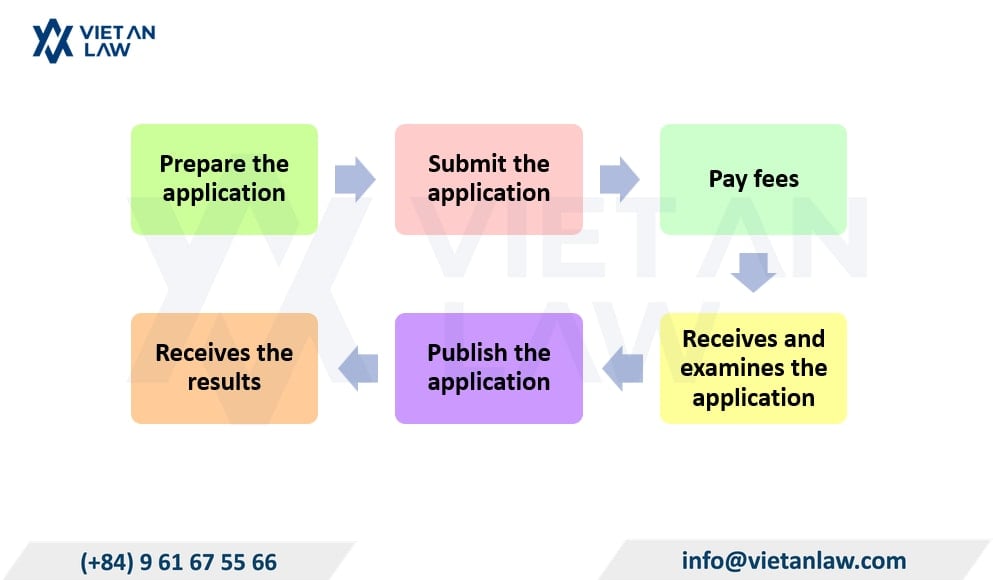
Step 1: Prepare the application for mechanical engineering product patent registration
According to Articles 100 and 102 of the Law on Intellectual Property 2005 (amended and supplemented in 2009, 2019, 2022), a patent registration dossier includes the following documents:
-
- The declaration for registration;
- The description of an invention;
- The abstract of an invention;
- Documents evidencing the registration right, if such right is acquired by the applicant from another person;
- Documents evidencing the priority right, if such right is claimed (copy of the first application(s) certified by the receiving agency, except for PCT applications);
- Receipt for payment of state fees (in case of paying fees via postal service or directly into the account of the National Office of Intellectual Property);
- The power of attorney (if the application is filed through a representative).
Note: As mentioned above, when preparing a mechanical engineering product patent application, the applicant must classify according to regulations.
Step 2: Submit the patent application
Individuals and organizations can submit patent registration applications in two forms as follows:
- Submit applications directly at the headquarters of the National Office of Intellectual Property or Representative Offices at the following addresses:
- The headquarters of the National Office of Intellectual Property: No. 386 Nguyen Trai, Khuong Dinh Ward, Hanoi;
- Representative office of the National Office of Intellectual Property in Ho Chi Minh City, address: No. 31 Han Thuyen, Sai Gon Ward, Ho Chi Minh City;
- Representative office of the National Office of Intellectual Property in Da Nang, address: 3rd floor, 135 Minh Mang, Ngu Hanh Son Ward, Da Nang.
- Submit the application via postal service to one of the application receiving points of the National Office of Intellectual Property;
- Submit online at the Public Service Portal of the National Office of Intellectual Property: https://dichvucong.ipvietnam.gov.vn.
However, recently, the National Office of Intellectual Property has announced that it will prioritize receiving applications online. Therefore, customers should consider submitting patent applications online to limit the time it takes to complete the procedure.
Step 3: Pay patent registration fee
According to the Schedule of industrial property state fees issued with Circular 263/2016/TT-BTC (amended and supplemented by Circular 31/2020/TT-BTC and Circular 63/2023/TT-BTC), state fees payable when registering a patent include:
- Application charge: 150.000 VND (per application);
- Charge for granting Protection title: 120.000 VND (for 1 independent protection request); From the 2nd independent protection request onwards: 100,000 VND/1 independent protection request);
- Fee for assessment of application for priority right (applicable to each application): 600.000 VND (per application/request);
- Application publication fee: 120.000 VND (from the 2nd image onwards: 60.000 VND/1 image);
- Information publication fee from the 7th description page onwards: 10.000 VND/page;
- Examination fee: 900.000 VND (for each independent protection request);
- Formality examination fee: 20% x 900.000 VND (each independent protection request);
- Content assessment fee: 80% x 900.000 VND (each independent protection request);
- Description has more than 6 pages; from page 7 onwards, an additional fee of 40.000 VND/page must be paid;
- Fee for search of information to serve the assessment: 600.000 VND (for each independent protection request);
- Fee for international classification: 100.000 VND/subclass;
- Fee for publishing the Decisions on grant of protection titles: 120.000 VND; from the 2nd image onwards: 60.000 VND/1 image;
- Registration fee for Decision on grant of protection titles: 120.000 VND.
Note: From July 1, 2025 to December 31, 2026, the above industrial property fees will be equal to 50% of the fee collection rate prescribed in Section A of the Industrial Property Fee and Charge Schedule issued with Circular 263/2016/TT-BTC. This reduction also applies to the use of online public services.
Step 4: The National Office of Intellectual Property receives and examines the form of the patent application
- If the application is invalid: The National Office of Intellectual Property shall issue a notice requesting the applicant to amend or supplement the application. If the amendment or supplement does not meet the requirements, the National Office of Intellectual Property shall issue a notice of refusal to accept the patent application;
- In case of a valid application: The National Office of Intellectual Property issues a notice of acceptance of the valid patent application.
Step 5: The National Office of Intellectual Property publishes the patent application
According to Article 110, Law on Intellectual Property 2005 (amended and supplemented in 2009, 2019, 2022), the National Office of Intellectual Property will publish the patent application published in the 19th month from the filing date or from the priority date for the application enjoying priority rights or at an earlier time upon request of the applicant.
The publication of the patent application must ensure the confidentiality principle prescribed in Article 111, Law on Intellectual Property 2005 (amended and supplemented in 2009, 2019, 2022).
Step 6: The applicant receives the results
After the process of examining the content of the patent application according to Article 144, Law on Intellectual Property 2005 (amended and supplemented in 2009, 2019, 2022), the National Office of Intellectual Property will issue the following decisions:
Case 1: The National Office of Intellectual Property refuses to grant a protection title
If the patent registration application falls under the cases specified in Article 117, Law on Intellectual Property 2005 (amended and supplemented in 2009, 2019, 2022), the National Office of Intellectual Property will issue a decision to refuse to grant a protection title (Patent for Invention or a Patent for Utility Solution).
Case 2: The National Office of Intellectual Property issues a protection certificate and registers it
If the application is valid and does not fall under the case of refusal to grant a protection certificate, the National Office of Intellectual Property will issue a decision to grant a protection certificate and record it in the National Register of Industrial Property if the applicant pays the fees.
Some requirements for patent applications
According to Article 102, Law on Intellectual Property 2005 (amended and supplemented in 2009, 2019, 2022), the patent application must include an abstract of an invention and a description of an invention. Specifically, as follows:
The description of an invention.
The invention description shall contain a descriptive section and the scope of protection of the invention.
- The description of an invention must satisfy the following conditions:
- Fully and clearly disclose the nature of the invention to the extent that such invention may be realized by a person with average knowledge in the art;
- Briefly explain accompanying drawings, if it is required to further clarify the nature of the invention;
- Clarify the novelty, inventive step and susceptibility of industrial application of the invention.
- The scope of protection
- Expressed in the form of a combination of technical specifications which are necessary and sufficient to identify the scope of the rights to such invention;
- Compatible with the description of the invention and drawings.
The abstract of an invention
The patent abstract must disclose the main contents of the nature of the invention. For the abstract of mechanical engineering product patents, it will usually include the following basic contents:
- Patent name – correctly state the technical subject matter to be protected;
- Field of use – describes which industry or field the mechanical product belongs to (for example: machine manufacturing, automobile, construction mechanics…);
- Technical status – Briefly state the relevant existing technical solutions;
- Technical problems to be solved – identify limitations and disadvantages of old techniques;
- Technical solution – briefly present the core features, structure, and operating principle of the new mechanical product;
- Efficiency achieved – state the benefits compared to previous techniques (increased durability, energy savings, cost reduction…);
- Attached drawings (if any) – showing structure and operating principles.
It can be seen that registering a patent for mechanical engineering products in Vietnam is not only a measure to protect legal rights but also a tool to increase the value of the business. Correct implementation of legal procedures will help the invention be exploited effectively, limiting the risk of disputes. If you need detailed advice, Viet An Law is always ready to accompany and support.