(+84) 9 61 67 55 66
info@vietanlaw.vn

Investment, Tax, Customs Law 90/2025/QH15 Amendments in Vietnam

Investment, Tax, Customs Law 90/2025/QH15 amendments in Vietnam, was passed by the National Assembly on June 25, 2025, and officially came into effect on July 1, 2025. This is considered “one law amending eight laws” because Law 90/2025/QH15 amends and supplements several articles of eight laws, including the Law on Bidding; the Law on Investment under the Public-Private Partnership Method; the Law on Customs; the Law on Value-added Tax; the Law on Export and Import Taxes; the Law on Investment; the Law on Public Investment; and the Law on Management and Use of Public Assets, with many new regulations in the fields of investment, taxation, and customs. Below, Viet An Law Firm updates some noteworthy new points in Law 90/2025/QH15.
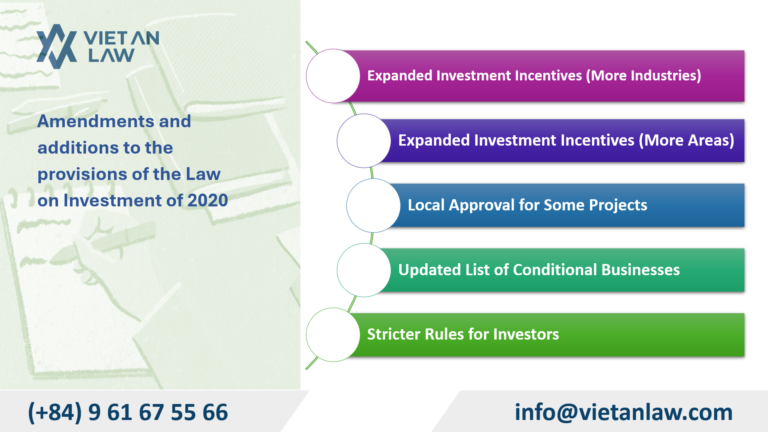
Table of contents

Hide

    Amendments and additions to the provisions of the Law on Investment of 2020

    New points in the Law on Investment from July 1, 2025

    Adding more industries eligible for investment incentives

    The business lines eligible for investment incentives as stated in Article 16 of the Law on Investment 2020 are supplemented in Clause 1, Article 6 of Law No. 90/2025/QH15 as follows:

    • Investing in the construction of large data center infrastructure, cloud computing infrastructure, etc.;
    • Investing in strategic technology sectors and the production of strategic technology products;
    • Investing in innovation and digital transformation;
    • Training human resources in science, technology, innovation, and digital transformation;
    • Operating railway transportation; railway industry and training railway human resources.

    Adding more areas eligible for investment incentives

    The investment incentive areas specified in Clause 2, Article 16 of the Law on Investment 2020 have been expanded to include concentrated digital technology zones, in addition to the following areas:

    • Areas with difficult socio-economic conditions, areas with particularly difficult socio-economic conditions;
    • Industrial parks, export processing zones, high-tech zones, economic zones.

    Transfer the authority to approve certain projects from the Prime Minister to the Provincial People’s Committees

    Instead of falling under the Prime Minister’s authority to approve investment policies, the following projects will be subject to approval by the People’s Committees of the respective provinces:

    • Investment projects that require relocation of 10.000 people or more in mountainous areas or 20.000 people or more in other areas;
    • Projects on investment in and construction of: airports/aerodromes; runways of airports/aerodromes; passenger terminals of international airports; cargo terminals of airports/aerodromes with a capacity of at least 01 million tonnes per year;
    • New investment projects on air passenger transport business;
    • Investment projects on petroleum processing…

    Amend the list of conditional investment and business lines

    Attached to Law No. 90/2025/QH15 is an appendix amending the list of conditional investment and business sectors and professions. Specifically, the list of conditional investment and business sectors and professions is amended as follows:

    • Additional activities: Providing services related to assets subject to taxation; Personal data processing services.
    • Abolishing the urban railway business line.

    Additional requirements for investors establishing economic organizations

    Foreign investors who establish economic organizations to implement investment projects before carrying out procedures for granting or amending Investment Registration Certificates for projects mentioned in Clause 4, Article 6 of the amendment Law 2025 below:

    • Investment projects to establish new innovation centers, research and development centers;
    • Investment projects to build infrastructure for large data centers, cloud computing infrastructure, mobile infrastructure from 5G and above, and other digital infrastructure in strategic technology fields as decided by the Prime Minister;
    • Investment projects in strategic technology fields and the production of strategic technology products as decided by the Prime Minister.

    Previously, Article 22 of the Law on Investment 2020 only stipulated that foreign investors must have an investment project and follow the procedures for issuing or amending the Investment Registration Certificate. This excludes the establishment of innovative start-up small and medium-sized enterprises and innovative start-up investment funds. Therefore, this regulation clarifies the exceptions to this provision.

    Amend and supplement the provisions of the current Law on Investment

    Major changes in the principles for applying the contractor selection method.

    Clause 17 of Article 1 of Law No. 90/2025/QH15 amending regulations in the fields of investment, taxation, and customs has added Article 29b on the principles of applying contractor selection methods as follows:

    • The investor may apply one of the contractor selection methods stipulated in Clause 1, Article 20 of this Law in cases and meeting the conditions stipulated in Articles 21, 22, 23, 24, 25, 26, 27, 28, 29, and 29a of this Law.
    • If the bidding package meets the conditions for applying one of the contractor selection methods stipulated in points a and c of Clause 1, Article 20 of this Law, but the investor decides not to apply these methods, then one of the methods stipulated in point b of Clause 1, Article 20 of this Law may be applied without having to comply with the conditions of the corresponding method.

    This regulation demonstrates the principle of empowering investors to prioritize the application of contractor selection methods with the simplest and most convenient procedures, such as direct contracting, contractor selection in special cases, and direct ordering. In addition to the prioritized methods mentioned above, investors may choose other methods such as open bidding, competitive bidding, and other methods appropriate to the scale and nature of the project.

    At the same time, expand the mechanism of direct contracting and apply the contractor selection method in special cases to accelerate the progress of contract packages and projects; supplement and improve the inspection and supervision mechanism for these contract packages, ensuring it is consistent with the policy of shifting strongly from “pre-inspection” to “post-inspection”.

    Eliminate the procedure for evaluating the results of contractor selection for simple, small-scale bidding methods

    To simplify bidding processes and procedures, and shorten the time for implementing contracts and projects, the amended Law on Bidding 2025 has eliminated the procedure for appraising the results of contractor selection for simple, small-scale bidding methods…

    At the same time, it decentralizes the responsibility for approving contractor selection plans from the competent authority to the investor; and does not require appraisal of contractor selection plans or bidding documents.

    Decentralize and expand the autonomy of state-owned enterprises and public service units in bidding processes

    • According to the revised Law on Bidding, the contractor selection activities of any entity (including state-owned enterprises) using state budget funds must comply with the provisions of the Law on Bidding.
    • For contractor selection activities not using state budget funds, state-owned enterprises have the right to make their own decisions based on ensuring transparency, efficiency, and accountability.

    This regulation has met the expectations of state-owned enterprises and public service units, allowing them to accelerate investment projects and meet production and business deadlines promptly.
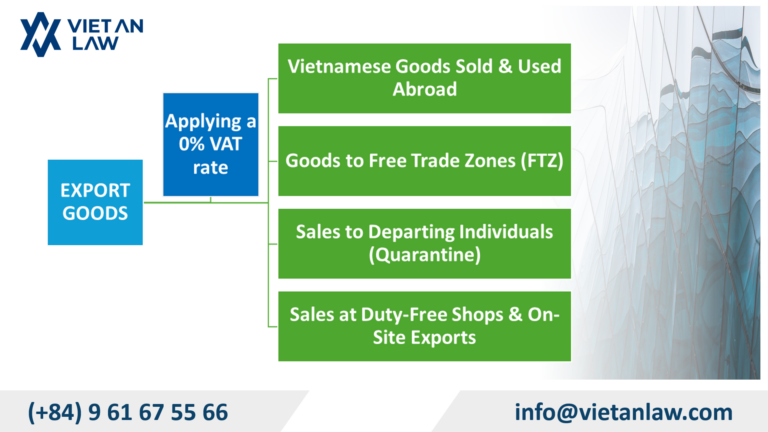
    Amendments and additions to the provisions of the Law on Value-added Tax 2024 and the Law on Import and Export Tax 2016

    Adding export goods subject to 0% VAT

    Exported goods are subject to VAT at a rate of 0%

    Law No. 90/2025/QH15 amending regulations in the fields of investment, tax, and customs has added point a, clause 1, Article 9 of the Law on Value-added Tax regarding the subjects to which the 0% tax rate applies to exported goods, including:

    • Goods from Vietnam sold to organizations and individuals abroad and consumed outside Vietnam;
    • Goods from within Vietnam sold to organizations in a duty-free zone and consumed within the duty-free zone, directly serving export production activities;
    • Goods sold in quarantine areas to individuals (foreigners or Vietnamese) who have completed exit procedures;
    • Goods sold at duty-free shops; goods exported on-site.

    This regulation contributes to expanding the scope of application of the 0% tax rate, ensuring consistency in tax policy and encouraging export activities in the context of international economic integration.

    Amendments and additions to the list of items exempt from import and export taxes

    Law No. 90/2025/QH15 amended and supplemented the subjects exempt from import and export taxes in the Law on Import and Export Tax 2016 as follows:

    The exemption for imported goods that are raw materials, supplies, and components not yet produced domestically, and which directly serve the production of information technology products, digital content, and software, has been abolished.

    Guidelines on imported goods eligible for tax exemption for the development of science, technology, innovation, and the digital technology industry, including:

    • R&D: Machinery, equipment, materials, documents (for science, tech, innovation, digital industry)
    • Fixed Assets: Equipment for investment projects (science, tech, innovation, digital industry)
    • Production (High-Tech): Raw materials, supplies, components (for science orgs, high-tech firms, new high-tech product ventures – 5-year exemption)
    • Production (Digital): Non-domestic raw materials, supplies, components (for digital products & R&D)

    These amendments reflect a focused and targeted support orientation for science, technology, innovation, and the digital technology industry, in line with the science and technology development strategy in the spirit of Resolution No. 57-NQ/TW on breakthroughs in the development of science, technology, innovation, and national digital transformation.

    Amendments and additions to the provisions of the Law on Customs 2014

    Clarifying the conditions for applying the Authorized Economic Operator (AEO) program.

    • The amended Law on Customs No. 90/2025/QH15, which revises regulations in the fields of investment, taxation, and customs, has added technology criteria and clarified the conditions for applying preferential treatment to businesses. One of the notable new points is the requirement for businesses to have an IT system for managing import and export that can connect to or share data with customs authorities.
    • This indicates that Vietnam is strongly promoting the digitalization process, aiming for a transparent ecosystem with real-time data control capabilities. Simultaneously, the minimum legal compliance period for AEO consideration has been reduced from 3 years to 2 years, expanding opportunities for dynamic, transparent, and technologically capable businesses.

    Special incentives for key semiconductor and digital technology sectors.

    The amended law, for the first time, opens a separate AEO (Advance Operating Operator) mechanism specifically for high-tech, semiconductor, AI, and data center enterprises. Enterprises in this group only need to meet four conditions instead of the usual six and are only eligible for priority treatment for goods related to the high-tech industry.

    This is a strategic move aimed at attracting FDI into key sectors in the global supply chain, especially the semiconductor industry – a sector where many countries are fiercely competing.

    Legalizing on-site import and export and customs supervision mechanisms

    • The law adds Article 47a, officially defining on-site import and export and establishing a mechanism for inspection and supervision of goods imported and exported on-site, which is common in processing models and domestic supply chains.
    • This has resolved many confusions and difficulties faced by both customs authorities and businesses in the past.

    The above is an update on the new points of Investment, Tax, Customs Law 90/2025/QH15 amendments in Vietnam. If you have any related questions or require consultation on regulations in the fields of investment, taxation, and customs, please contact Viet An Law for the best advice and support!
    Related Acticle

    New 2026 Rules for Household Enterprises Tax in Vietnam

    New 2026 Rules for Household Enterprises Tax in Vietnam

    New 2026 rules for household enterprises tax in Vietnam: lump-sum tax abolished, 500M VND exemption threshold, declaration method required. Complete guide to tax changes.
    CIT Law Implementation in Vietnam: Key Insights into Decree 320/2025

    CIT Law Implementation in Vietnam: Key Insights into Decree 320/2025

    CIT Law Key Insights in Vietnam: Complete guide to Decree 320/2025 covering new tax rates (15%-17% for SMEs), exemptions, R&D deductions, and compliance requirements.
    Procedures for setting up a company in Peru

    Procedures for setting up a company in Peru

    Setting up a company in Peru made simple. Complete guide covering procedures, legal requirements, document preparation, and registration at SUNARP for foreign investors.
    Procedures for investment in Burundi

    Procedures for investment in Burundi

    Complete guide on procedures for investment in Burundi. Learn registration steps, required documents, company types, and legal requirements for foreign investors entering Burundi's market.
    Adjust Investment Registration Certificate in Khanh Hoi Ward, Ho Chi Minh city

    Adjust Investment Registration Certificate in Khanh Hoi Ward, Ho Chi Minh city

    Learn how to adjust Investment Registration Certificate in Khanh Hoi Ward after administrative boundary changes. Complete guide on requirements, documents, and procedures.

    CONTACT VIET AN LAW

    In Hanoi: (+84) 9 61 67 55 66
    (Zalo, Viber, Whatsapp, Wechat)

    WhatsApp Chat

    whatsapp-1

    In Hochiminh: (+84) 9 61 67 55 66
    (Zalo, Viber, Whatsapp, Wechat)

    WhatsApp Chat

    whatsapp-1

    ASSOCIATE MEMBERSHIP