In the context of investors constantly looking for potential emerging markets, Burundi, known as the “Heart of Africa” thanks to its strategic geographical location, is gradually emerging as a remarkable destination for international investors. Although it still faces certain challenges, Burundi possesses unique advantages such as untapped natural resources and a young workforce. With its position as a gateway to larger markets in the East African Community (EAC) and the Economic Community of Central African States (ECCAS), along with ongoing investment incentive policies, Burundi opens up potential opportunities for pioneering businesses, especially in the a gricultural sectors, mining, tourism and renewable energy. Viet An Law would like to guide customers on the procedures for investing in Burundi through the article below.
A commitment to self-balance foreign currency sources or a document of a licensed credit institution committing to arrange foreign currency for investors (Certification).
A document of the tax authority certifying the fulfillment of the investor’s tax payment obligation up to the time of submission of the investment project dossier (Certification).
Decision on outward investment – for institutional investors (Original).
For outward investment projects in the fields of banking, securities, insurance, science and technology, the investor shall submit a written approval of a competent state agency on the satisfaction of conditions for outward investment in accordance with the Law on Credit Institutions. Law on Securities, Law on Science and Technology, Law on Insurance Business (Certificate)
Consular legalization, notarized translation of overseas business registration certificates.
Register for Forex Trading
According to Article 5 of Circular No. 12/2016/TT-NHNN, amended and supplemented by Circular No. 31/2018/TT-NHNN, Circular No. 24/2022/TT-NHNN, after being granted an outward investment registration certificate, the investor must open 01 (one) investment capital account in 01 (one) foreign currency in accordance with the demand for remittance of investment capital abroad at 01 (one) credit institution license and registration of foreign exchange transactions related to outward investment activities with the State Bank.
Except for the case of remittance of investment capital abroad in Vietnam dong, investors are allowed to open and use 01 (one) investment capital account in Vietnam dong and 01 (one) investment capital account in foreign currency at 01 (one) licensed credit institution and register foreign exchange transactions related to outward investment activities with the Bank State.
A dossier of registration for foreign exchange transactions related to outward investment activities includes:
Application for foreign exchange trading related to outward investment activities.
A copy of the outward investment certificate.
A copy of a foreign language, a Vietnamese translation of the written approval or a business license or a document proving the right to conduct investment activities in the host country.
The original of the written certification of the licensed credit institution on the opening of the investor’s investment capital account, clearly stating the account number and type of foreign currency.
The original of the authorized credit institution’s written certification of the amount of money the investor has transferred abroad before being granted the outward investment registration certificate.
Written explanation of the need for remittance of investment capital abroad in Vietnam dong in case of remittance of investment capital abroad in Vietnam dong.
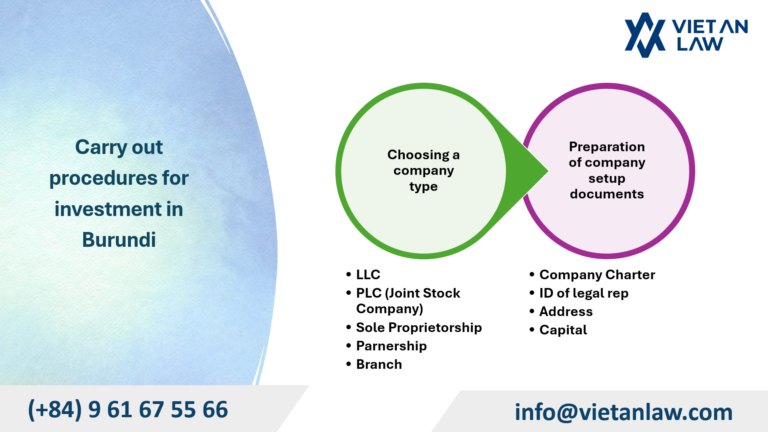
Carry out procedures for investment in Burundi
Choosing a company type
Common types that foreign investors often consider in Burundi include:
Société à Responsabilité Limitée (SARL/LLC) – Limited Liability Company: This is the most popular option for small and medium-sized businesses. The distinguishing feature is that the members are only limited liability to the extent of the capital contributed, which helps protect their personal assets from the company’s debts.
Société Anonyme (SA/PLC) – Joint Stock Company: Suitable for larger-scale enterprises that need to raise capital from many investors. This type allows the issuance of shares and usually has higher charter capital requirements than SARLs. Shareholders are also entitled to limited liability.
Entreprise Individuelle (Sole Proprietorship): This is the simplest form, owned by a single individual. However, the owner is liable for unlimited liability for all obligations of the business.
Société en Nom Collectif (Partnership): This type is for at least two individuals to do business together. Partnerships are usually liable for unlimited liability for the company’s debts.
Succursale (Branch) – Branch of a foreign company: Allows a foreign company to establish a presence in Burundi without the need to establish a new, independent legal entity. The branch will act as an extension of the parent company, and the parent company will be fully responsible for the activities of the branch.
Preparation of company establishment documents
Company Charter: This is a document detailing the company’s name, head office address, business objectives and lines, charter capital, organizational structure, rights and obligations of members/shareholders, decision-making process, and other important provisions.
Identification documents of the legal representative and/or director: Copy of passport (authenticated/consularized).
Confirmation of investment capital: Depending on the type of business and current regulations, investors may need to provide confirmation from the bank that they have fully contributed the minimum charter capital (if any) or committed to capital contribution.
Registered office address in Burundi: Provide office lease or legal ownership/use documents.
Other documents: Depending on the specific case, the API may require additional documents such as:
Decision of the parent company (from Vietnam) on the establishment of a subsidiary/branch in Burundi.
Power of attorney (if the person carrying out the procedure is not the legal representative).
Filing for setting up a company in Burundi
After preparing all the information documents, you proceed to submit the company establishment documents. Due to the Burundi Investment Promotion Authority (API) saying that it is unable to manage all the companies operating in Burundi due to budget constraints, the authority to form the company will still belong to API. You can apply via the link below. https://easybusiness.bi/ The Investor will submit all the documents and information prepared in the previous step to the API.
After completing the registration process at the Burundi Investment Promotion Authority (API), your business will receive a set of legal documents as follows:
Approved company charter (Statuts de la société): This is a charter that has been officially approved and recognized by the competent authorities of Burundi.
Certificate of Business/Commercial Registration (Registre de Commerce – RC): This is one of the most important documents, officially confirming that your company has been legally registered in Burundi’s commercial register.
Tax Identification Number (Numéro d’Identification Fiscale – NIF): This number is issued by the Burundi Tax Authority (Office Burundais des Recettes – OBR) through an API. The NIF is a unique identifier for your company in the national tax system. Having a tax identification number is required for the company to be able to fulfill its tax obligations, including filing tax returns, paying taxes and fees related to business activities.
Registration card with the Institut National de Sécurité Sociale (INSS): This is a certificate that your company is registered for the national social security system. Registration with INSS is a mandatory requirement for businesses that hire workers. This ensures that the company and its employees will contribute to and enjoy social insurance benefits in accordance with Burundian law, including health insurance, unemployment benefits, pensions, etc.
Fast & Reliable Legal Assistance
Fill out the form below and get connected with a lawyer quickly.
Discover the 6 employment contracts exempt from social insurance Vietnam under the 2024 Social Insurance Law. Learn legal exemptions, compliance risks, and cost optimization strategies for businesses.
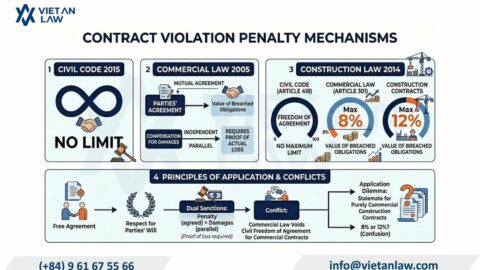
Vietnam's draft Commercial Law 2026 removes the 8% contract penalty cap, allowing unlimited breach penalties. Learn how this affects your contracts, liquidated damages clauses, and dispute strategy.
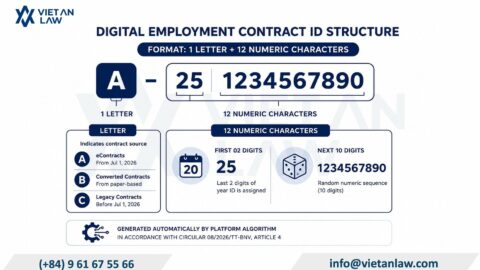
Electronic employment contract Vietnam: Complete guide to Circular 08/2026/TT-BNV key updates on ID codes, eContract platform access, and digital labor contract requirements effective July 2026.
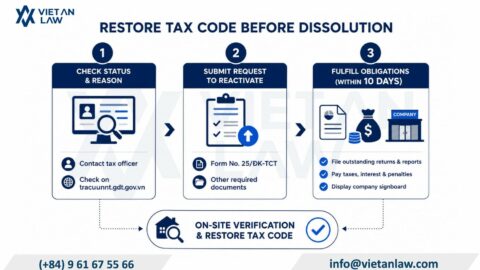
Can you dissolve a company with a locked tax code in Vietnam? No—but dissolution is possible after restoring tax compliance. Learn the legal requirements, costs, timeline, and step-by-step procedures to…
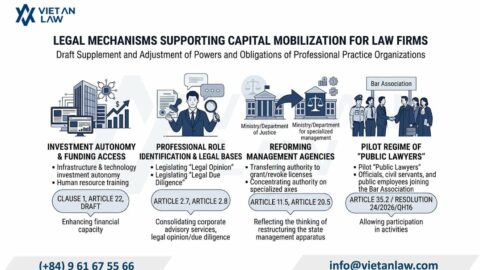
Capital contributing members in law firms Vietnam: Draft Law on Lawyers 2026 allows non-lawyer investors in limited liability law firms for the first time. Effective March 2027.