


In the context of digital transformation and rapid technological development, the issue of intellectual property rights (IP) for artificial intelligence (AI) technology is becoming an important legal challenge globally. In 2025, the field of intellectual property law is expected to face unprecedented changes due to the rapid development of emerging technologies, in which AI plays a key role. In the following article, Viet An Law will inform Clients about the current trends of intellectual property rights for AI technologies in the world.
Legal challenges of intellectual property rights for AI technologies
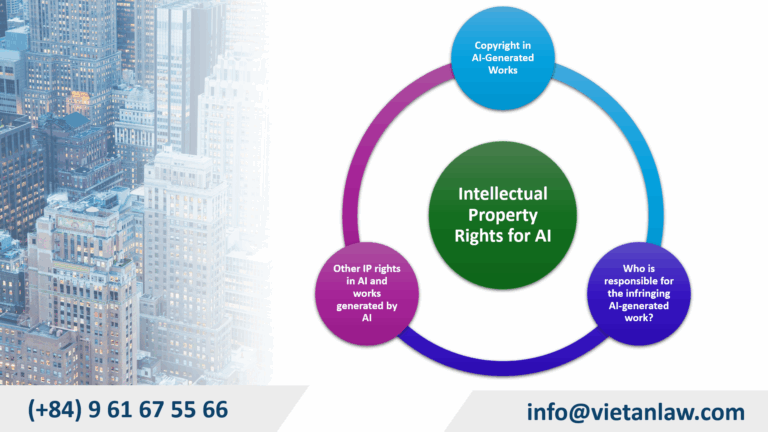
Intellectual property rights in AI technology are raising complex questions about ownership and protection of digital assets, data, and creativity. As AI advances, existing legal frameworks are finding themselves unable to address new issues. In particular, AI-generated content is challenging traditional concepts of copyright and ownership, requiring new guidance on copyright and patent protection.
In New Zealand, the digital technology industry is driving some of the most significant changes in intellectual property law. Innovation in software, artificial intelligence and digital content is happening so quickly that existing IP frameworks are struggling to keep up with new challenges such as protecting AI-generated works, protecting software innovation and data ownership.
Similarly, in Thailand, artificial intelligence is transforming industries at an increasingly rapid pace through the creation of new technologies and content. Challenges have arisen regarding IP ownership and protection, especially as Thai laws were drafted long before generative AI was implemented. Determining whether AI systems or their developers own IP rights is currently a major legal gap.
The development trend of AI Rights in China
According to the New Generation Artificial Intelligence Development Plan released by China in 2017, it is expected that China will establish initial AI laws and regulations, ethical standards and policy systems, as well as form AI security assessment and control capabilities.
China is now the leading country in terms of AI-related patent applications. According to a report from the World Intellectual Property Organization (WIPO), Chinese inventors are the most active patent applicants in the fields of general AI, generative AI, and AI-application inventions. Notably, the number of GenAI-related patent families filed by China-based innovators between 2014 and 2023 was about six times that of the second-ranked country.
Experts predict that in 2025, Chinese and international companies will continue to file more patents in China related to the entire IT technology structure in AI, including core chip technology, frameworks, models, and applications.
Challenges and opportunities in intellectual property enforcement for AI
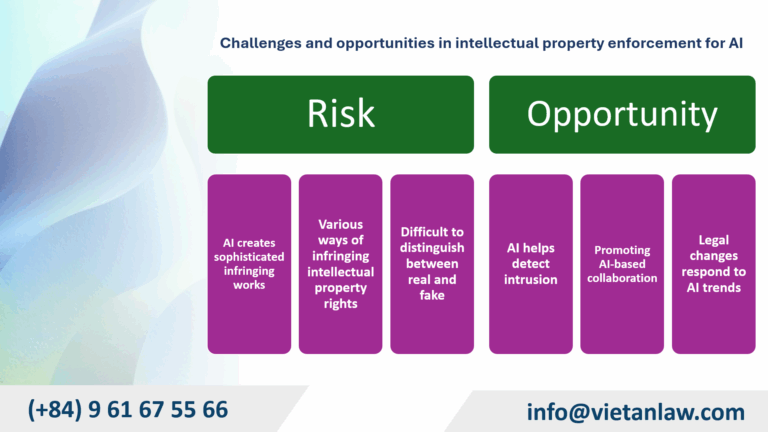
Intellectual property rights in AI create both risks and opportunities for IP owners. As AI has improved significantly over the past five years, the following possibilities are easily discernible:
- Advanced Counterfeiting: AI can now recreate counterfeits with high accuracy;
- Various types of infringement: Including digital content, designs, and physical products (via 3D printing);
- Difficult to distinguish: The line between genuine and fake goods is increasingly blurred;
Conversely, AI can also be used as an effective tool to detect intrusions, specifically, this opportunity is exploited in the following aspects:
- Infringement Detection: AI uses machine learning to recognize infringement patterns and anomalies to alert rights holders;
- Strengthening cooperation: Promoting coordination between authorities and technology platforms;
- New regulatory developments: Legal changes are expected to address copyright and AI infringement.
Strategy to strengthen intellectual property rights for businesses
To increase the protection of their digital assets in the new era, companies should prioritize digital and AI-related innovations and secure cross-border IP rights in key markets. It is important to keep up with evolving IP laws, especially in areas such as digital content and software. Companies should also explore licensing and partnership models to expand the scope and value of their IP and stay informed of regulatory developments to maintain a competitive advantage.
IP rights holders can focus on prioritizing the registration and enforcement of their IP in the digital space, as well as monitoring and adapting to legal developments in AI and digital content. Other areas that should attract IP rights holders’ attention include developing IP licensing and commercialization strategies, particularly in the technology, green technology, and manufacturing industries, which can support business expansion into new markets.
In the context of the rapid development of emerging technologies, intellectual property rights for AI technology are becoming a complex legal challenge that requires countries to continuously adjust and improve their legal frameworks. The challenges and opportunities arising from the application of AI require not only the development of domestic laws but also international cooperation to ensure an effective and balanced intellectual property protection system in the digital age.
Above is the information that Viet An Law has compiled about the current situation of intellectual property rights for AI technologies in the world. For advice on intellectual property protection for AI technology, please contact Viet An Law for timely support.